Back-to-school season sells itself as a shopping list. It isn't one. A backpack full of the right supplies doesn't fix a chaotic morning if there's nowhere for it to land when your child walks in the door, and a color-coded planner doesn't help if nobody's agreed on who's picking up from practice on Tuesdays.
This is a plan for both sides of back-to-school preparation: what your children need to walk in prepared, and what you need in place to manage the months that follow: the calendar, the car, the papers, the mornings. Buy less than the internet suggests, build the systems around it, and let this be the year the rest of the school year feels as manageable as the first week.
This post contains affiliate links. As an Amazon Associate, I earn from qualifying purchases, at no extra cost to you. #ad
Before Shopping: Confirm, Inventory, and Decide What Can Wait
Check What the School Actually Requires
Supply lists vary by teacher as much as by grade, so wait for the actual list before you shop: a generic "school supplies" haul often duplicates what's already sitting in a drawer, or misses the one specific item a teacher requested. While you're waiting, refresh the logins on any parent portal or communication app now, before permission slips and payment requests start arriving. Confirm emergency contacts, medical information, and pickup authorization are current and submitted, these are easy to put off and inconvenient to scramble for once the year is already moving.
Take Inventory Before You Buy Again
Before anything new comes into the house, go through what's already there. Check backpacks for wear, lunch containers and bottles for lids that still seal, shoes for fit, and notebooks or binders that survived the year with room left in them. Cross those off the list first, and shop for what's missing.
Worth checking at the same time: the systems the house itself will lean on all year. Is there an actual hook where a backpack can hang, or does it just get dropped by the door? A shelf where a lunch container has a home, or a spot to charge a tablet? New supplies without a landing spot don't solve the morning pile, they just add to it. A few of the more useful pieces for building that landing spot, and the everyday supplies worth having on hand, are gathered in our Back-to-School Finds for Kids collection.
Decide What Genuinely Needs to Wait
Buy for the first week (everyday tops and bottoms, socks, and shoes that actually fit right now) and let the rest solve itself once the year reveals what's really used. For cold-weather gear, check what still fits from last year and hold off on buying more until the seasonal need is clear. Sports and activity gear is worth pausing on too: confirm with the school or activity program whether equipment is provided, rented, lent, or required to be purchased before assuming you need to buy it yourself. Most non-specialized purchases can wait until requirements are confirmed. The pressure to have every possible need covered before day one usually just leads to overbuying.
Prepare the Everyday School Essentials
A handful of things are worth choosing well and having ready early, because they get used every single day. A backpack that fits your child's frame and holds what they'll carry matters more than the pattern on it: have them try it on with a filled binder inside before it's the final answer. Two adjustable shoulder straps worn close to the body, heavier items packed nearest the back, and the bag's own compartments used to spread out the weight all help distribute the load more evenly, consistent with American Academy of Pediatrics backpack-safety guidance. A pencil case with real compartments, rather than a loose pile in the bottom of the bag, keeps the small things from disappearing by October.
Labeling frequently carried items (water bottles, lunch containers, jackets, anything that leaves the house daily) can prevent avoidable mix-ups and lost items, especially for younger children. Our Back-to-School Finds for Kids collection has label sets, backpacks, and the everyday supplies worth having ready before the list even comes home.
Make Lunches, Clothing, and Activities Easier to Manage
A Lunch Station Kids Can Use Themselves
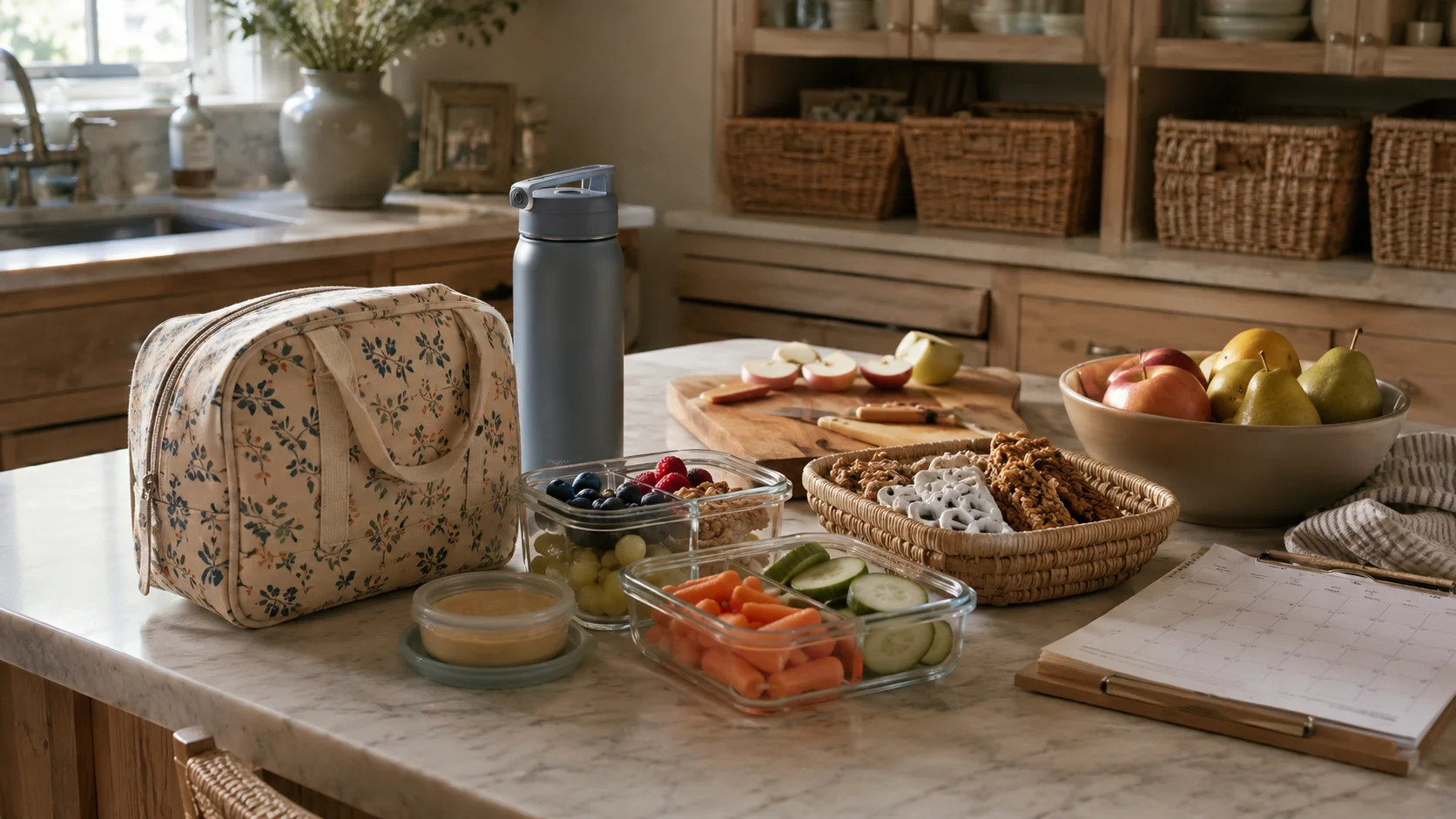
A few labeled bins in the pantry (one for the main item, one for a side, and one for a snack) can give children age-appropriate choices and let them assemble parts of their own lunch, instead of leaving you to make every decision before coffee. Keep an after-school snack zone stocked at kid height too, so raiding the kitchen doesn't turn into an unsupervised pantry excavation. For water bottles, keeping one in use and one clean backup creates a routine children can learn to follow. Any perishable lunch item should travel in an insulated lunch bag with at least two cold sources, per USDA school-lunch food-safety guidance.
Buy for Fit Now, Not the Whole Season
Everyday tops, bottoms, and shoes are worth buying for actual current fit, since they're in heavy daily rotation and outgrown fastest. Outerwear and anything for a season that hasn't arrived yet can wait, or come from what's already in the closet from a sibling or last year.
Reuse Before You Rebuy
A backpack or binder that still works doesn't need replacing just because it belonged to an older sibling first: a few stickers or a name patch can help a reused backpack or binder feel personal and clearly theirs. The same goes for activity gear: confirm the program requirements and the child's commitment before purchasing a complete new kit.
SHOP BACK-TO-SCHOOL FINDS FOR KIDS
Backpacks, lunch and hydration gear, labels, homework supplies, and the everyday essentials from this section are gathered in one place, browse the Back-to-School Finds for Kids collection.
Build the Home Base for the School Year
One Spot for Backpacks, Shoes, and Devices
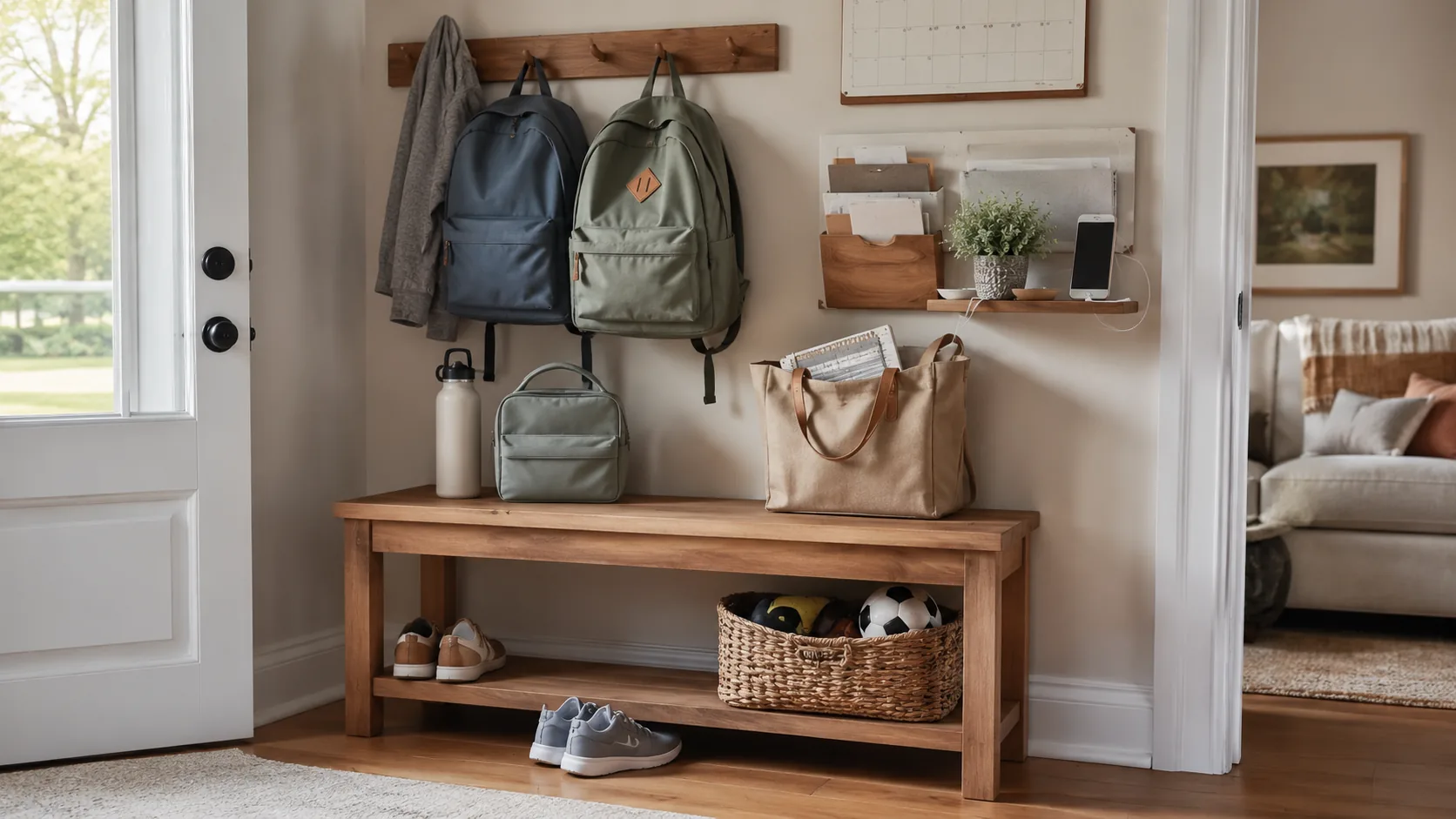
A mudroom makes this easier, but it isn't required: a wall by the door, a hall closet, or a labeled shelf works just as well. A hook per child, a low basket for shoes, and a small charging shelf means backpacks land in the same place every day instead of migrating from the couch to the table to the floor.
Sort Papers the Moment They Land: Act, Save, Recycle
Papers come home constantly, and the pile only gets manageable if there's a rule for it the moment it lands, not a filing project for someday. Three simple homes solve most of it: Act for anything that needs a signature or a date added to the calendar, Save for the artwork and awards worth keeping, and Recycle for flyers and duplicates that don't need to exist past today. Deciding which bin a paper belongs in as soon as it comes out of the backpack helps prevent the pile from building.
Put the Family Calendar and School Accounts in Order
A paper wall calendar, a dry-erase board, or a shared digital app all work: the format matters far less than three things: everyone in the house can see it, it's simple enough that the whole family uses it without being reminded, and it can hold every input in one place rather than living in four different apps and one parent's head. School events, activities, appointments, and meal plans all belong on the same calendar, not scattered across separate systems that only one person checks.
A short weekly review, choose one consistent day each week, is what keeps the system honest. Walk through the week, add anything new from a school email or flyer, and confirm nothing from the Act pile got missed. While you're at it, double-check that portal and app logins from earlier in the season still work; a locked-out account is a bad time to discover it on a permission-slip deadline.
Prepare the Mom, Not Just the Children
Most back-to-school planning stops at the kids' list, as if the person managing the household's whole year doesn't also need to walk into it prepared. She does, and the fix isn't waking up earlier to compensate for a system that isn't built yet. A command center, a getting-ready checklist, a homework caddy, and a self-serve lunch station are genuinely useful ideas, borrow them. What doesn't need borrowing is the assumption that more hours out of her day is what makes any of it work.
The same preparation that goes into a child's backpack is worth giving to the parts of the year she's responsible for: a planner or calendar she checks without having to think about it, and a designated spot for her own paperwork (insurance cards, school forms, appointment reminders) so it isn't competing for space with everyone else's.
A bag or folder that's ready to grab on the way out the door does more for a busy morning than one more item added to an already-full to-do list. A few things worth keeping in it, chosen for what gets used rather than as a full packing list: a small organizer pouch, a charging cable or portable charger, a pen, a reusable water bottle, a small snack, a document folder for anything that needs a signature, a compact umbrella, and a reusable bag for whatever comes home unexpectedly. None of it needs to be elaborate: the point is that it's already there when she's already out the door.
Create a Practical School-Year Car System
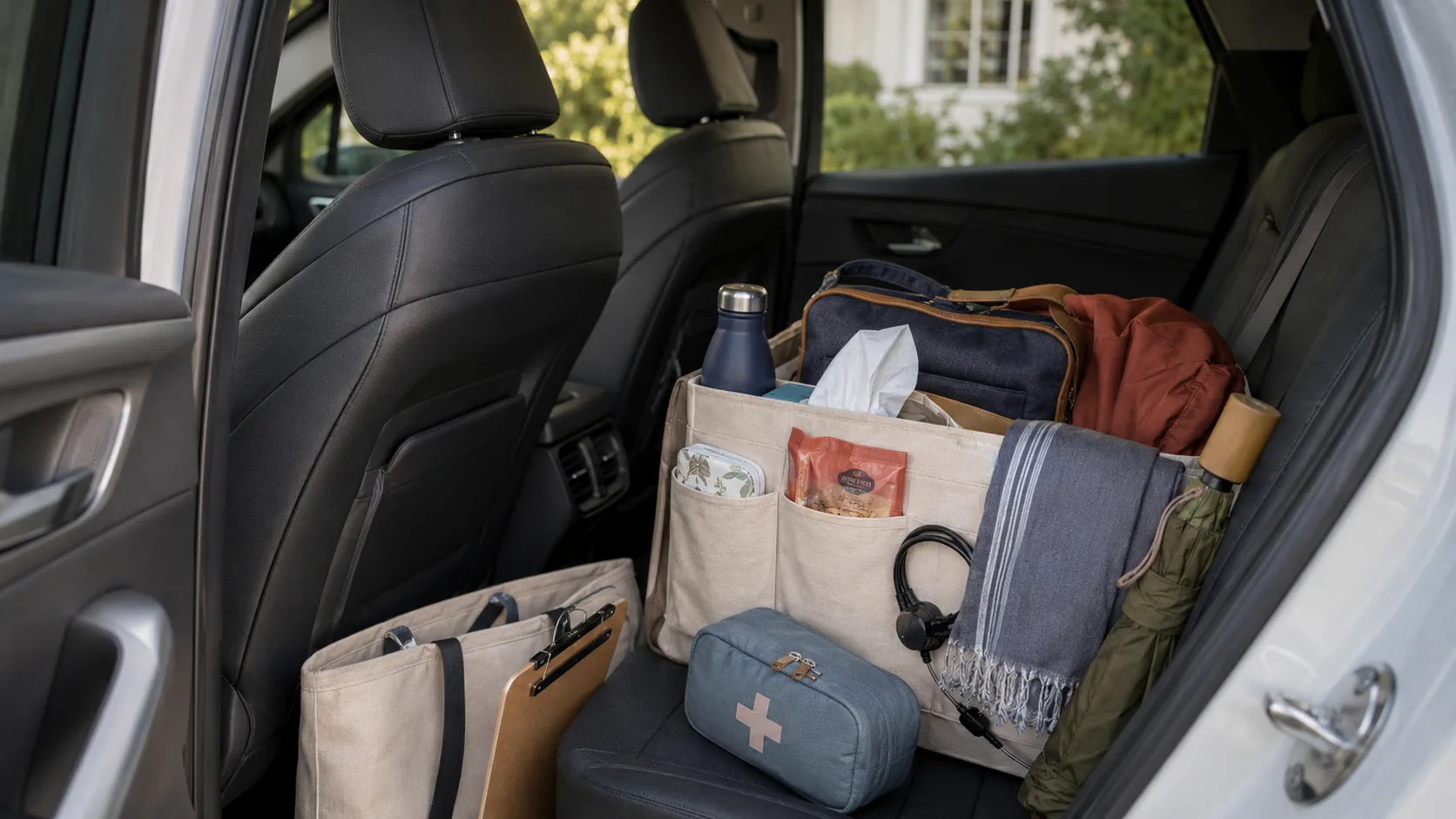
A stocked backseat is a good start, but the car deserves a fuller system than a snack bin, it's where pickups, activities, errands, and unexpected weather all happen. A small bin for shelf-stable snacks and water covers the pickup line and the gap between school and practice. A spare layer, extra pair of socks, or other appropriate spare clothing handles a surprise weather change or a spilled drink without a detour home. A folder or clipboard holds anything that needs a signature on the go, so a permission slip doesn't sit forgotten on the kitchen counter.
A more complete kit also covers the things that only matter when something goes wrong: tissues or wipes, a few small trash bags, a couple of reusable shopping bags, basic rain gear, a compact first-aid kit, and a towel or lightweight blanket. Households in regions with real winter weather, wildfire smoke, or other seasonal risks may want to add region-specific emergency items as wellReady.gov's vehicle emergency-kit guidance is a useful starting reference. Round it out with a phone charger and a bag for library books or return items, and restock the whole thing on the same day each week: tying it to the same weekly review that resets the calendar keeps one system from drifting out of sync with the other.
Not everything in the kit should live there indefinitely. Food and water should be checked and rotated regularly rather than left to sit for months. Medicines, portable chargers, loose batteries, and other heat-sensitive items should be stored elsewhere and brought into the car only when needed.
SHOP SCHOOL-YEAR ORGANIZATION FOR MOMS
Planners, car organizers, on-the-go bins, and the paperwork and scheduling tools from this section are gathered in one place, browse the School-Year Organization for Moms collection.
Practice, Share Responsibility, and Reset
Rehearse Before the First Week
Practice the actual morning routine a few days before school starts (waking up, getting dressed, leaving on the real schedule) so the first genuine morning isn't also the first rehearsal. A short night-before routine helps just as much: bag packed, clothes chosen, devices charging, the same few steps every night until it stops needing to be thought about.
Give Children Their Own Part of the System
"Get the kids involved" is easy to say and vague enough to mean nothing. What actually works is naming specific, age-appropriate tasks and handing them over for good: packing their own bag from the labeled shelf, building their own lunch from the pantry bins, checking their own getting-ready list before they leave, hanging their own backpack on their own hook the moment they're back through the door. These aren't chores added on top of the system, they're the system, built so a child can run part of it without a parent standing over them.
Put a Reset Date on the Calendar
No system is right on the first try, and nothing here needs to be. Two to three weeks after school starts, take twenty minutes to walk through what's working: which bin nobody uses, which folder is already overflowing, what keeps getting skipped. Adjust what needs it instead of quietly abandoning the whole thing: a system that never gets revisited becomes its own kind of clutter by October.
Buying the right supplies was never really the hard part. The systems around them (the hooks, the bins, the calendar, the car, the mom's own plan alongside the kids') are what carry a family from a manageable first week into a manageable year.