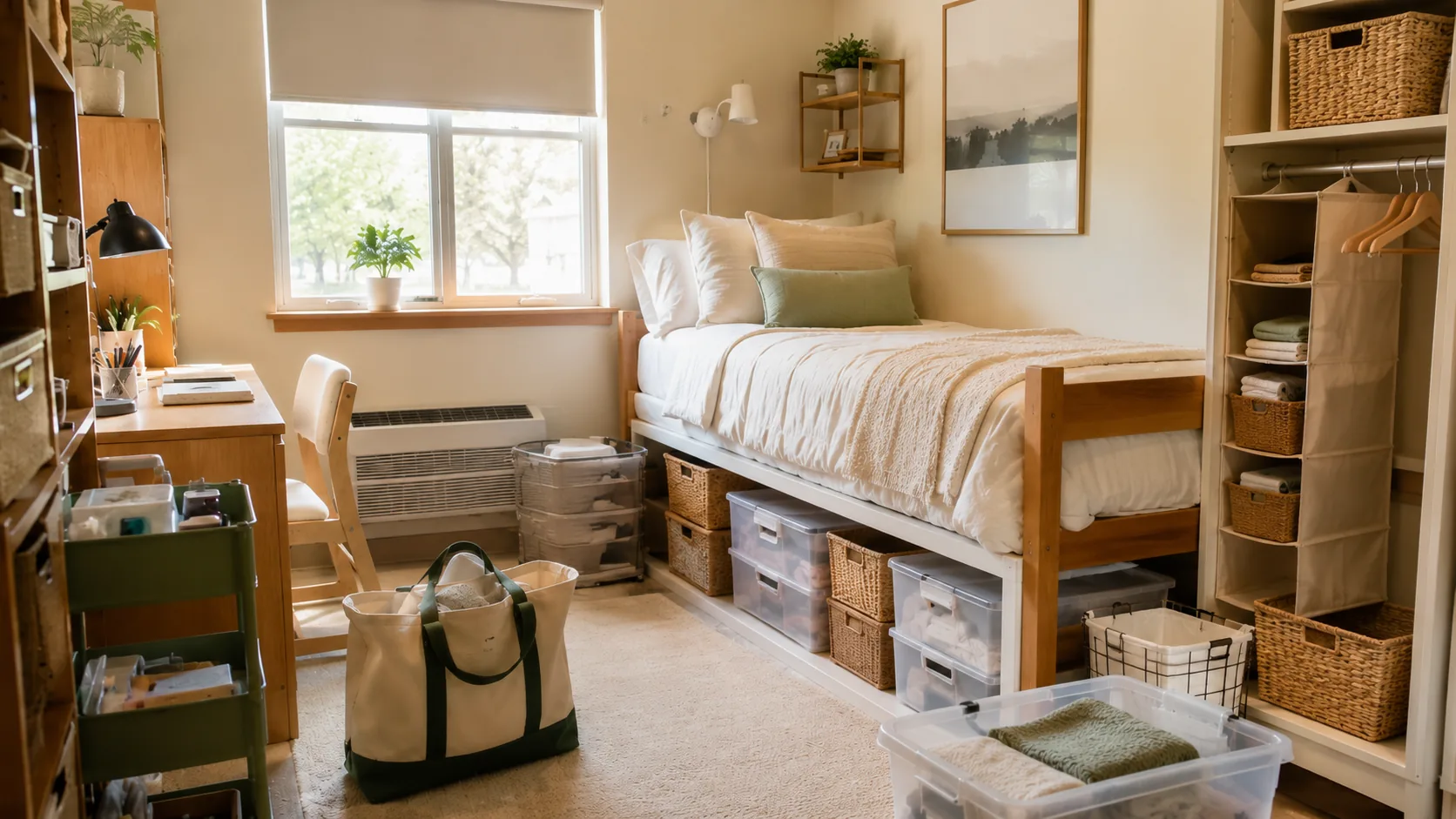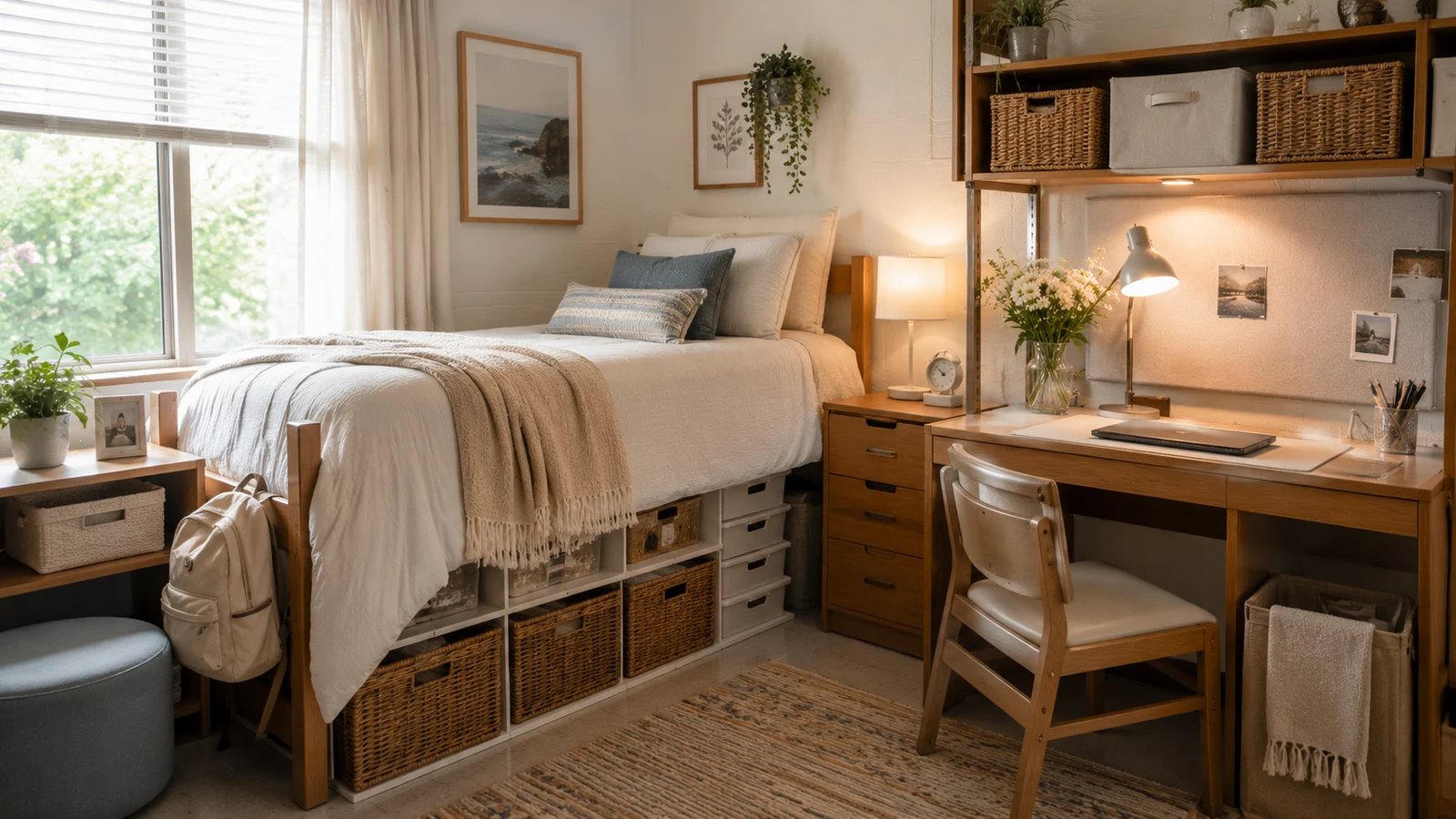
A dorm room is twelve feet by twelve feet, a twin XL mattress with the world's worst mattress pad, and fluorescent overhead lighting. It is not, by default, a cozy space. But it can become one, not by pretending it's a Pinterest bedroom, but by choosing a few things well and letting the rest be simple.
These are the finds worth choosing. Not the things that photograph well and fall apart in October. The ones that make the space feel settled, personal, and like somewhere you actually want to be at the end of a long day.
This post contains affiliate links. As an Amazon Associate, I earn from qualifying purchases, at no extra cost to you. #ad
But here's the part most dorm lists skip: the biggest money mistakes at college aren't the wrong products, they're the right products bought without checking the school's rules, or bought twice because two roommates didn't compare carts. So this isn't a list of 100 things. It's a way to decide what to buy and bring now, what to verify against your school's rules first, and what to coordinate with a roommate so nothing shows up in duplicate.
The Decisions You Can Make Early
Some purchases are straightforward enough to choose early; others depend on school rules, published dimensions, or a conversation with a roommate. Start with the easy ones. Almost everything is Twin XL, so bedding is safe to buy early, and it's the one thing genuinely worth thinking through before you go.
There's no single "right" bedding, the useful questions are how your student sleeps and how the room gets laundered. Do they sleep warm or cool? A light quilt suits a hot sleeper; a fuller comforter or duvet suits a cold one. How small is the dorm's washer and dryer? A comforter too bulky to fit them becomes a chore all year. Whatever the pick, it's Twin XL. Many students find a mattress topper makes a real difference on a thin dorm mattress, but match the material and thickness to how they sleep; memory foam, fiberfill, and latex feel very different, especially for someone who runs warm. A simple duvet and cover is the flexible base: easy to restyle with a different throw and pillows year to year, without rebuying the whole bed.
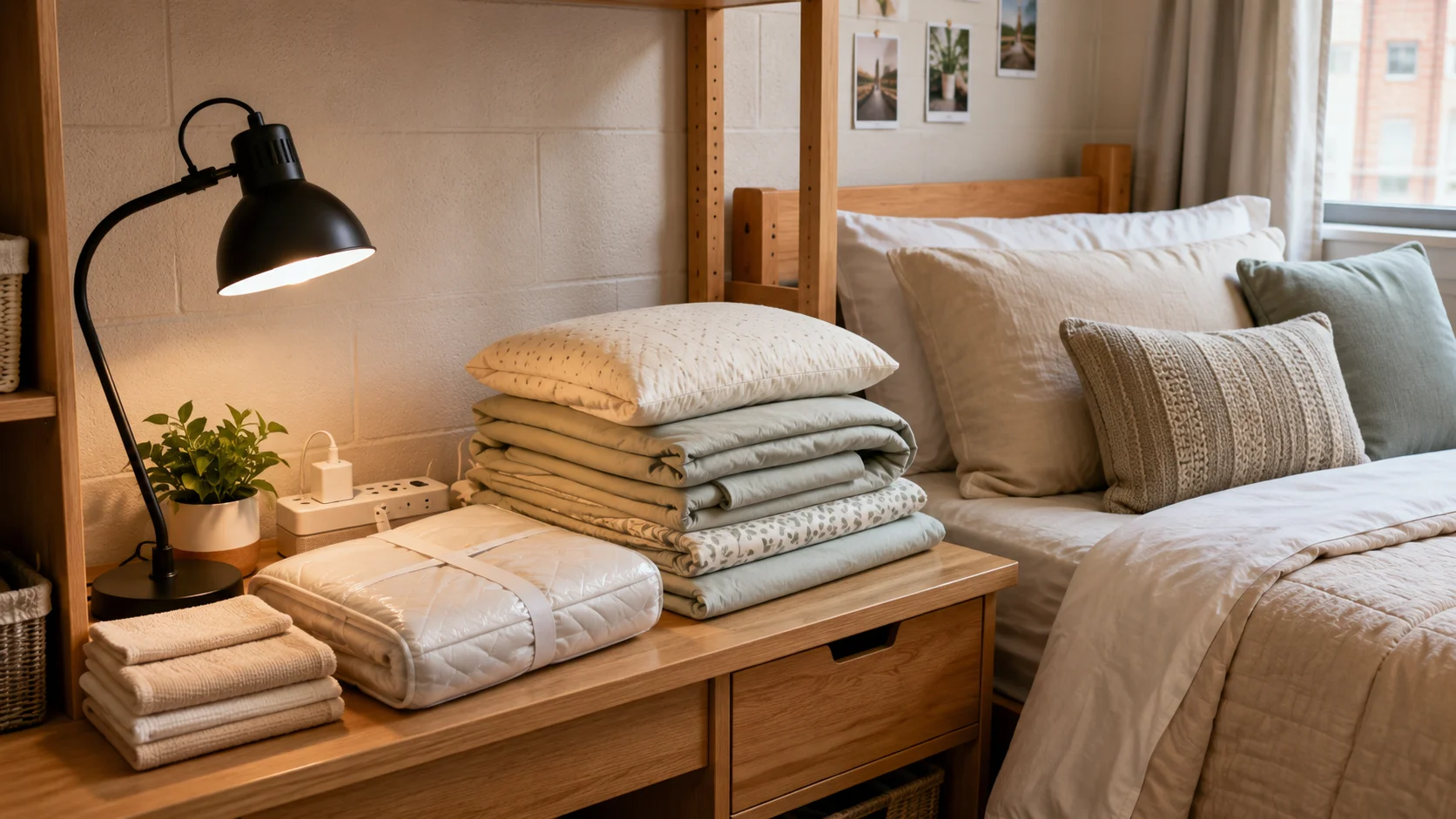
The other safe early buy is lighting. Fluorescent overhead light makes a room feel like a waiting room; a warm desk lamp at eye level makes the desk somewhere you'd actually choose to sit. One caveat worth checking first: some schools ban halogen bulbs, so look for LED.
Buy the surge protector, not the extension cord. Some schools ban extension cords outright and allow only a UL-approved surge protector: check your school's list before you pack either one.
That's genuinely most of the "buy it now" list: bedding, a topper, a lamp, a surge protector, towels, and the everyday toiletries. The rest of what fills a Pinterest dorm haul is worth verifying against your school's rules and room information first, which is the whole next part.
Before You Buy the Big Stuff, Verify What You Can
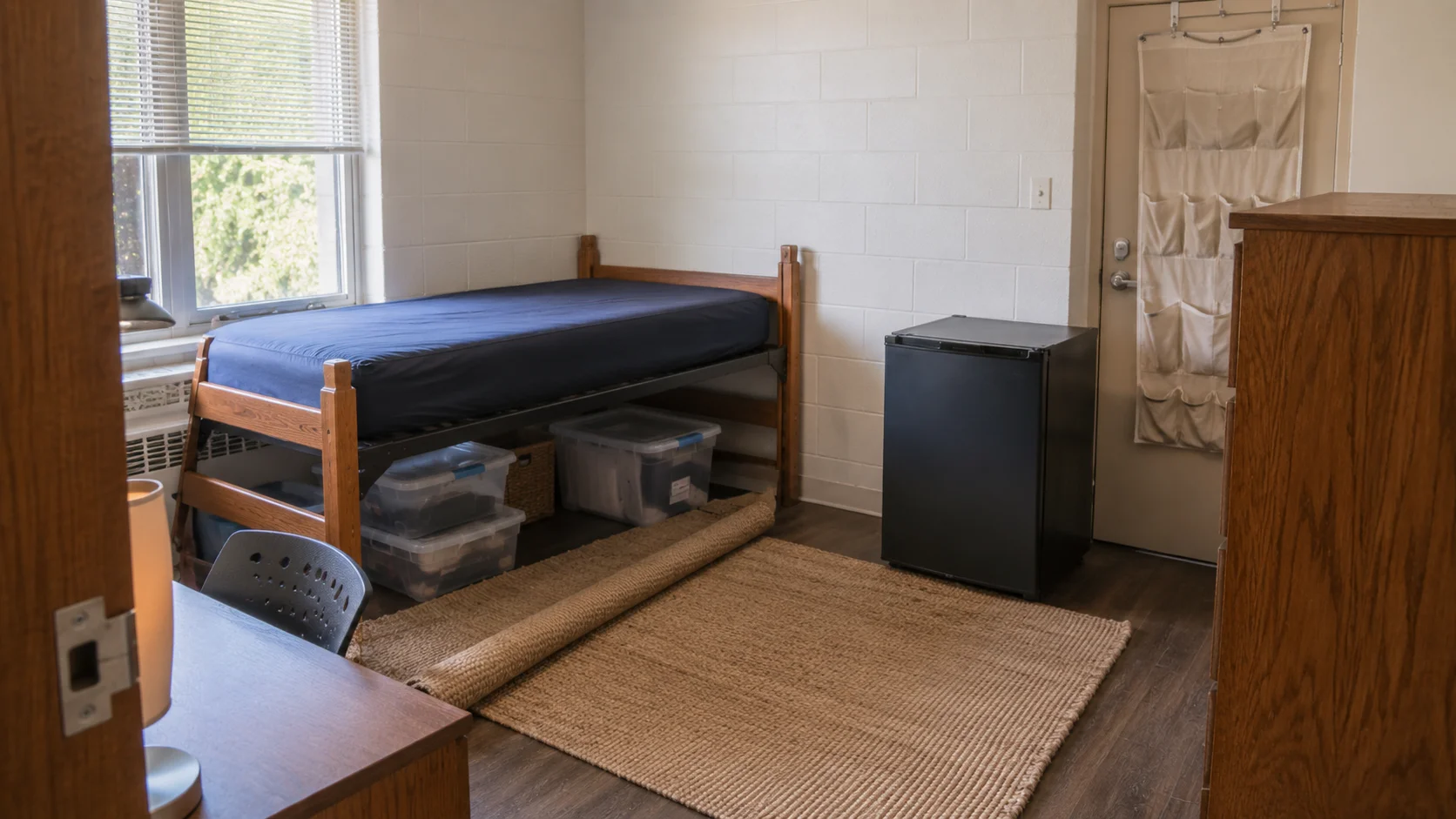
A rug, an over-the-door organizer, under-bed bins, a desk hutch, a headboard-height shelf, these are the items where a guess becomes a return label. A rug bought for a typical dorm layout may not fit your particular room. An over-door organizer doesn't hang if the door is thicker than the hooks. Under-bed bins don't slide if the bed isn't raised as high as you assumed. None of that is knowable from a listing photo.
So before you order the big or oddly-sized things, verify what you can from the school: published floor plans, official room dimensions, residence-hall photos, the move-in packet, and returning students or parent groups. You usually can't get into the actual room to measure it, and exact layouts vary even within the same building, so plan with the best information available and lean toward flexible or adjustable storage that works at more than one size. Then, on move-in day, do the one thing almost no checklist mentionsphotograph any existing damage before you unpack a box. Dorms bill for damage at move-out, and a dated day-one photo is the only thing that protects the deposit.
The same logic applies to storage in general: many rooms come with more built-in drawer space than students expect, and the bins and closet organizers that actually help are the ones bought to fill a specific gap you can see, not a cart full of "just in case" containers that end up stored inside each other. Once you know what the room can take, the Dorm Room Organization & Essentials list is a good place to shop the gaps.
A desk hutch or over-desk shelf lives in this same category. Many dorms now include one, and plenty of students add their own, but confirm the desk width and your school's rules before buying, and plan to assemble it before you load the desk supplies onto it. It's structural, not decorative: it goes up during the tool-and-furniture part of setup, not at the end.
Don't Forget the Bathroom
For a lot of freshmen, the shared bathroom is the biggest lifestyle adjustment of all, and most dorm guides barely mention it. What you need depends entirely on the setup. A communal bathroom down the hall calls for a shower caddy that carries everything in one trip, shower shoes, quick-dry towels (a regular towel struggles to dry in a room with no airflow), a robe if that's their style, and a spot in the room (a couple of over-door hooks, if they're allowed) where the caddy and towel can dry between uses.
A suite or private bathroom is a different list: now someone has to supply the toilet paper, hand soap, a bath mat, a shower curtain and liner if they aren't provided, a trash can, and basic cleaning supplies, plus a plan with the roommate for who restocks and who cleans. Check what the room already includes before packing duplicates.
Text Your Roommate Before You Both Buy a Fridge
A small shared room usually doesn't need duplicate large appliances, rugs, or cleaning equipment, but two strangers are about to furnish it from two different Amazon carts. The single fastest way to save money and floor space is a five-minute conversation before either of you buys the big shared items.
Split the truly shared things: one person brings the mini fridge, the other brings the rug and a small vacuum. A fan, though, is worth having per person rather than sharing: dorms run hot with no real airflow, so a clip-on, bunk, or USB fan at each bed earns its space: the clip-on kind that mounts right onto a lofted frame is everywhere now for a reason. An air purifier is one of the higher-value additions for a shared dorm: older buildings, humid climates, musty or poorly-ventilated rooms, and dust- or allergy-sensitive students especially benefit. One properly sized unit is usually enough for a small shared room, so coordinate it with the roommate and choose one rated for the square footage of a double, not a studio. Appliances are the most rule-bound category of all: schools cap microwave wattage and fridge size, so check the numbers your building allows before anyone buys one.
Bring It All: Just Don't Set It All Up at Once
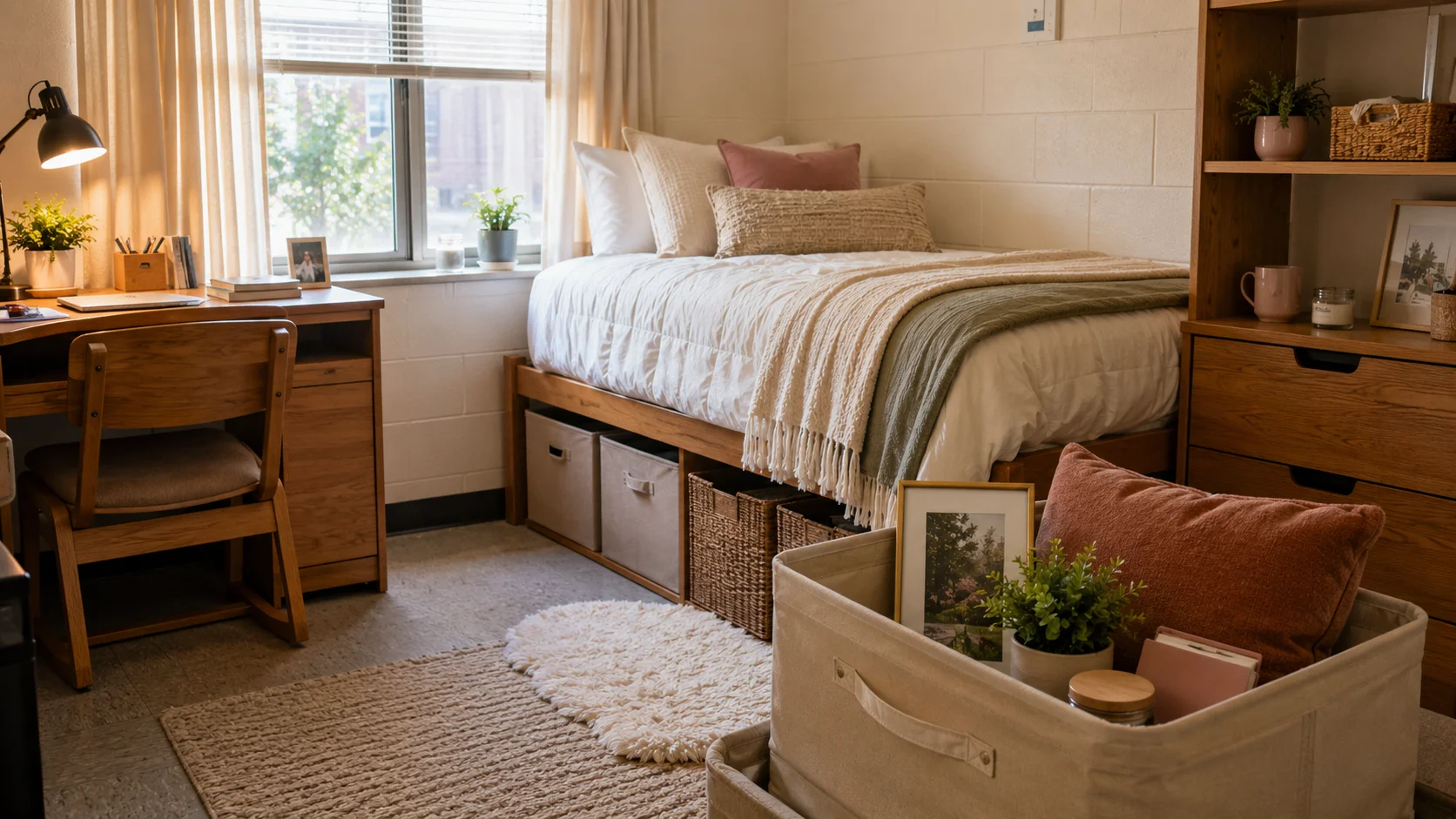
Here's the honest correction to a lot of dorm advice: if you're driving six hours or flying, you can't "wait and see" and pop back to the store. So bring what the student is reasonably likely to need: the decor, the health box, the extra hooks, the shower caddy. The thing you can delay isn't buying it; it's setting it up. Get the room functional on move-in day, and let the student add the personal layer over the first week, once they can see how they actually use the space.
So the personal pieces, a throw pillow in a different texture, framed photos, the one or two things that make the room read as chosen rather than assigned: travel in the car, but they're the last thing to place, not the first. One good detail does more than a whole wall of taped-up posters, and it lands better once the bed and desk are already working.
What you genuinely can leave off the first order: duplicates, extra quantities, a second organizer before the first one's even full, and extra furniture (a second rolling cart, another nightstand, more desk drawers) that depends on the floor space that's actually left. Those are the only real "buy it later" items; everything the student actually needs comes now.
One Box Every Student Should Pack
If there's one thing worth packing early and keeping easy to reach, it's a health box, not a decor piece, not a maybe. The student's regular medications, a thermometer, basic first-aid, and the familiar over-the-counter things your household already reaches for. Keep it on an accessible shelf, not buried at the bottom of a closet bin. It'll sit untouched for weeks, and then a cold goes around the floor and family may be several hours away right when it's needed. Need a starting point? Browse the College Health Kit Must-Haves.
Food belongs in the first-week plan, too, not a shopping list, just a cushion. Bring enough familiar snacks, drinks, and simple, permitted foods your student already likes to cover the first several days, so they aren't dependent on immediately finding a grocery store while they learn the dining-hall hours, delivery options, and what actually works with the appliances the dorm allows.
FREE PRINTABLE
We turned all of this into two checklists you can print.
One packing list sorted by what to verify, coordinate, and pack in order, and a step-by-step for making the room livable in the first hour.
Get the free dorm checklists →Want the full move-in day walkthrough these checklists are built from: what to carry in yourself, what order to unload the car, the bed-and-storage sequence? Read What to Pack First for College Move-In Day.
Ready to shop? College Room Essentials · College Dorm Must-Haves · Dorm Room Organization & Essentials · College Health Kit Must-Haves
And when the boxes are in the room, the order matters as much as the list did, and it isn't the order most people use. Start by wiping down the desk, shelves, and bed frame: a clean surface before anything gets placed on it. Then the structural work, while the bed frame and furniture are still empty and easy to move: set the bed height (risers or lofting), attach any headboard or over-bed shelf, place the rug and move the furniture, then position the fridge and heavy storage and route the cables while you can still reach behind everything, and keep a clear walking path from the door to the bed to the desk as you go, not something to untangle later. Then make the bed, not first, because half of that work happens on and around it. After that, load the closet and drawers, and if there's a private or suite bathroom, unpack it so toiletries, towels, and shower supplies are ready for the first evening. Set up the first-night essentials, and leave decorating for last. Our free move-in checklist lays out the full order, step by step.
Common Questions About Dorm Room Essentials
What does every dorm room actually need?
Almost everything else depends on the school and the room, but a few things are safe to buy for anyone: Twin XL bedding, a mattress topper, a warm desk lamp (check for an LED bulb if the school restricts halogen), a UL-approved surge protector instead of an extension cord, towels, and the everyday toiletries. That's genuinely most of the buy-it-now list.
What shouldn't you buy right away?
Duplicates, extra quantities, a second storage bin before the first one is even full, and extra furniture that depends on how much floor space is actually left, like a second rolling cart or another nightstand. Bring what a student is likely to need, but don't set all of it up, or buy backups, before move-in day shows what the room can actually hold.
What should roommates coordinate or split before move-in?
A five-minute conversation before either person buys the big shared items saves money and floor space. Split the large appliances (one person brings the mini fridge, the other brings the rug), but treat a fan as a per-person item since dorms run warm with little real airflow. Check the school's wattage and size caps for appliances before anyone buys one.
What order should you set up a dorm room on move-in day?
Wipe down the desk, shelves, and bed frame first. Then do the structural work while the furniture is still empty and easy to move: set the bed height, attach any headboard or shelf, place the rug, then position the fridge and heavy storage and route cables while it's still possible to reach behind everything. Make the bed after that, then load the closet and drawers, set up the bathroom if there is one, and leave decorating for last.
SHOP THE DORM EDIT
Shop College Room Essentials on Amazon →Or go straight to the list you need:
College Dorm Must-Haves ·
Dorm Room Organization & Essentials ·
College Health Kit Must-Haves