Move-in day is going to be chaotic no matter what you do. The elevator will be slow, the cart will be borrowed, and by 2pm everyone will be sweating and slightly short with each other. The goal is not to arrive perfectly, it's to end the day with a space that already feels like somewhere you chose to be.
This is not an exhaustive packing list. It's a priority order, and it's really two different priority orders at once, which is the part most checklists skip. There's what you personally carry in first, and there's what comes off the truck or out of the car first when everyone's hauling boxes. Mixing those two up is how the lamp ends up at the bottom of a bin nobody can find until 9pm.
This post contains affiliate links. As an Amazon Associate, I earn from qualifying purchases, at no extra cost to you. #ad
Two Different Orders, Not One List
Most packing lists treat move-in day as a single sequence: here are forty things, pack them all, good luck. In practice there are two separate problems, and they need two separate answers.
The first is what you carry in yourself, by hand, before anything else: the things you need to function for the next twelve hours regardless of what's still in the car. The second is what order the rest of it should come off the truck or out of the trunk when your family or roommates are helping haul. Those are not the same list, and trying to make one list do both jobs is why move-in day always feels more chaotic than it needs to.
Treat the first one as a bag you keep with you the whole drive. Treat the second one as instructions you can hand to whoever's helping carry, so you're not the bottleneck answering "where does this go" forty times in an hour.
The goal is not to arrive perfectly, it's to end the day with a space that already feels like somewhere you chose to be.
The First-Night Bag
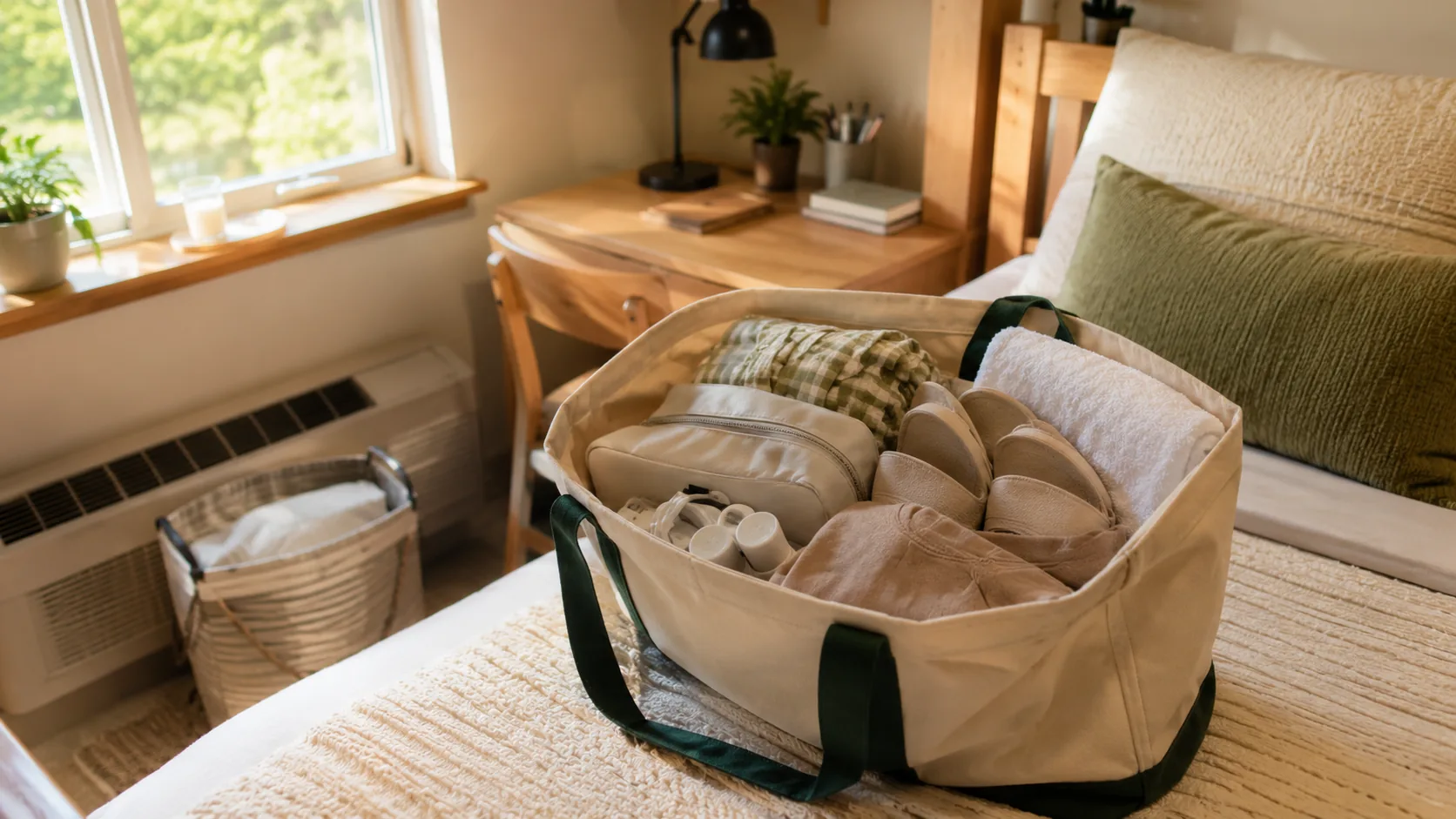
Before anything else: pack a box, bag, or bin specifically for the first night, separate from everything else, and keep it with you, not buried in the trunk under the fourth load of stuff.
This bag should have everything you need to sleep, get ready in the morning, and feel human: pillow, one set of sheets, a bath towel, toiletries, chargers, a change of clothes, and something small that feels like yours: a candle, a photo, a throw blanket. You won't unpack everything on move-in day, and you don't need to. But you should be able to sleep comfortably and wake up without digging through boxes at 6am.
This is also the bag that should hold any medication, your ID and any paperwork the school needs that first week, and your laptop charger specifically, not just "chargers" generally. The thing people forget isn't the charger itself, it's that it got packed in a box that's now somewhere in a hallway three floors down.
Pack a small health kit in this same bag, not buried somewhere in the truck order: pain reliever, bandages, a thermometer, the over-the-counter basics your household already reaches for. It'll sit untouched for weeks, and then a cold goes around the floor right when you least expect it. Need a starting point? Browse the College Health Kit Must-Haves list.
The Truck Order: What Comes Off First
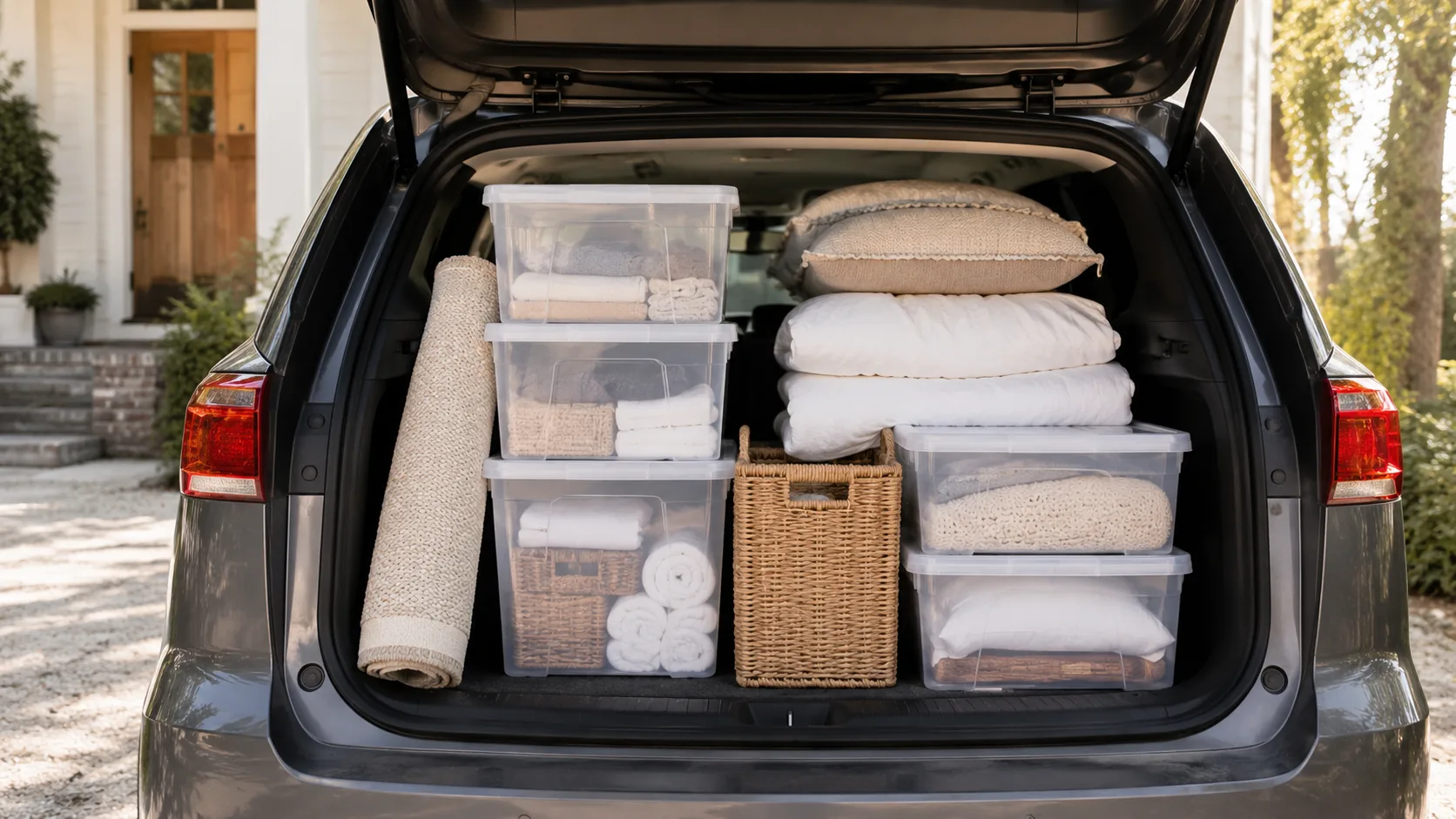
If you have help moving things in, this is the part worth deciding before you arrive, not while you're standing in a parking lot. A workable order: big or awkward items first (mini-fridge if your roommate hasn't already covered it, a rug, anything that needs two people), then bedding, then storage bins, then the desk box. Decorative or "nice to have" items go last, or wait for a second trip entirely.
The reason this order works is that it matches what you'll actually do once everything's upstairs: you can't set up storage until the bins are there, you can't make the bed until the bedding's there, and nothing decorative matters until the functional layer exists underneath it. Carrying things up in build order means you're not unpacking, repacking, and re-carrying things you brought up too early.
Bedding First, Everything Else Second
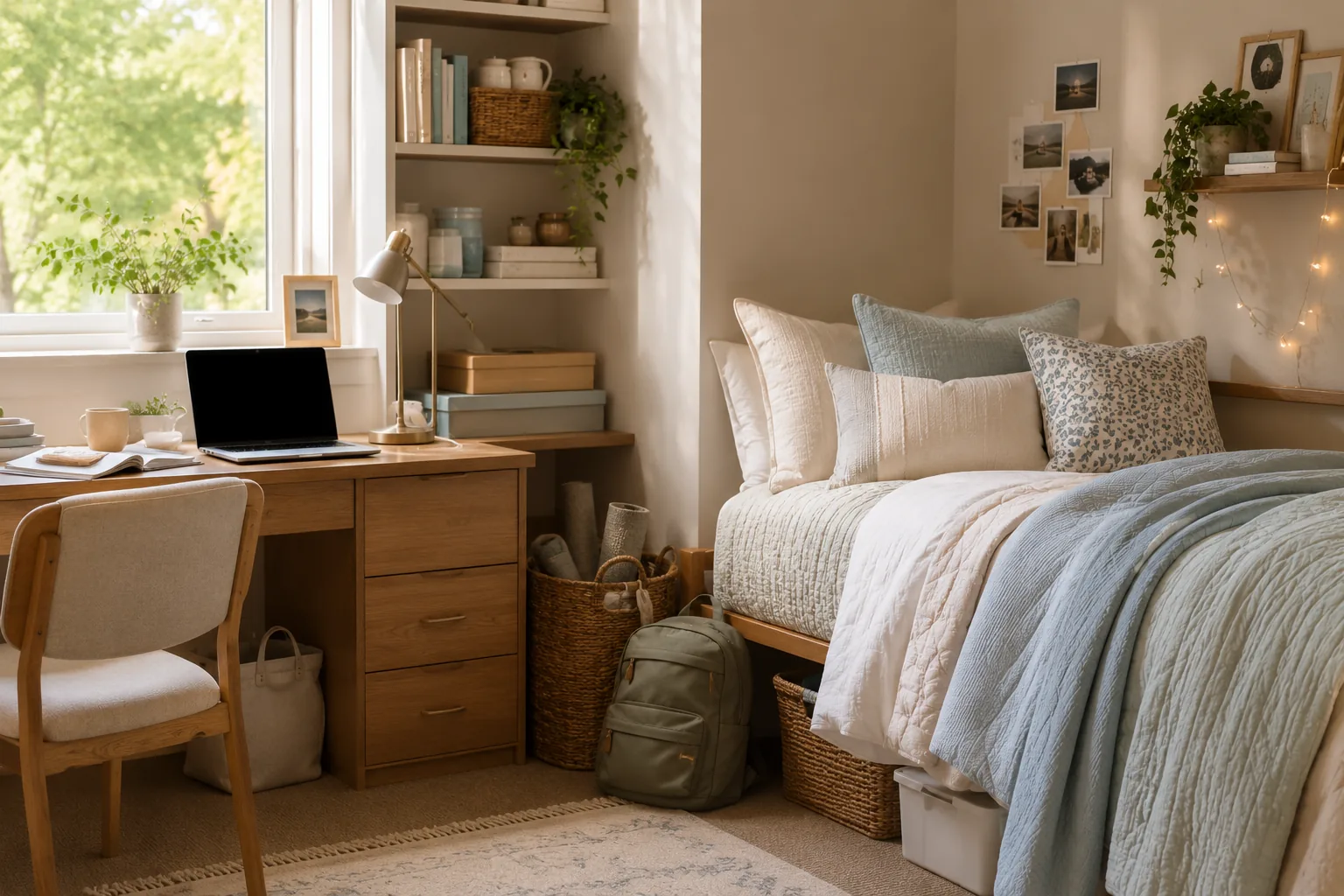
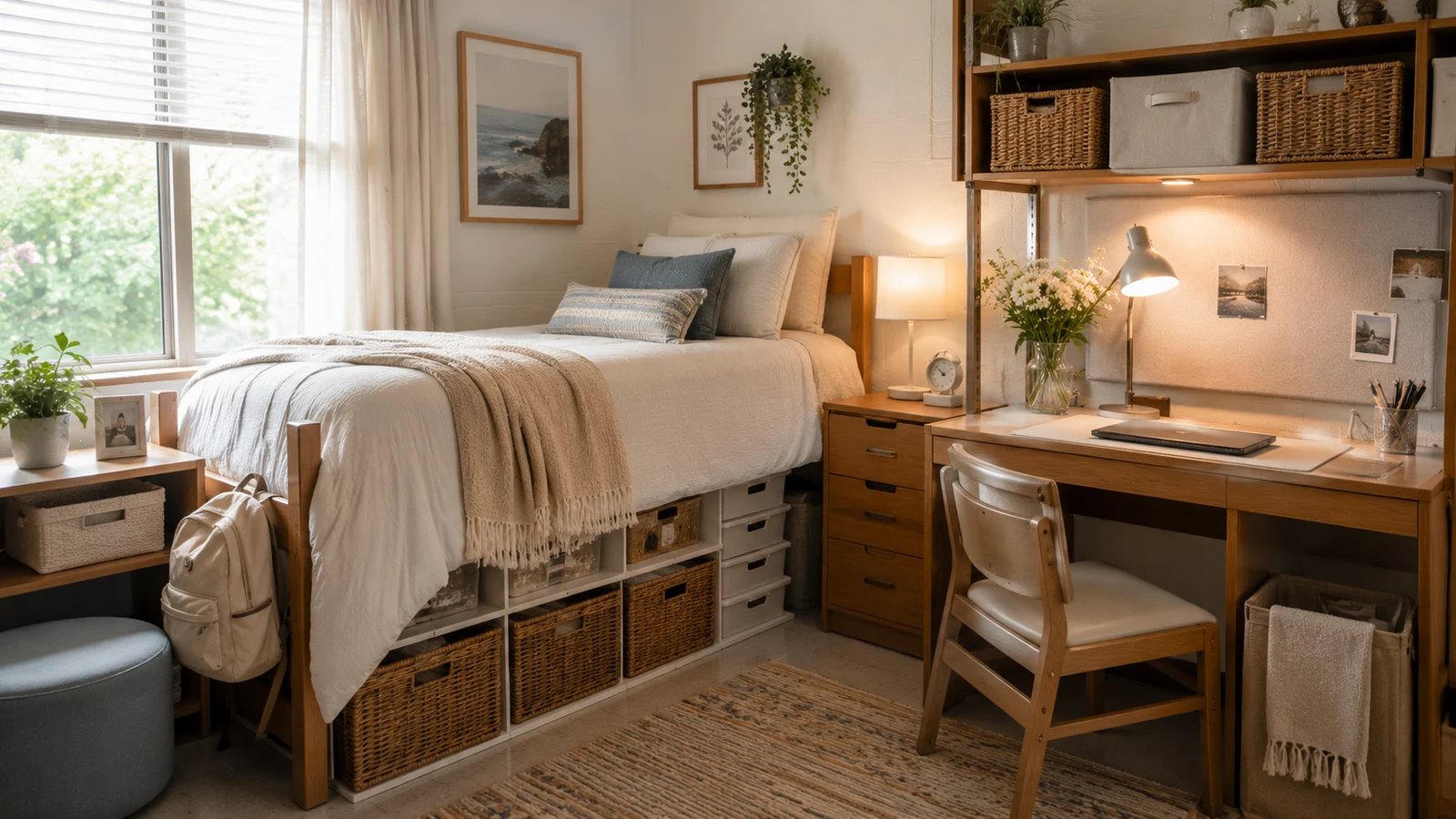
The dorm bed is twelve feet from the door. It's the first thing you see when you walk in and the last thing you see before you sleep. Getting it made before anything else, even before unpacking clothes, changes the feeling of the whole room immediately.
A good comforter set in a warm neutral (oatmeal, cream, warm grey) does the work of a much more decorated room. It makes the space look intentional before a single decoration goes up. Buy the quality one, not the cheapest option and not the most expensive, but the one with a proper fill weight and a cotton cover that gets softer with washing. It will last through every apartment after this one, which, it turns out, is exactly the direction dorm design is heading this year: fewer, sturdier pieces chosen to last, instead of a room's worth of things that get tossed in May.
Bring one extra pillow beyond what you sleep on. It makes the bed look styled, gives you something to prop against the wall, and you'll use it more than you think. Double-check the size before you buy anything: dorm beds are almost always Twin XL, which is longer than a standard Twin, and standard sheets simply won't fit. For more of the same warm, neutral layering at home, our Bedroom Finds collection has the full range.
Storage Before You Unpack Anything
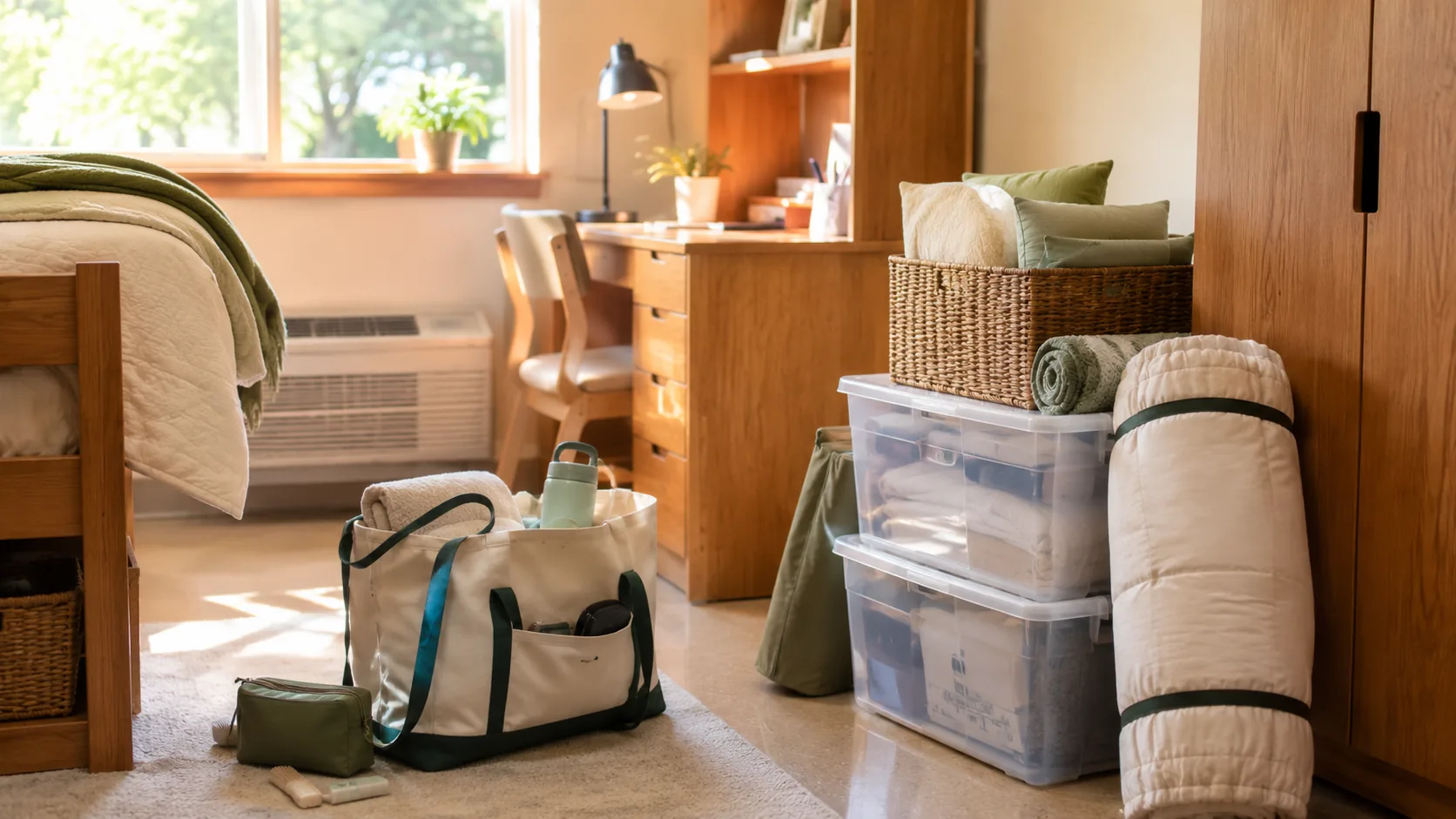
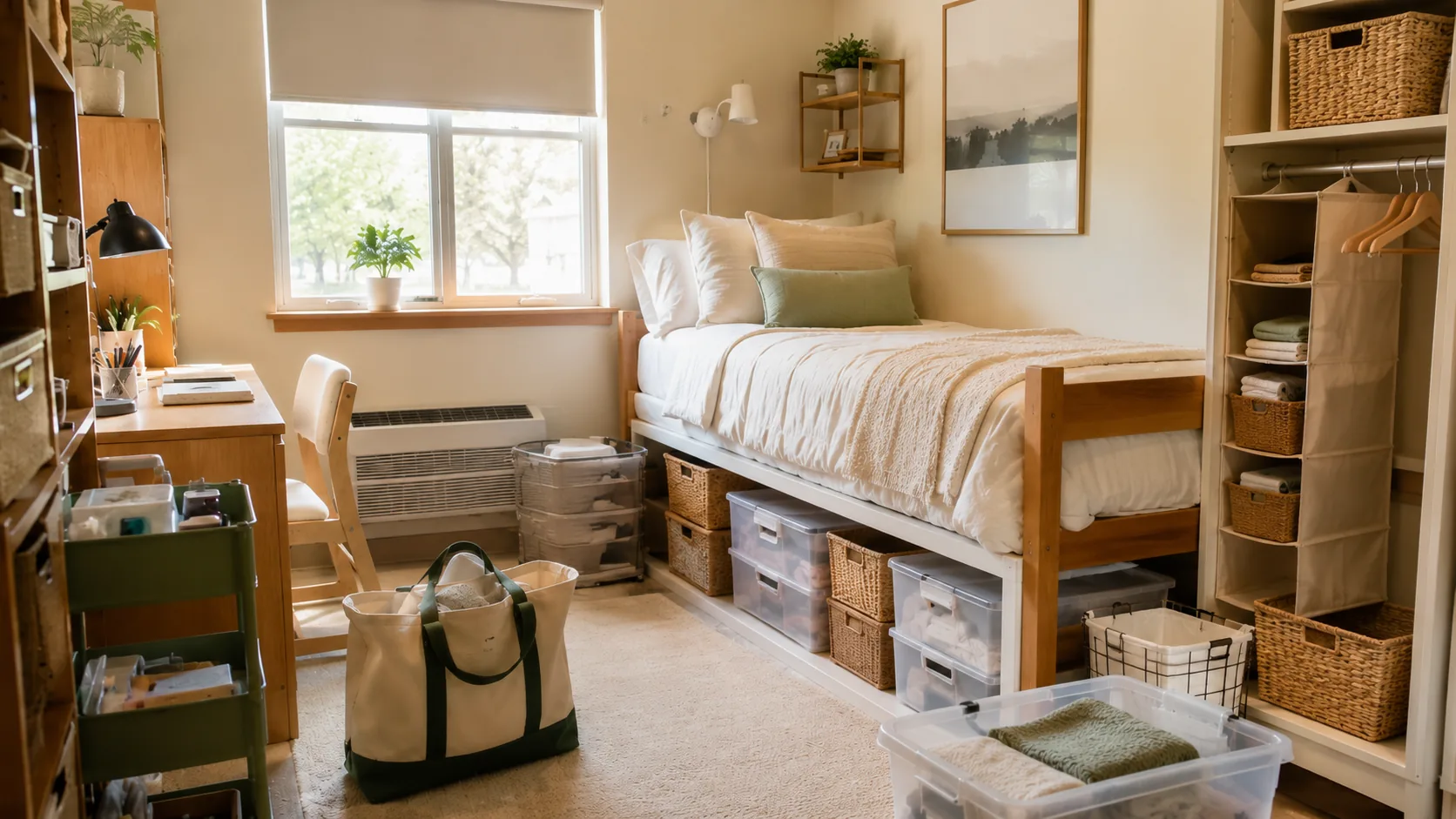
The mistake most people make is unpacking first and organizing second. Set up your storage systems before a single item comes out of a box. This means under-bed bins, door organizers, closet dividers: whatever you're using, put it in place first. Then unpack into it.
Under the bed is the most underused space in a dorm room. Two low rolling bins fit a surprising amount: off-season clothes, extra bedding, shoes, anything you need but not every day. Clear bins let you see what's inside without digging. Woven baskets on a shelf hold the things you reach for constantly (books, headphones, snacks) and look good doing it.
A hanging organizer on the back of the door is the move for toiletries, cleaning supplies, or the everyday items that would otherwise live on the desk and take over. Put it up before the first trip of boxes and you'll have somewhere for everything to land. The same goes for the inside of any closet doors, they're flat, vertical, completely unused space in almost every dorm room, and an over-the-door rack or a few adhesive hooks turns them into real storage instead of dead space.
SHOP DORM STORAGE
The under-bed bins, woven baskets, and door organizer above are all part of the Dorm Room Organization & Essentials list, see the full set and a few more options there.
What to Check Before You Buy Anything Else
The fastest way to spend money you didn't need to spend is buying something the school already provides, or buying something your roommate is also bringing. A few minutes on the school's housing page before move-in (checking what's already in the room, what's not allowed, and what's shared per floor rather than per room) prevents the most common version of this: two mini-fridges, two microwaves, or a microwave nobody was allowed to bring in the first place.
If you have a roommate and you've been in touch, this is worth one short conversation before move-in day, not a debate once you're both standing in the room with duplicate everything. Splitting the big shared items (a fridge, a microwave, a rug for the floor between the beds) is the single easiest way to cut move-in costs for both of you, and it also means less stuff competing for the same small floor space.
None of this is about being frugal for its own sake. It's that a dorm room has a fixed amount of floor space no matter what you buy, and every duplicate item is space you can't get back later.
The Desk, the Lamp, and One Detail That Makes It Yours
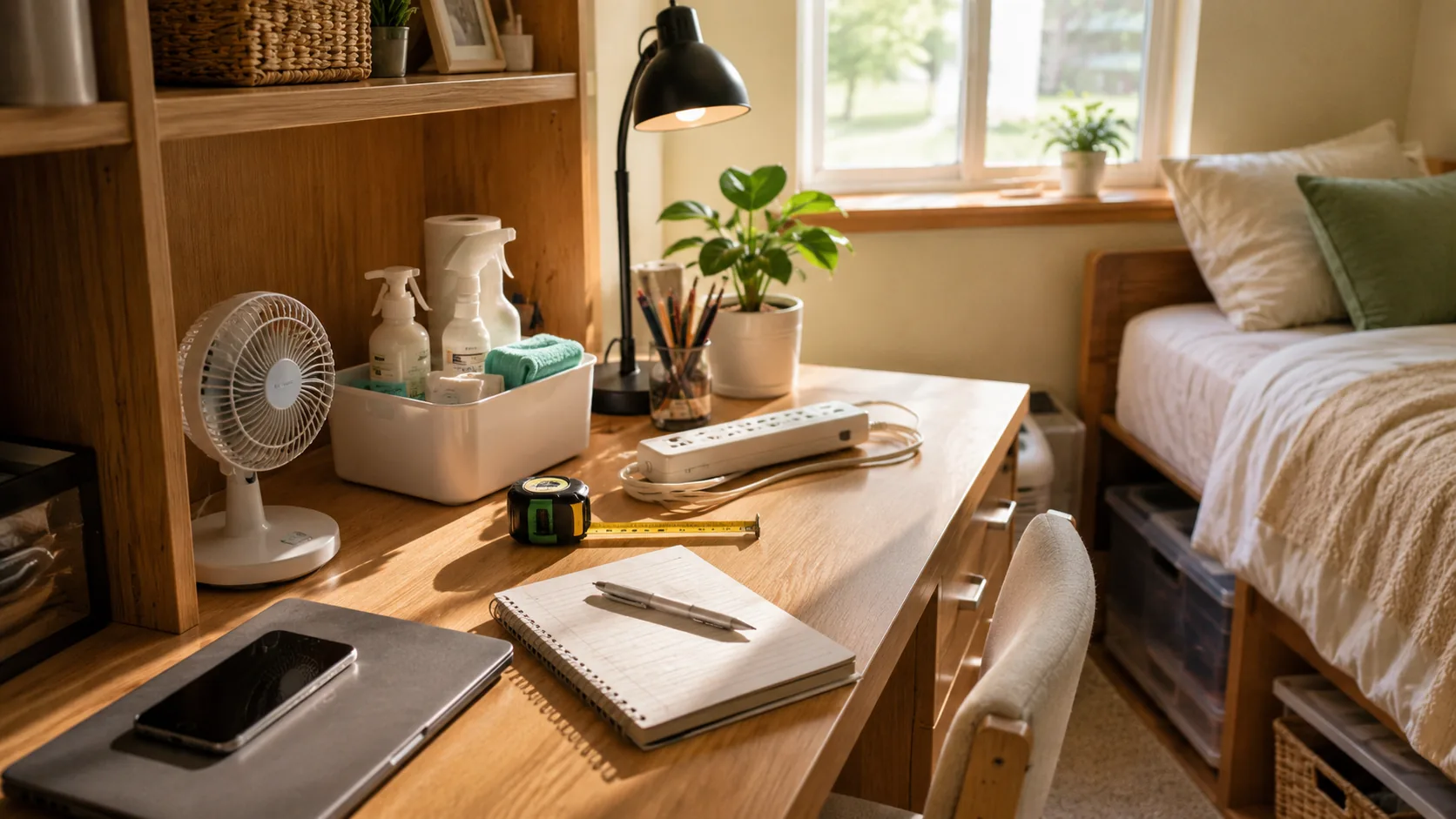
The desk lamp is the single most impactful thing you can add to a dorm desk. Not because of lighting (though that matters), because a warm light source at eye level changes the entire mood of the room after dark. The overhead fluorescent turns a dorm into a hospital waiting room. A good gooseneck lamp makes it feel like a place you chose to study.
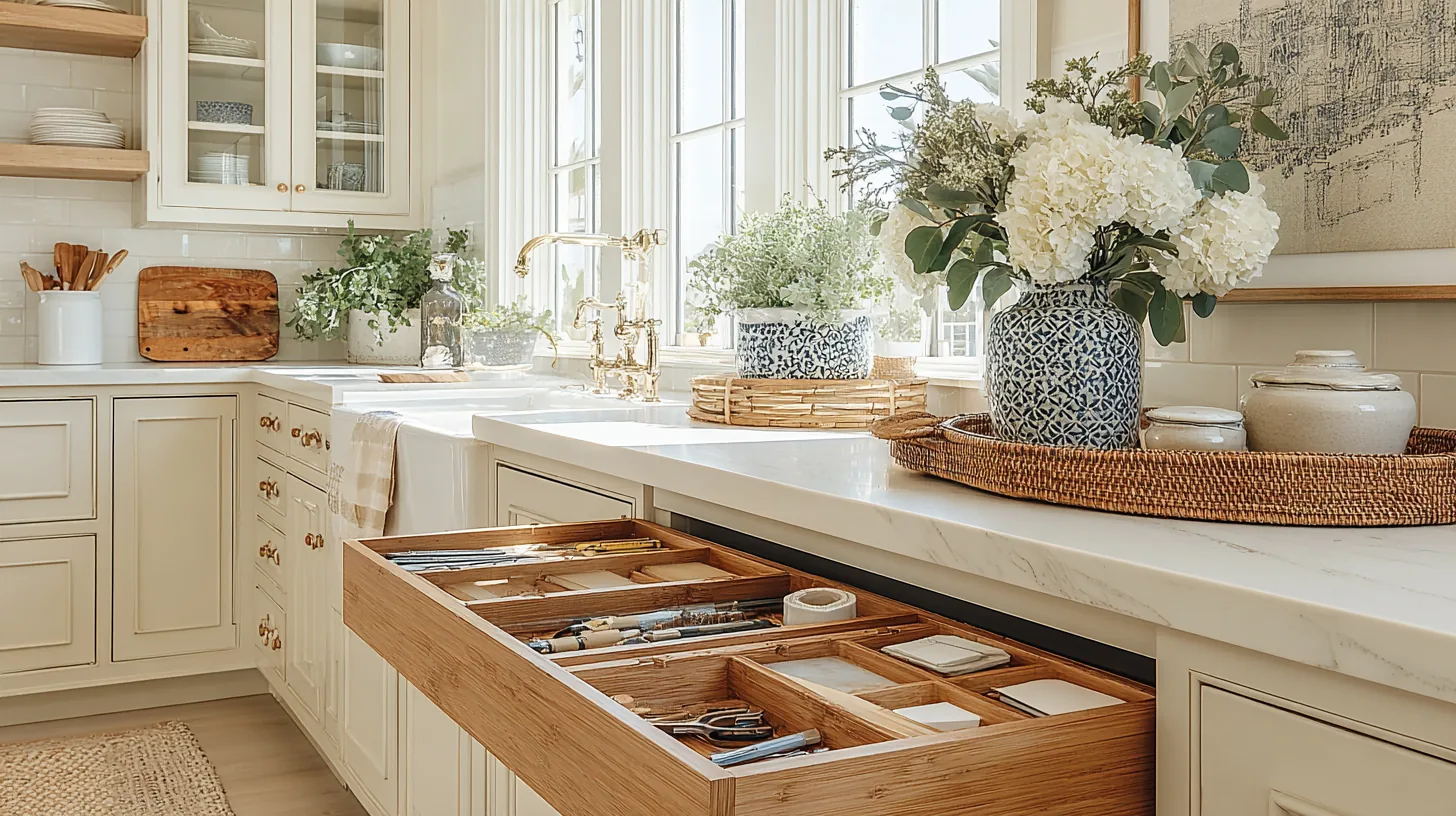
Beyond the lamp: a drawer organizer or small desktop caddy for pens, chargers, scissors, and the things that pile up. The desk works when you can sit down and immediately open your laptop. It doesn't work when you spend the first five minutes clearing a space to do that.
After the bed is made, the storage is set up, and the desk has a lamp, one personal detail is enough. Not a full gallery wall on move-in day. One thing that signals: I live here and I thought about it a little. A throw blanket in a different texture than the comforter. A framed photo propped on the desk rather than taped to the cinder block. A small plant if the window gets real light. A woven tray that holds the things that would otherwise scatter across the surface of the dresser. The College Dorm Must-Haves list is a good place to find a few more of these small, finishing touches.
The room doesn't need to look finished on day one. It just needs to feel like it's becoming somewhere. That's enough for the first night, and everything else, the gallery wall included, has the whole semester to happen.
FREE PRINTABLE
We turned all of this into two checklists you can print.
One packing list sorted by what to verify, coordinate, and pack in order, and a step-by-step for making the room livable in the first hour.
Get the free dorm checklists →Ready to shop? College Room Essentials · College Dorm Must-Haves · Dorm Room Organization & Essentials · College Health Kit Must-Haves