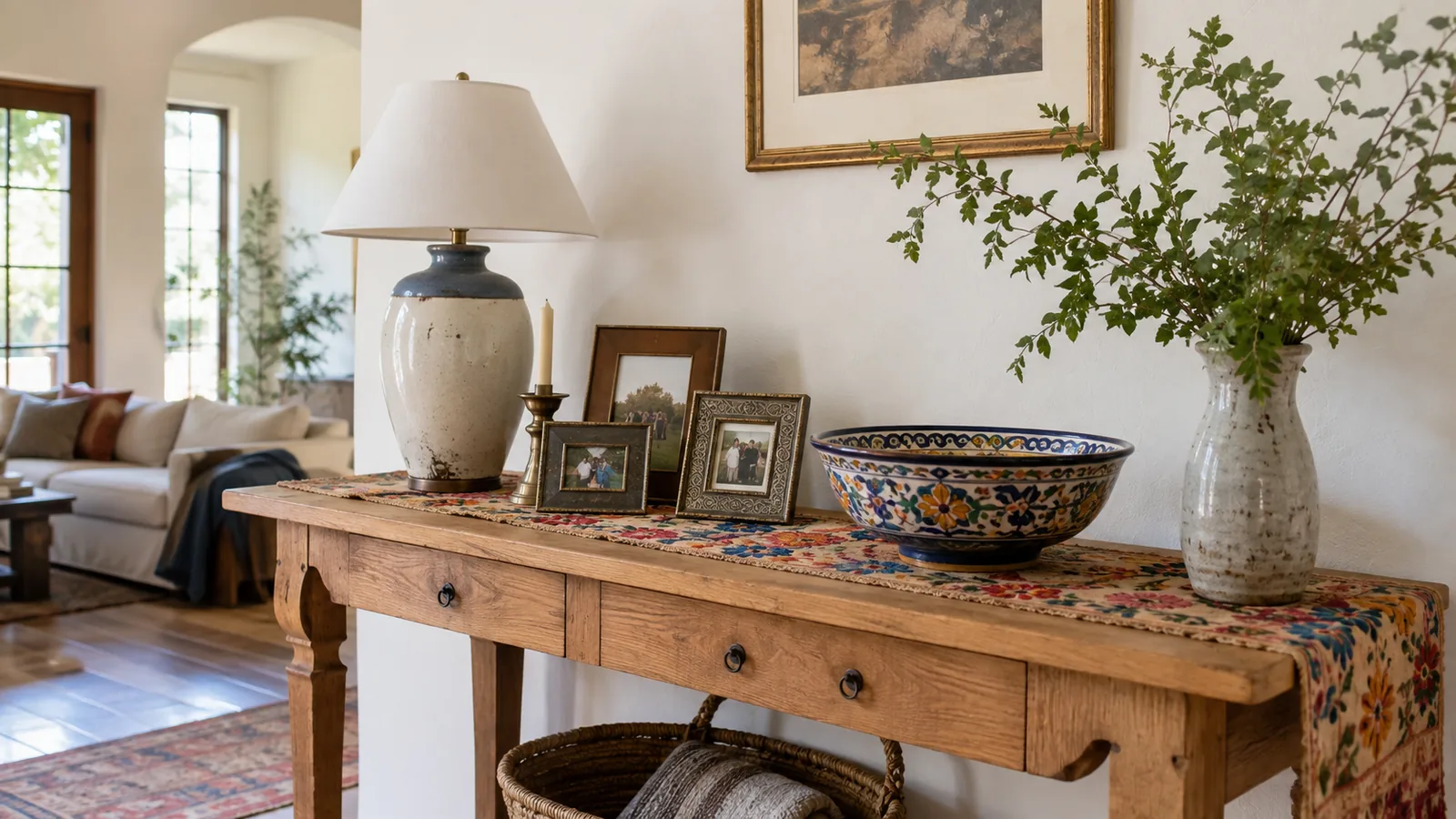
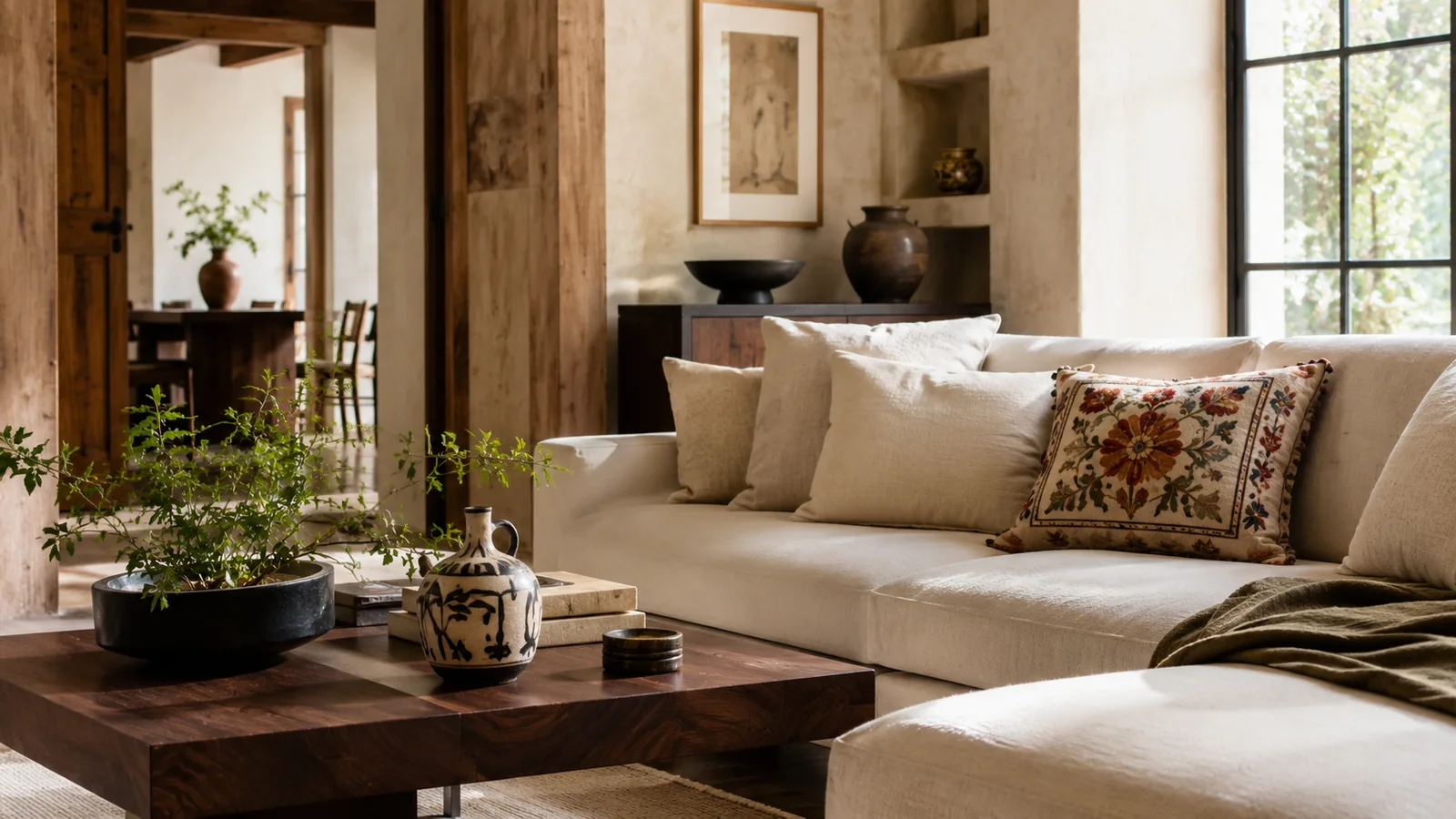
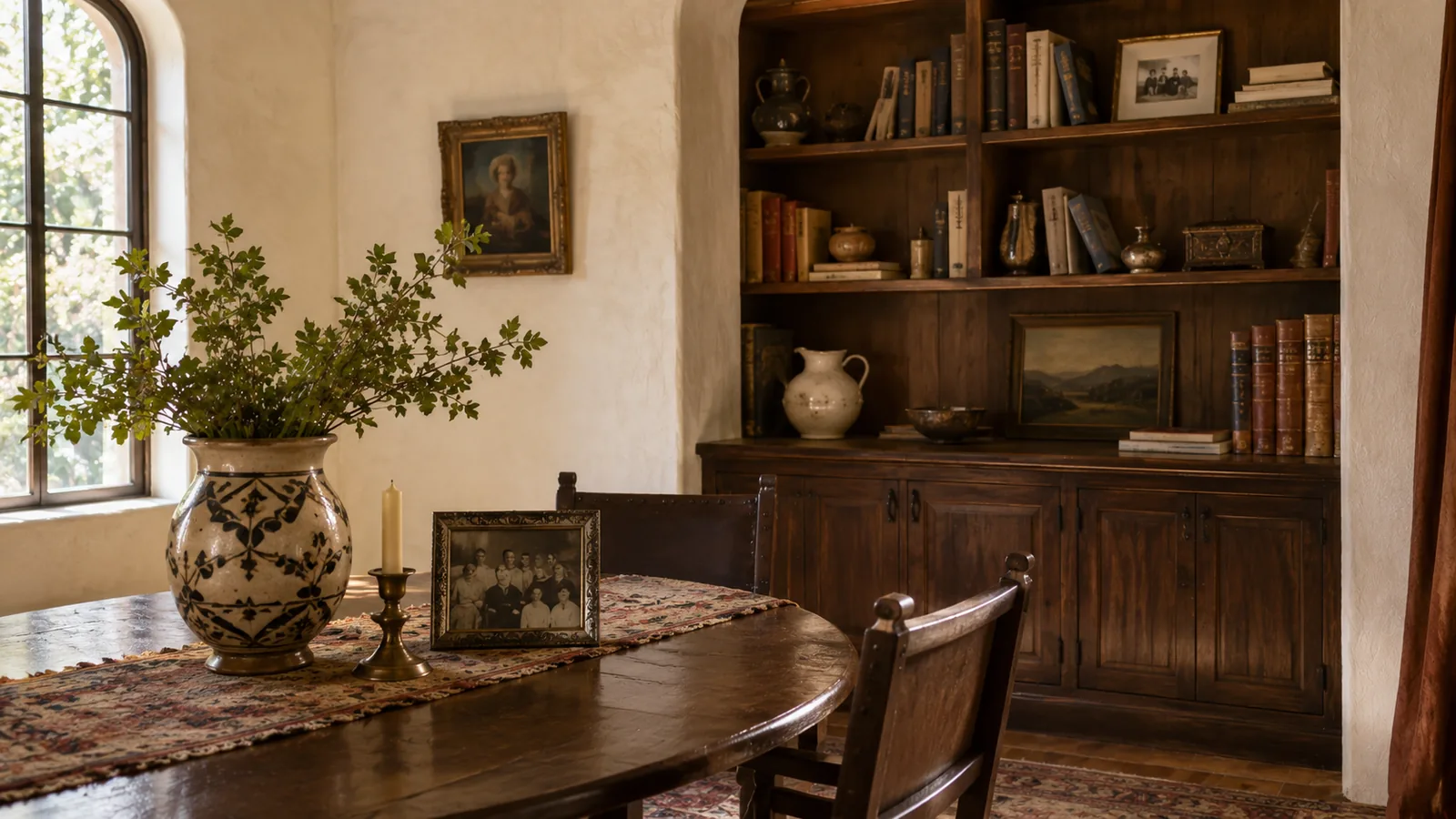
Some of the best pieces in a home aren't decor at all. They're the embroidered runner that's been in the family for two generations, the hand-painted bowl from a trip nobody's forgotten, the woven basket that's held everything from mail to laundry for years. Hispanic Heritage Month runs September 15 through October 15, and a meaningful way to mark it isn't necessarily a new seasonal display. It's giving the pieces that already carry real meaning an actual place in the home, not a box that only opens once a year.
This post contains affiliate links. As an Amazon Associate, I earn from qualifying purchases, at no extra cost to you. #ad
What This Actually Means, and What It Isn't
Hispanic Heritage Month honors a wide range of countries and traditions, not one aesthetic, and this piece draws from real, specific traditions rather than blending everything into a vague "Hispanic style." One honest note up front: this isn't Día de los Muertos. That's a distinct Mexican observance with its own history, symbolism, and traditions, and it deserves separate treatment rather than getting folded into this one.
More Than One Tradition
Hispanic Heritage Month encompasses many countries, communities, and traditions, and no single palette, material, or pattern represents all of them. This article uses several Mexican artisan traditions as specific examples rather than treating "Hispanic" as one decorating style. The larger idea applies regardless of where a family's own pieces and traditions come from.
Textile Traditions, Named Specifically
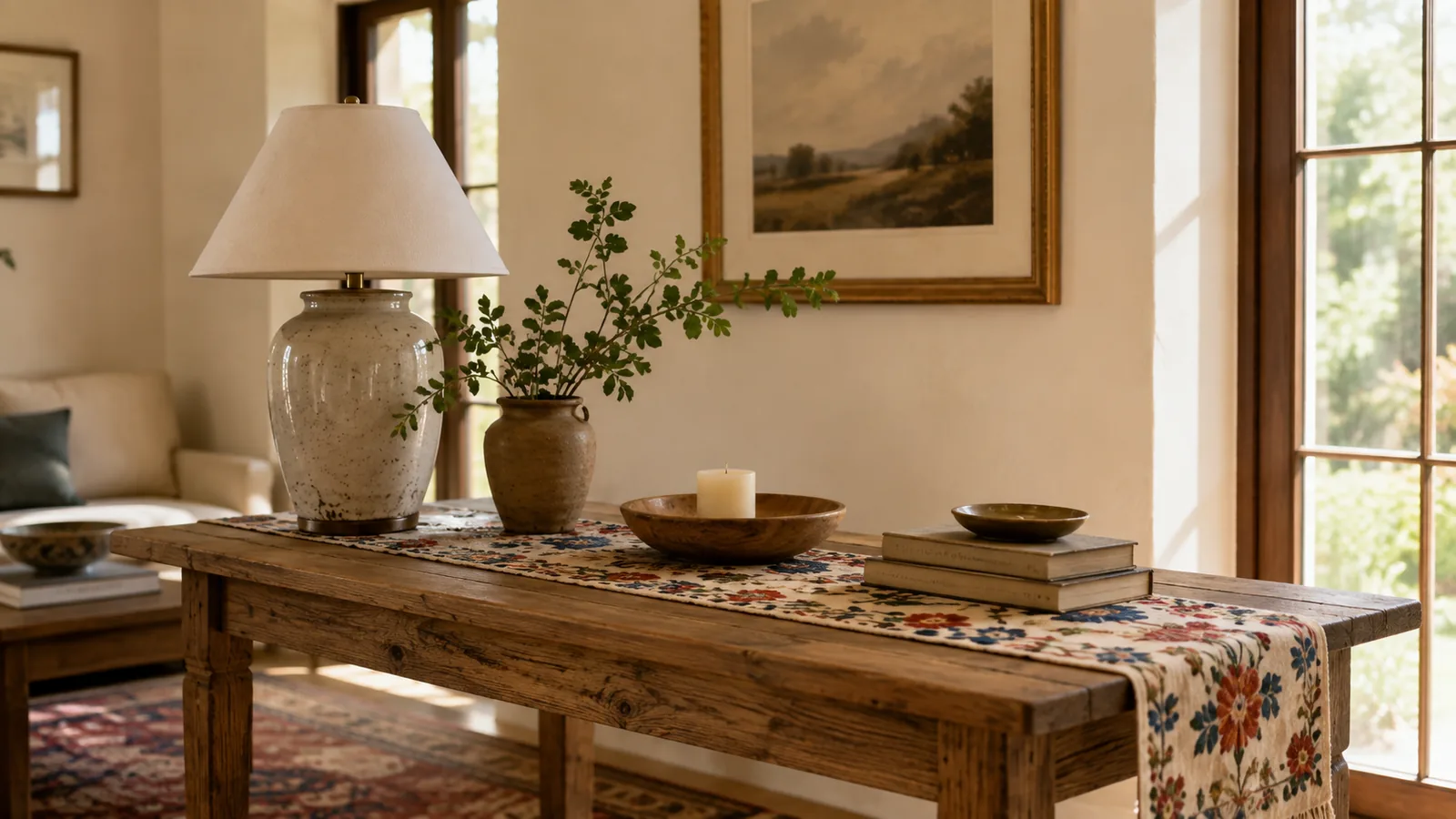
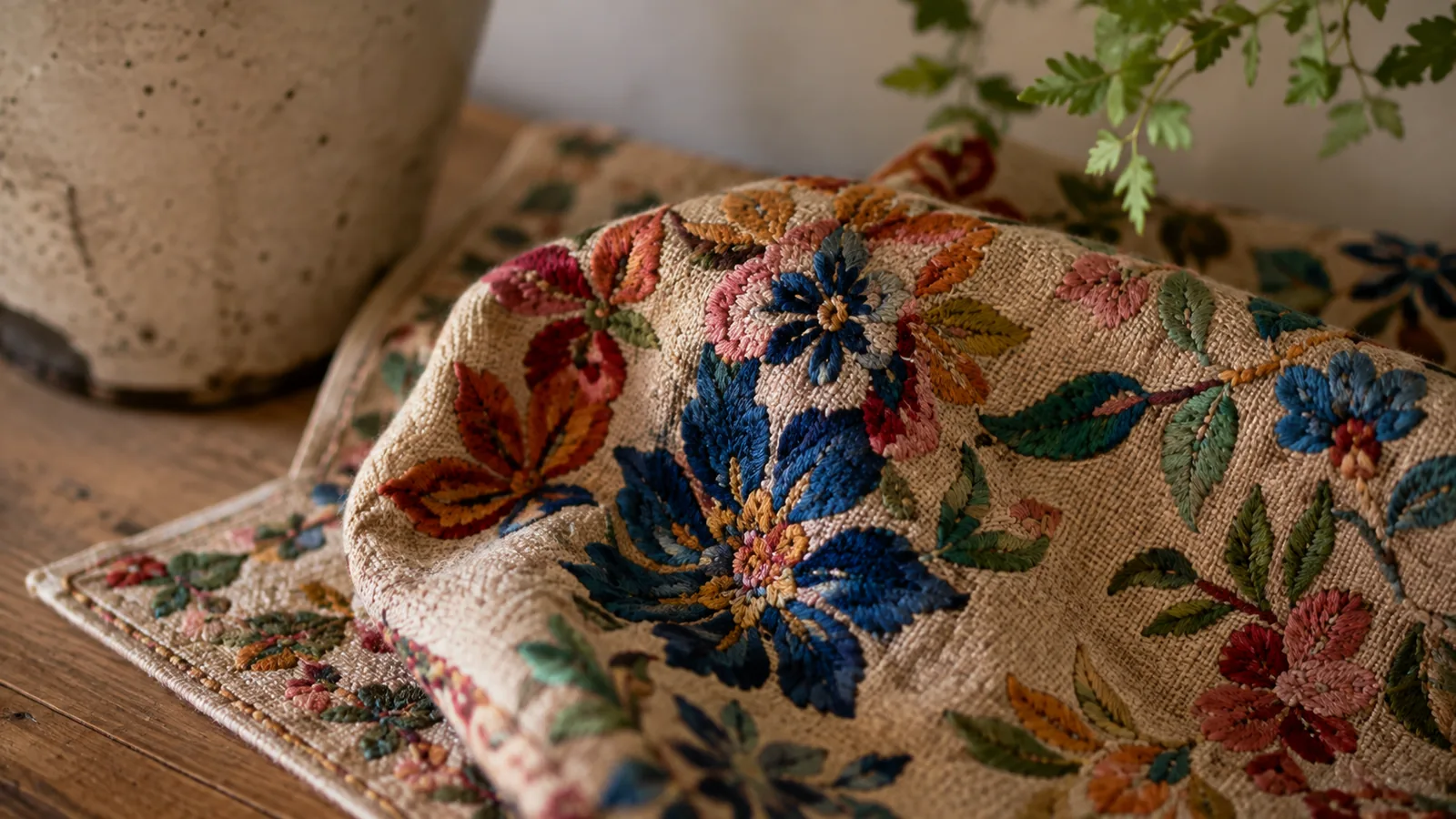
An embroidered table runner does more for a room than almost anything else on this list, because texture and handwork bring dimension in a way a flat printed pattern often doesn't. If you're drawn to embroidered textiles specifically, Tenango embroidery, the tradition carried by Ñuhú/Otomí communities in and around Tenango de Doria, Hidalgo, Mexico, is worth knowing by name rather than as a generic "boho" or "global" pattern. Naming a tradition correctly is part of respecting it.
That doesn't mean the only right choice is an original piece. Commercially produced embroidered or printed textiles inspired by this look can be a genuinely beautiful choice for a home too, as long as they're described honestly, as Tenango-inspired or Mexican-inspired, rather than as authentic Tenango embroidery.
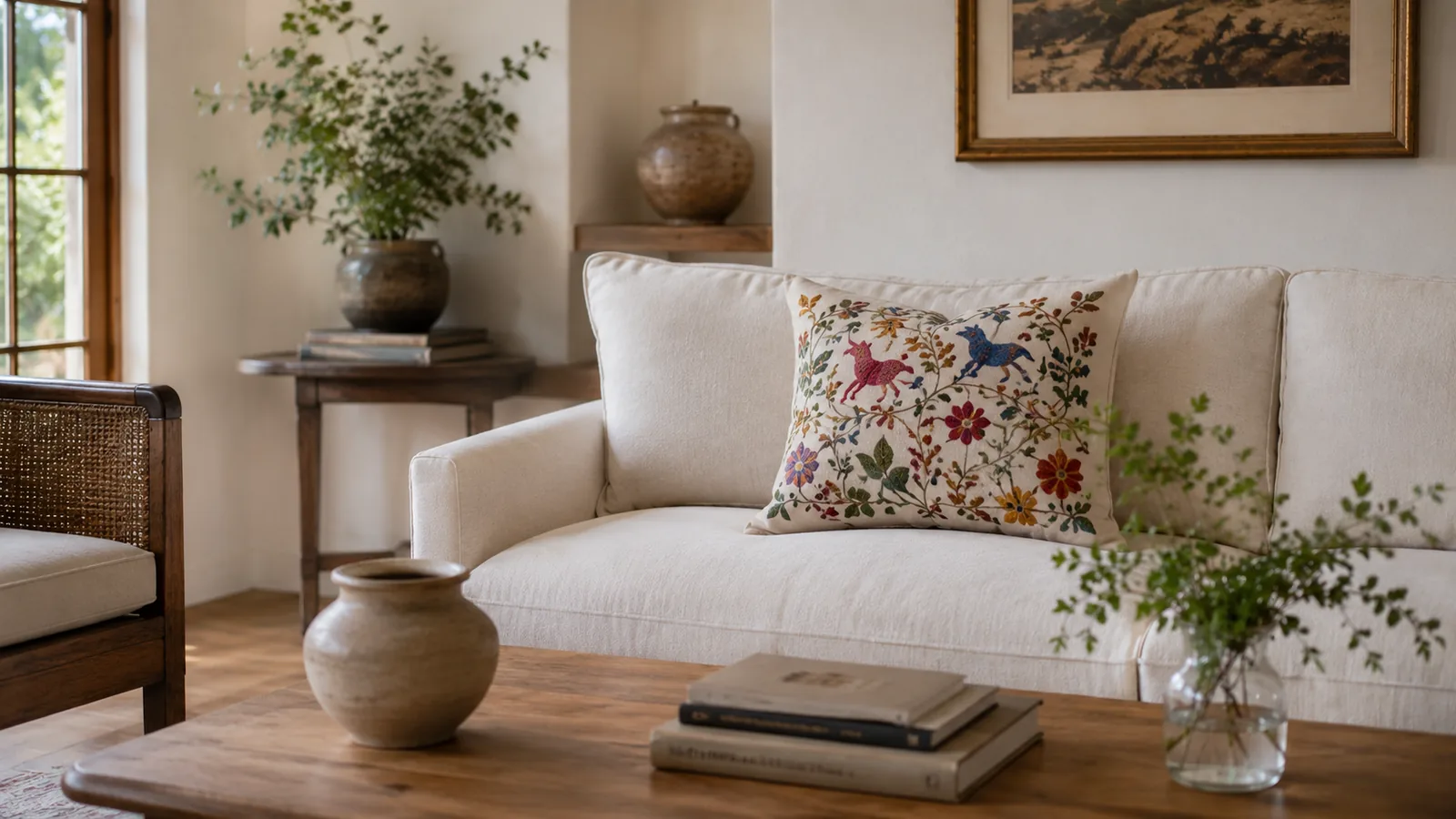
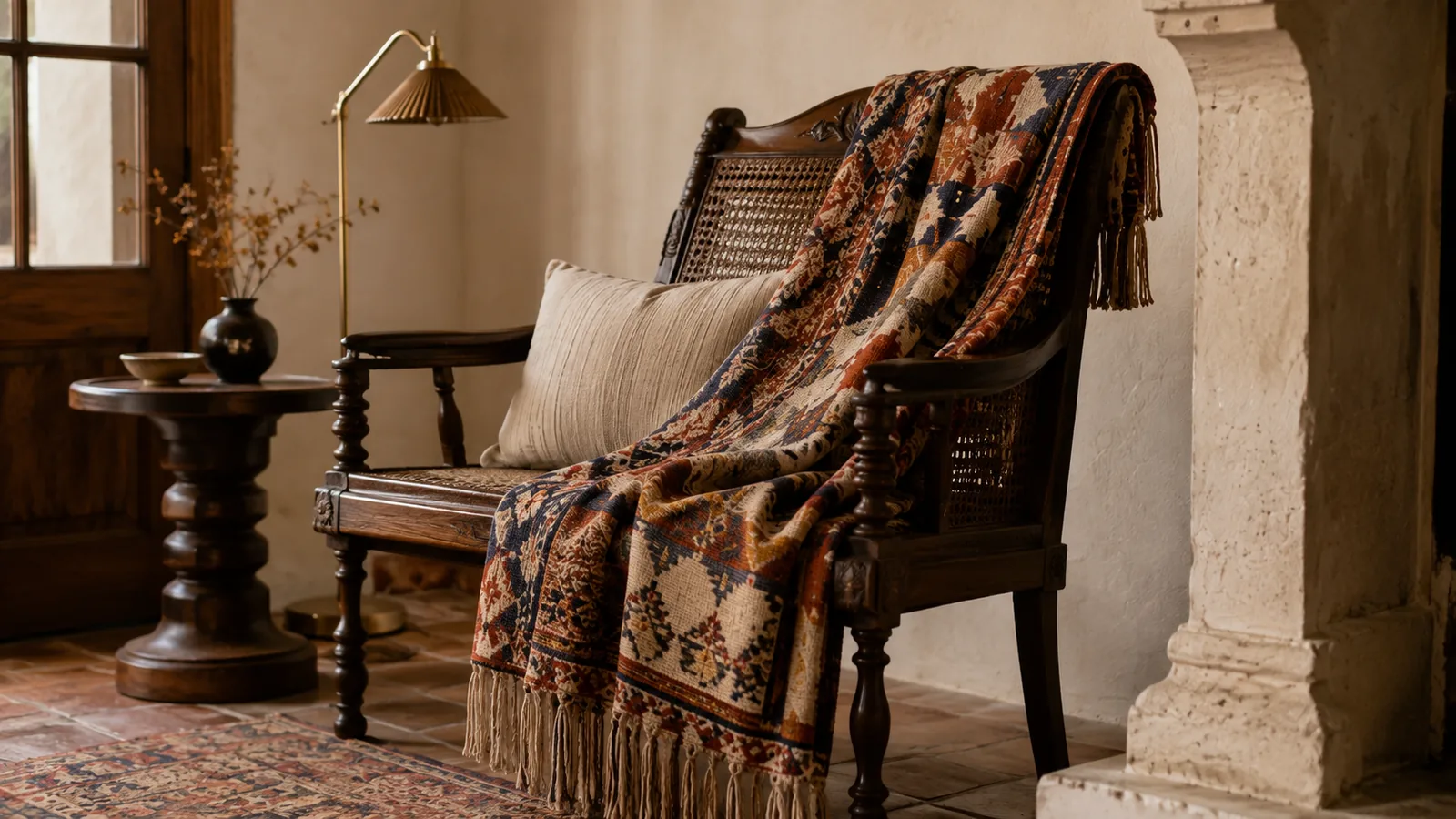
One textile is usually enough to start. A single runner on a console, one patterned pillow cover on an otherwise neutral sofa, a single woven throw over the back of a chair: each of these introduces color and story without needing the rest of the room to change around it. This is the same restraint that makes eclectic styling work anywhere in the house: one meaningful piece does more than five generic ones competing for attention.
The Table
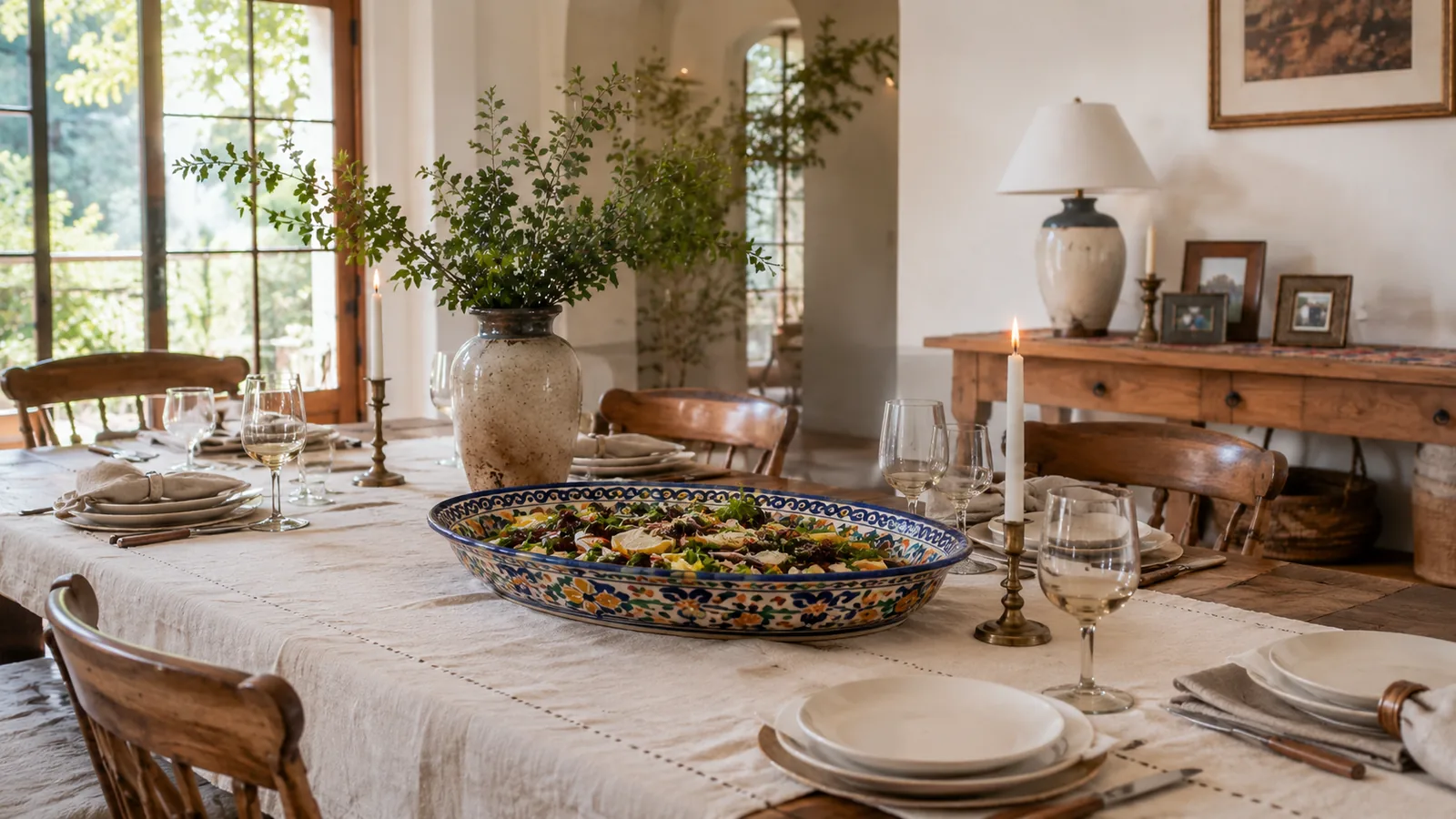
A table set with meaningful, collected pieces looks nothing like a table set with themed decor. Talavera from Puebla and Tlaxcala, Mexico, belongs to a specific ceramic tradition whose artisanal making process is recognized by UNESCO, alongside related ceramic-making traditions in Spain. Authentic Talavera belongs to that specific tradition and place of origin. Talavera-inspired ceramics are a different thing, not a lesser one, and they can still bring color and pattern into a home when they're represented honestly as inspired pieces rather than the origin-verified craft itself. One strong serving piece on a table does more than five small decorative objects scattered around it. If you already own pieces like this, this is the month to actually use them at the table instead of keeping them for display only.
Family Photos and the Stories Worth Hanging
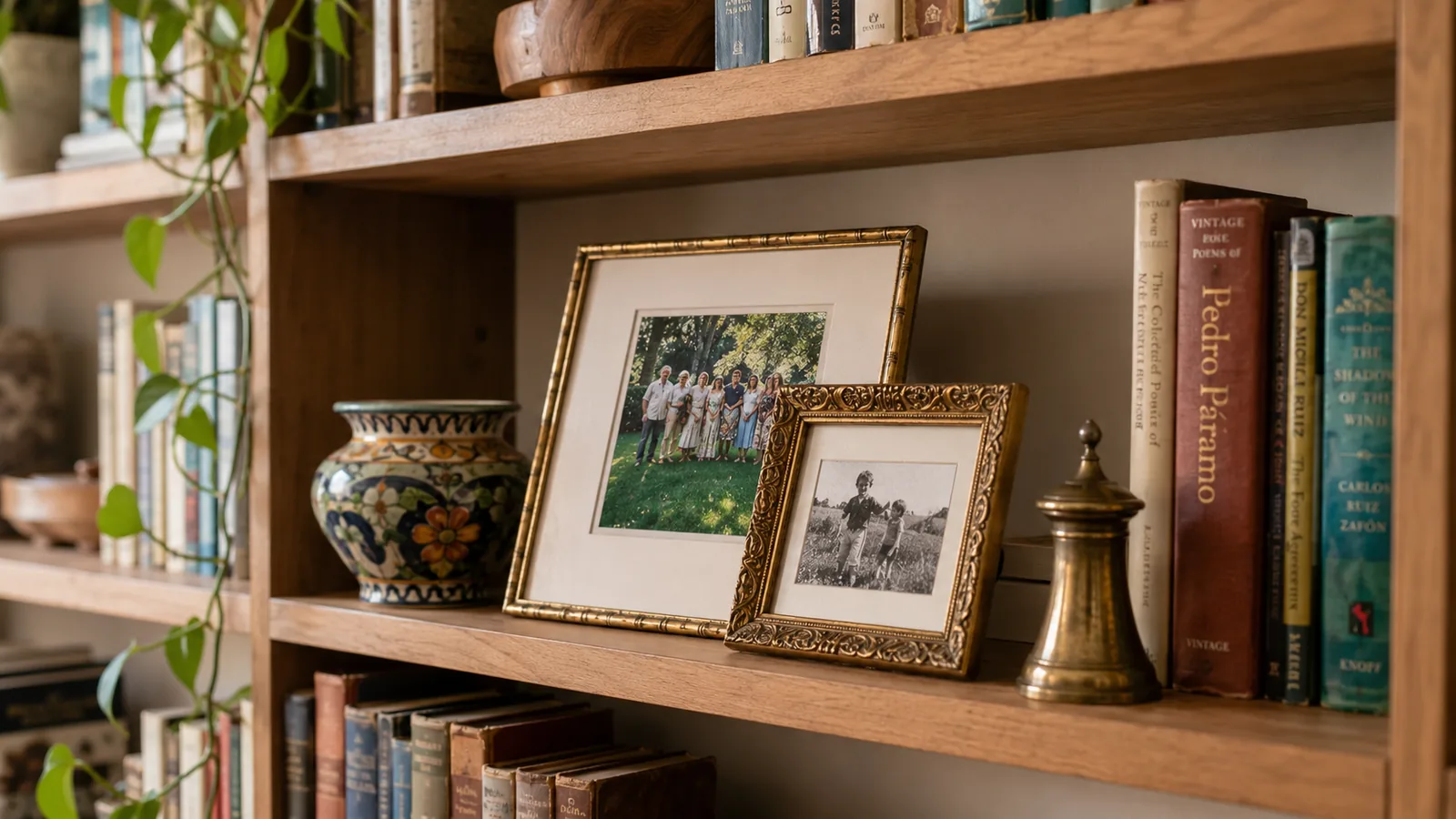
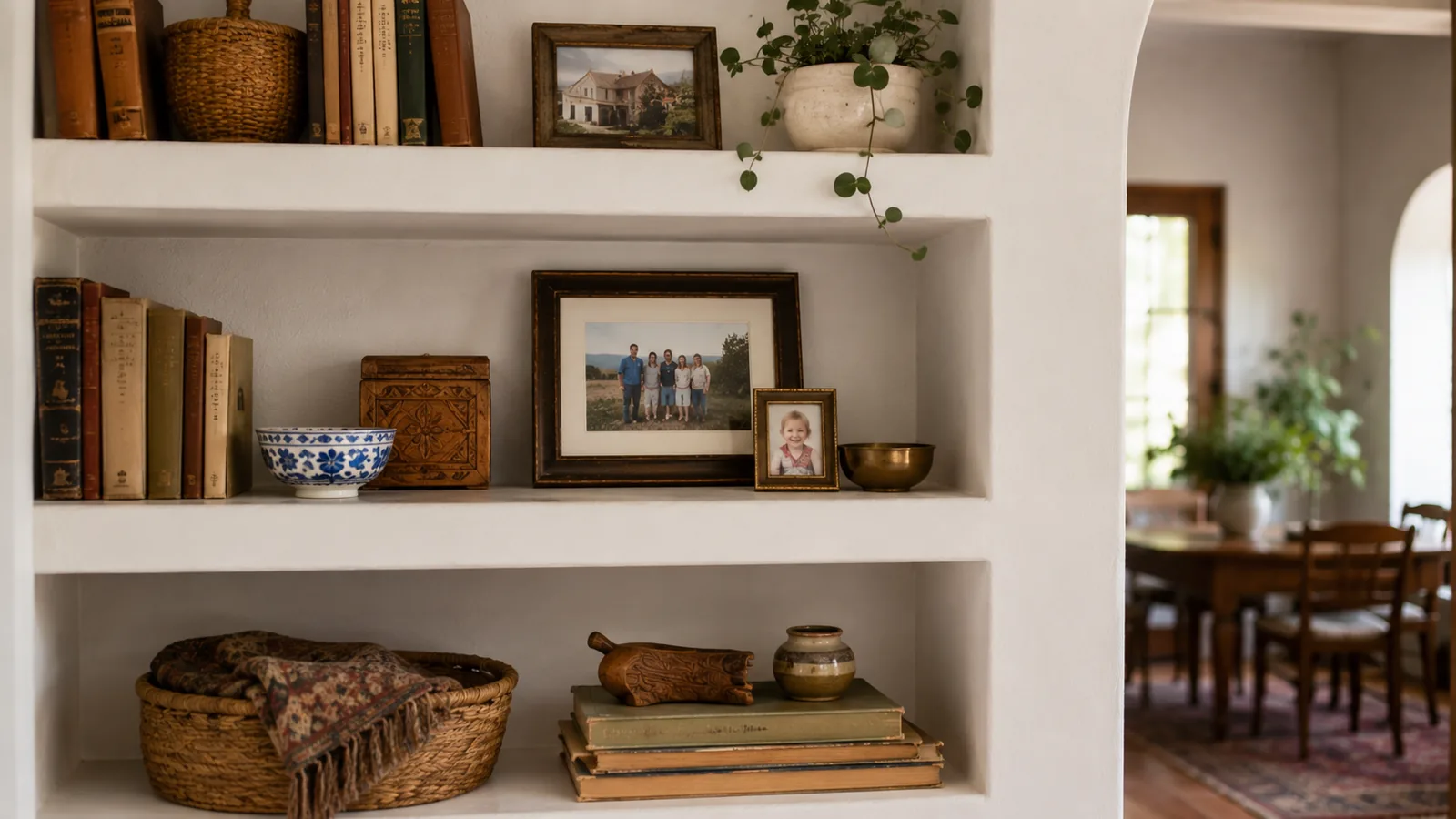
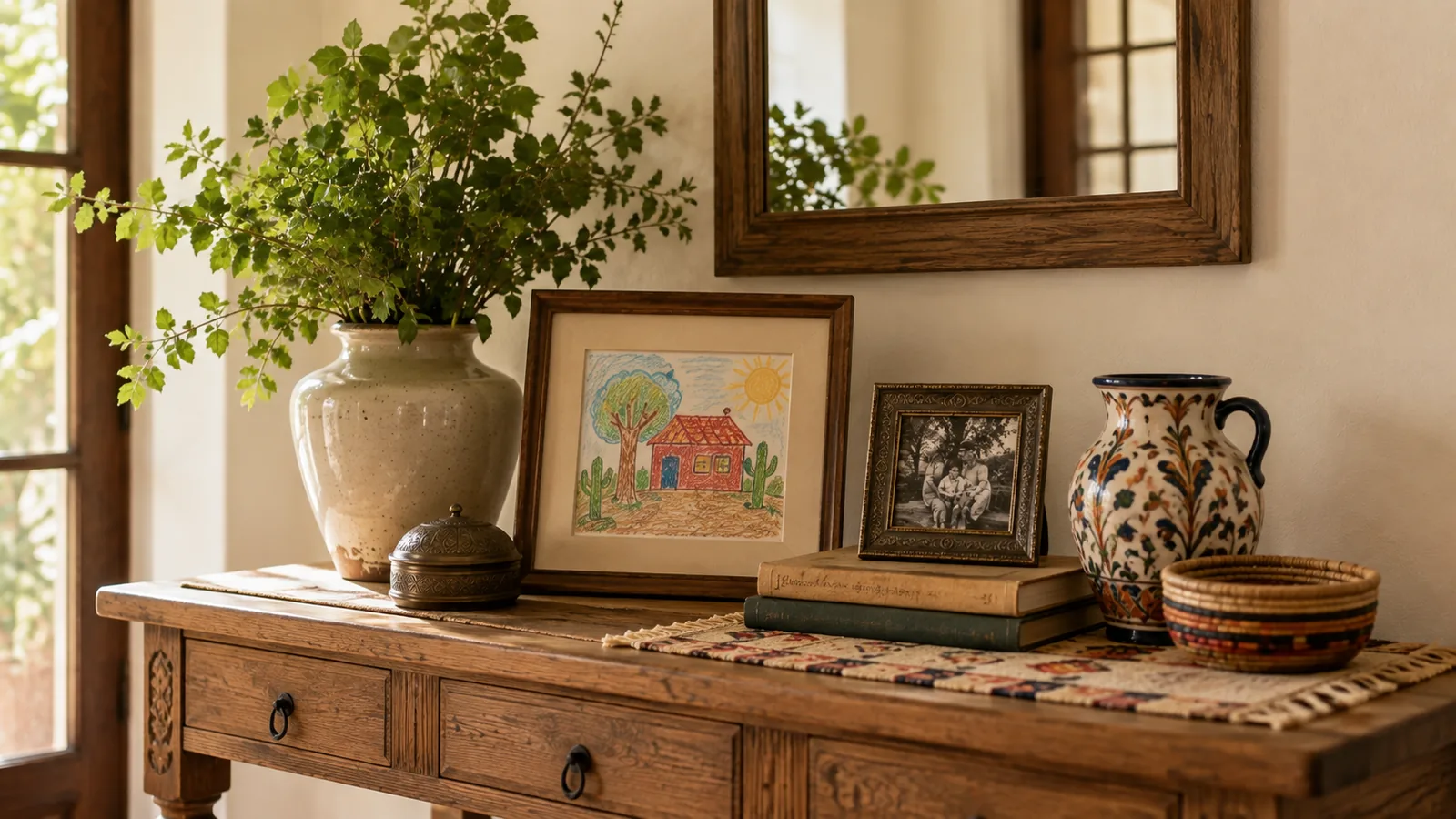
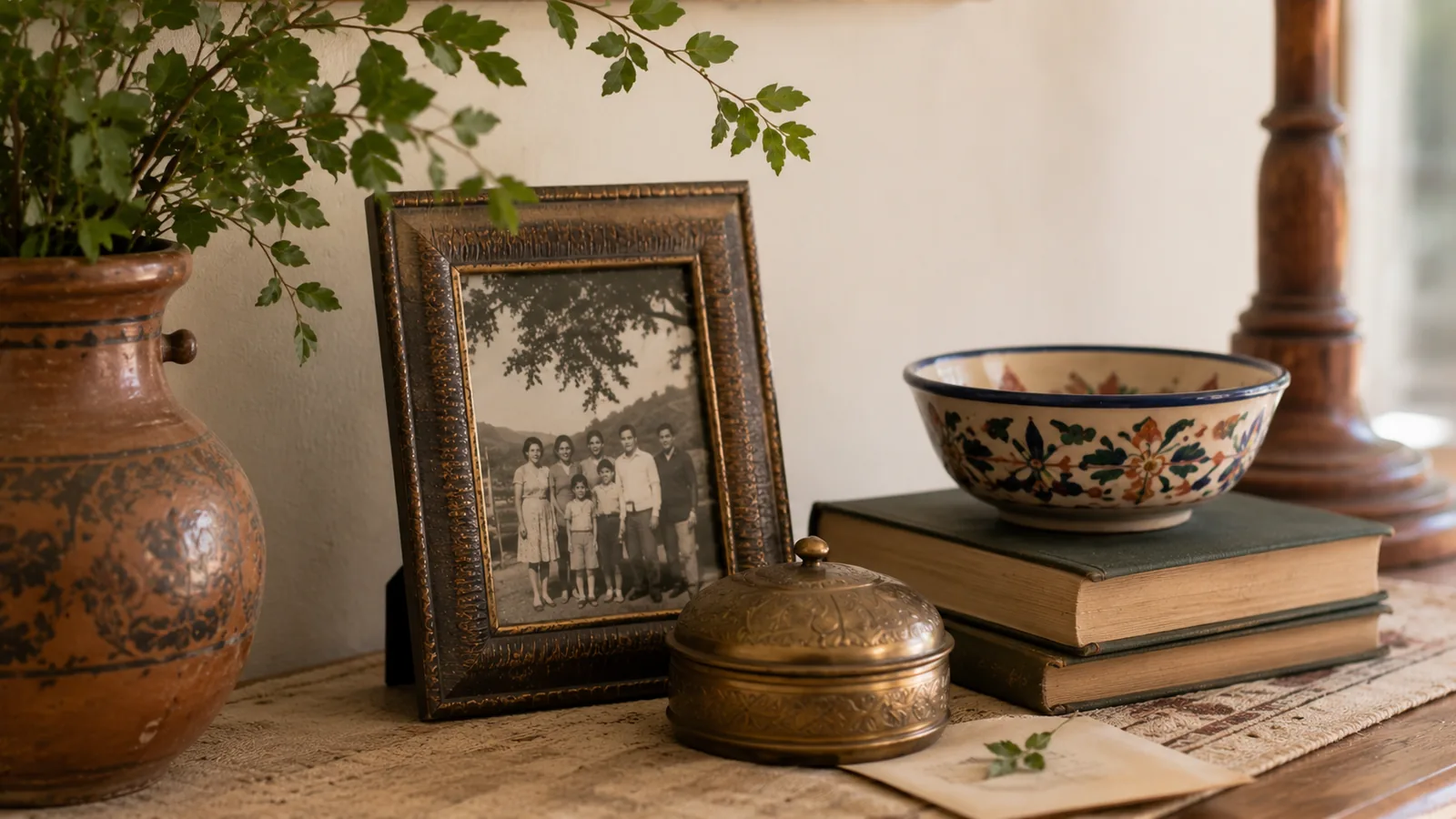
One of the most meaningful versions of this isn't a purchase at all. A small wall or shelf grouping of family photos, spanning generations if you have them, alongside a keepsake or two, does more for a home than any decor object on this list. This is where a grandparent's photo, a child's drawing, and a small inherited object can sit together intentionally instead of scattered across different rooms. If you're just starting a collection like this, a simple, consistent frame or shelf styling set gives it a real place to grow, one photo and one object at a time. It doesn't need to be finished to be worth starting.
If You Want One Temporary Celebration
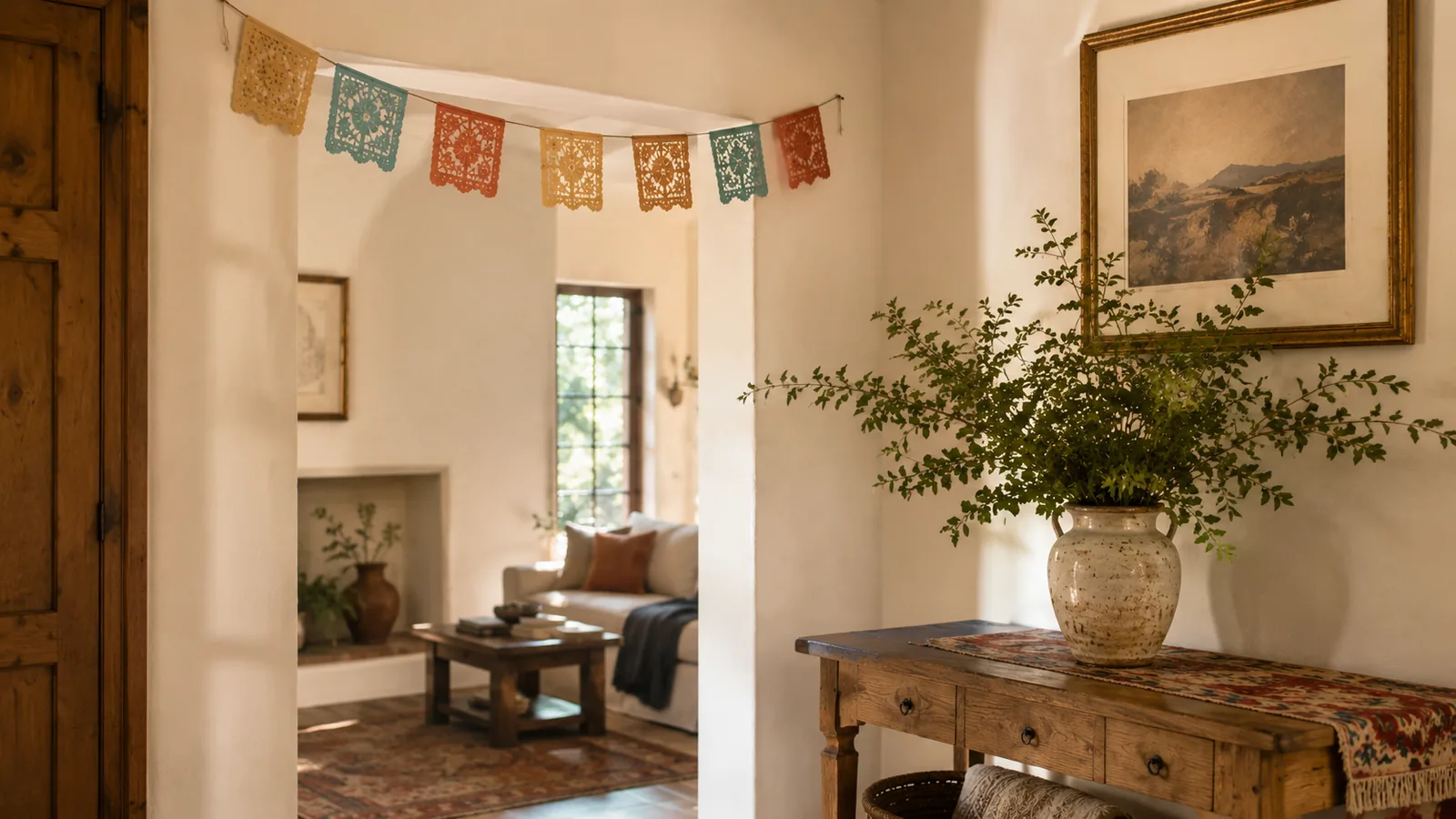
Papel picado, the cut-paper banners traditional to Mexican celebrations, is genuinely festive and, honestly, meant to be temporary; that's part of what it is. There's nothing wrong with hanging one for the month specifically, as a small, deliberate celebration rather than a permanent fixture. One banner, hung somewhere considered (a doorway, above a console, along a single shelf edge) rather than strung across an entire room, marks the occasion without competing with the pieces that are meant to stay up well past October 15.
What Stays Up Year-Round
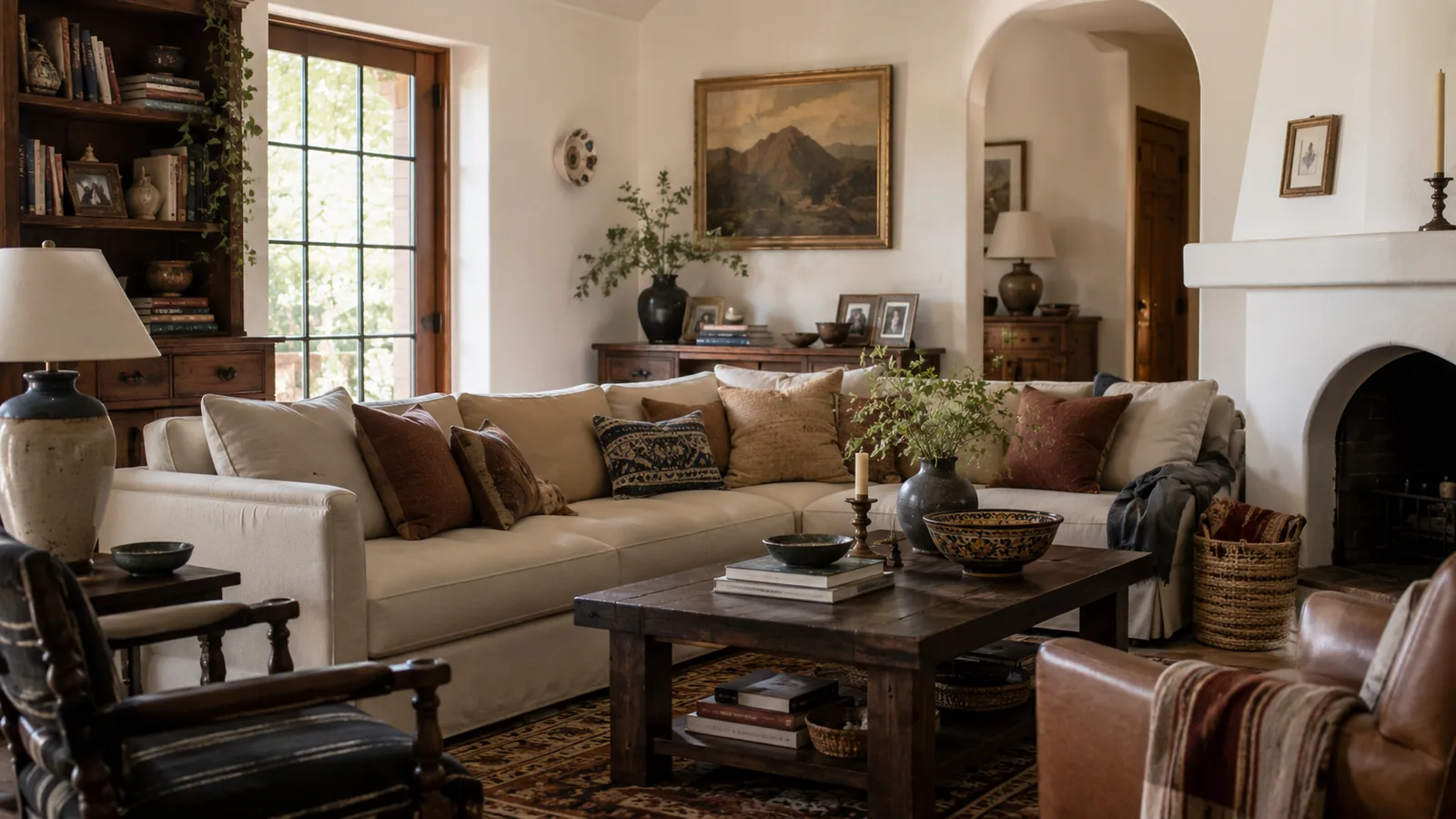
Here's what separates the pieces above: which of them earn a permanent place in the home rather than getting boxed away after October 15. A hand-painted, Talavera-inspired bowl on a console. A woven basket by the door, actually holding something. The family photo grouping from earlier. None of this needs to come down when the month ends, because none of it was ever just for the month. The papel picado banner, on the other hand, probably does come down, and that's fine; it was never meant to stay.
That's the real test for anything on this list: would it still make sense in the room on October 16th? That distinction, not the calendar, is what should decide what's genuinely part of the home and what was only ever decoration. This is the same idea behind everything Casita writes about making a house feel like home: the things that matter don't get seasonal treatment, they get a real place.
A Note on Doing This Well
There's a real difference between a genuinely artisan-made piece, with a known origin and technique, and a commercially produced piece inspired by that same tradition, and both can have a real place in a home. Talavera and Tenango, named above, are real, specific traditions with a real place and history behind them. The more clearly a piece identifies its maker, origin, and technique, the easier it is to understand its provenance and the tradition behind it.
If what you want is an original piece with real provenance, buying directly while traveling, or from a verified maker, cooperative, museum shop, gallery, or reputable artisan source, can make that provenance easier to establish. If what you love is simply the color, the embroidery, the pattern, the design influence, there's nothing wrong with choosing an inspired, commercially produced piece for your home instead. The part that actually matters isn't which one you choose. It's not representing an inspired piece as an original traditional craft.
Inspired Finds
For readers drawn to the color, embroidery, pattern, and craft influences explored here, Hispanic Heritage: Artisan-Inspired & Textile Finds gathers accessible embroidered, printed, and decorative pieces with Hispanic-inspired design influences. The collection is broader than the Mexican examples discussed in this article.
These are inspired designs rather than authenticated artisan-made pieces, and that distinction is intentional.
SHOP THIS ARTICLE
This Isn't About the Month
These are pieces that already mean something. Hispanic Heritage Month is just the reason to finally give them a real place in the house, not the reason they matter.