Early fall is not a deadline. It's the few weeks between "still summer" and "genuinely autumn," and most decorating advice skips right over it: treating the season like a switch to flip, all pumpkins and plaid on one day and beach towels the day before. A home doesn't need to move that fast.
This is a plan for the in-between: keep what still works from summer, add a small number of flexible warm layers, and hold the rest (the full harvest displays, the heavy textiles, the Halloween pieces) until the calendar catches up.
This post contains affiliate links. As an Amazon Associate, I earn from qualifying purchases, at no extra cost to you. #ad
Early Fall Is a Transition, Not a Complete Reset
A home doesn't stop feeling like summer the moment September starts. The days are still long, the windows are still open some afternoons, and a room that's been working all summer doesn't suddenly need every trace of it removed. Early fall decorating works as an edit to what's already there (a few things added, a few things put away, most of it left alone) rather than a full room-by-room overhaul repeated every October.
The three moves that make up that edit are simple to hold in mind: Keep what's still doing its job, Warm the room with a small number of flexible additions, and Wait on anything that only makes sense once the season is fully underway. Every section below is one of those three.
Start With a Seasonal Inventory
Before anything gets added, look at what's already stored from last fall. Pull it out, and be honest about three things: what still matches the space, what got damaged or faded enough to skip, and what never got used last year despite taking up a bin's worth of room. That last category is the one worth being strict about, if a piece stayed in storage all last season, pause before giving it space for another year.
This step also answers the shopping question before it becomes one. Once you know what's already usable, what's left is a short, specific list instead of a vague sense that the house needs "fall stuff." Sort what comes out of storage into the same three categories the rest of this plan uses: keep it out and use it as-is, keep it but let it wait for a later week, or let it go. If you skipped a piece last year, decide whether it still belongs before placing it back in storage.
What to Keep From Summer
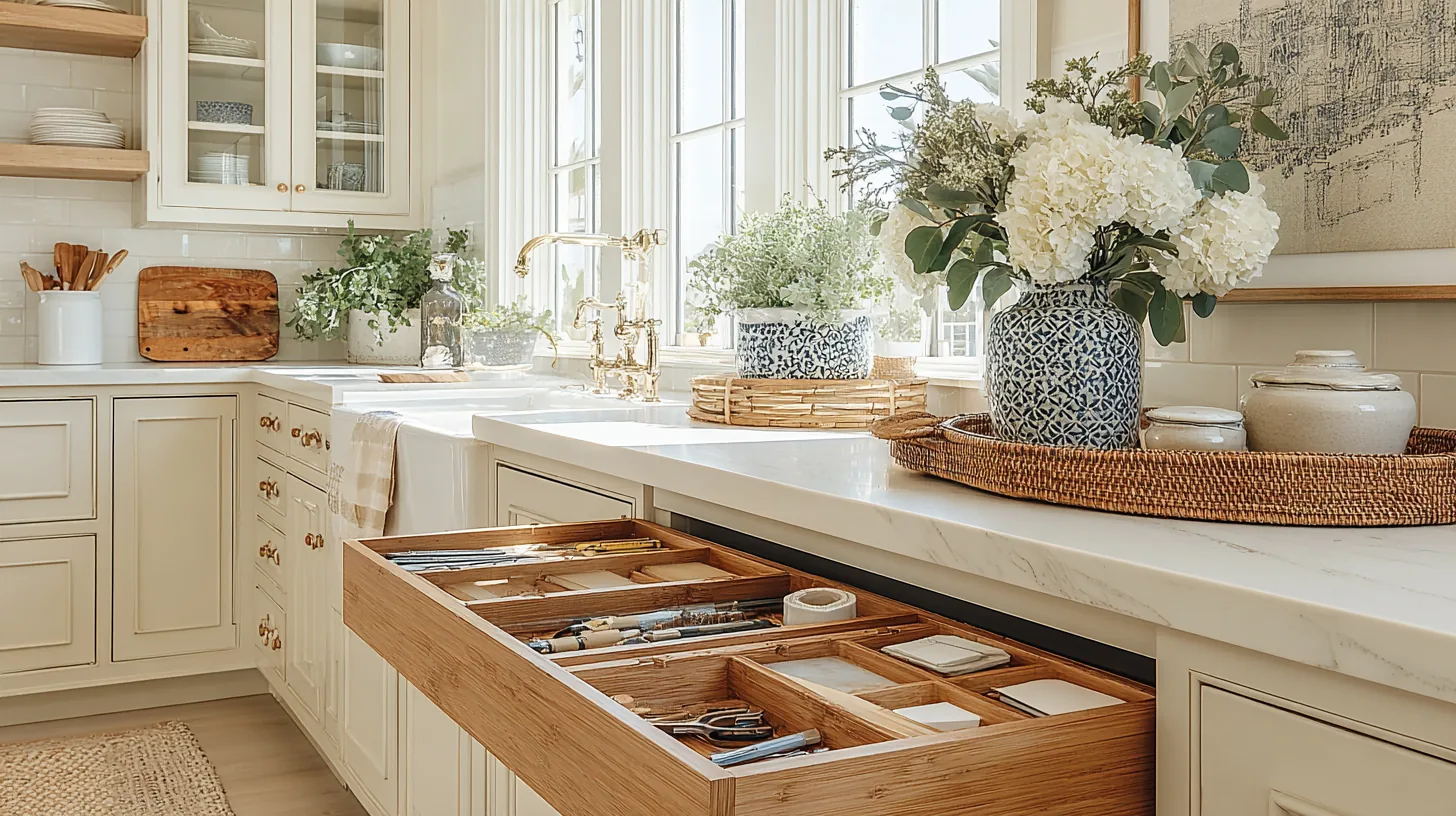
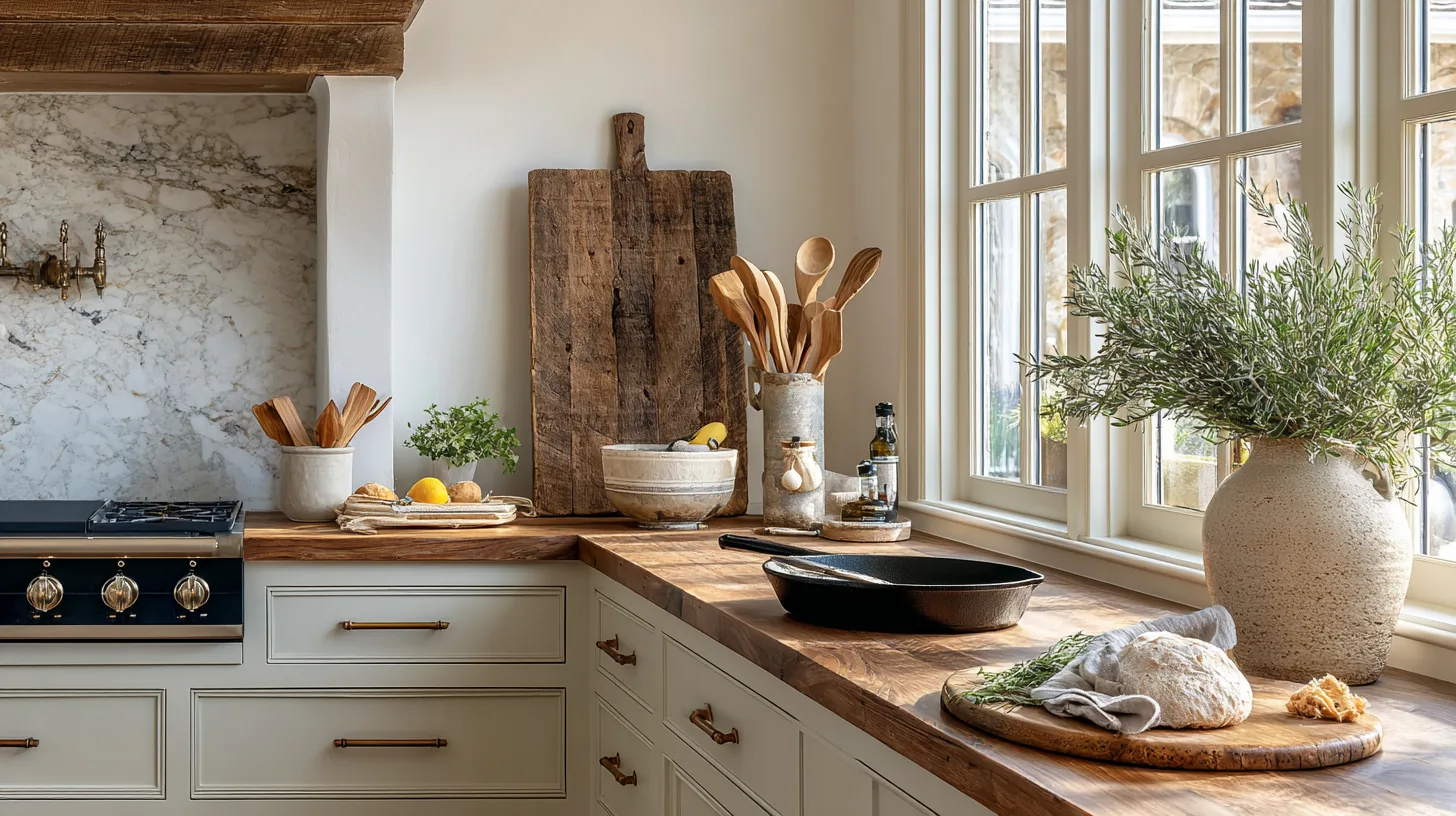
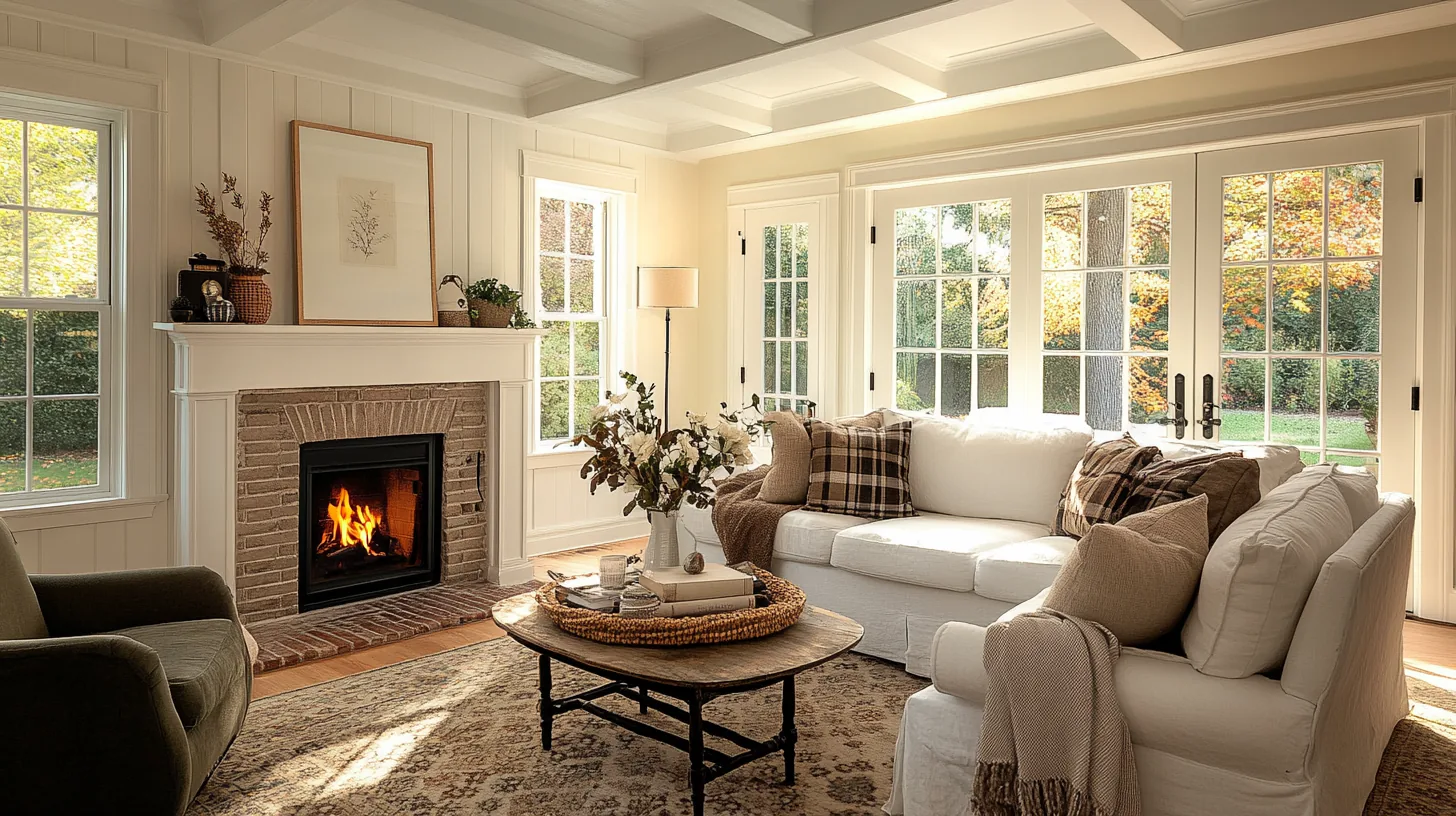
More of summer stays than most fall guides imply. A light neutral base (cream, sage, pale wood) doesn't read as "summer only"; it's simply a base, and it's exactly what makes the warm additions later actually show up instead of getting lost in a room that's already busy. Green plants, natural wood, clear or ceramic vases, woven textures, and simple trays all carry straight through. So does most everyday artwork, and anything in cream, sage, pale blue, or warm white.
None of this needs to be put away and swapped for something seasonal. Fall is what gets layered on top of it, not what replaces it.
Add Warmth Without Making the House Dark
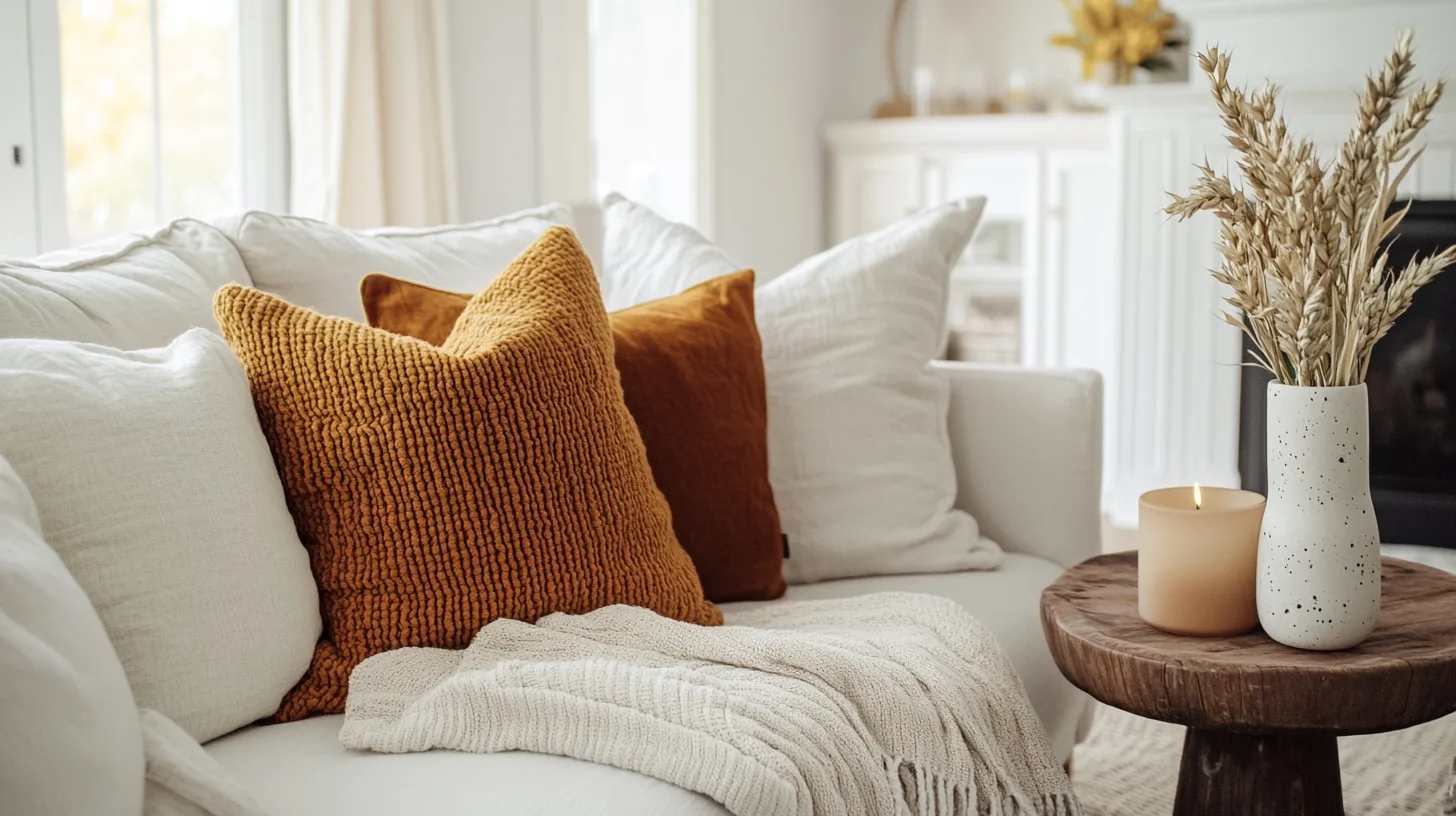
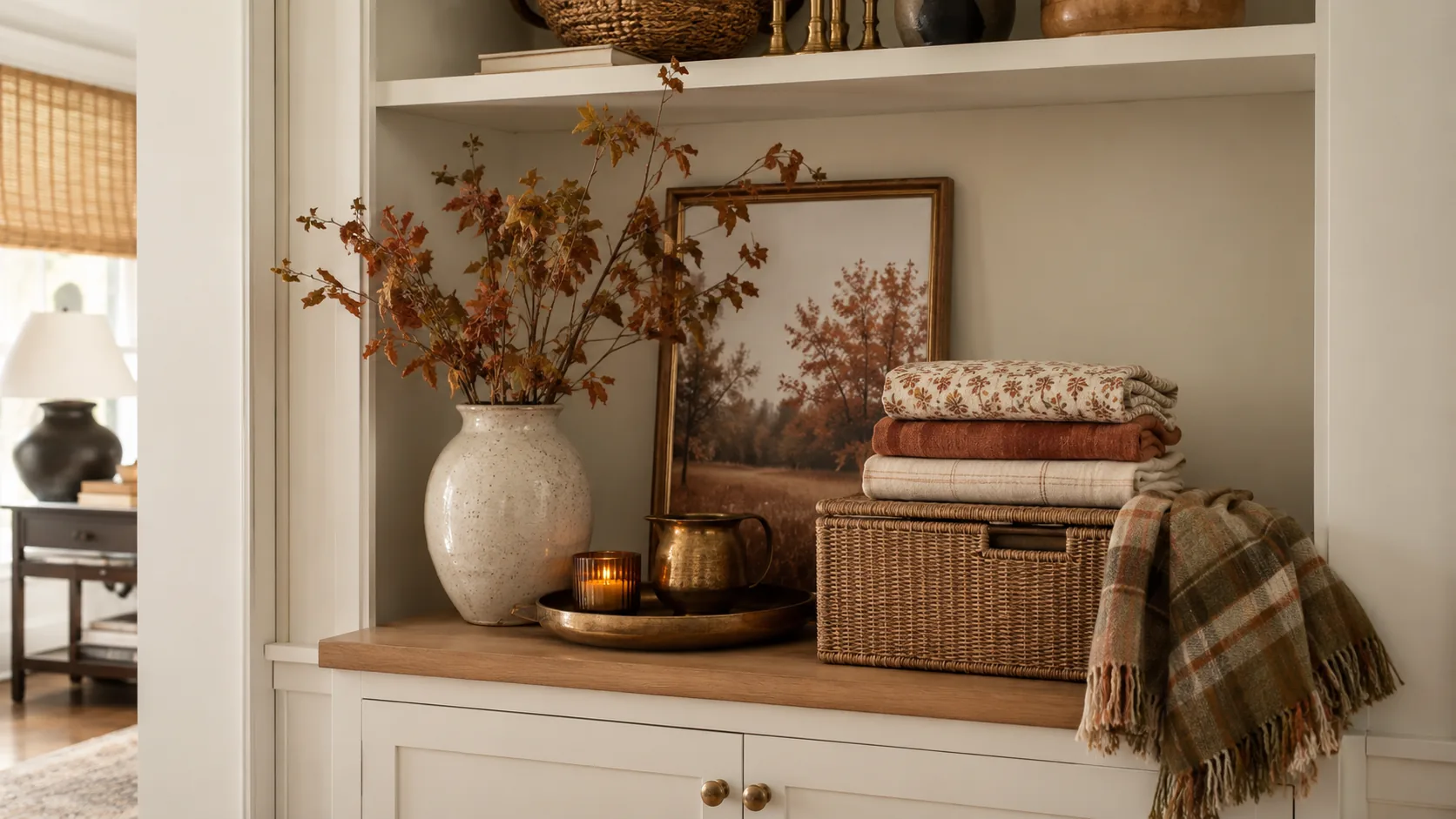
The additions that shift a room's feeling are smaller than most people expect, and there's no need for more than a handful at a time. One arrangement of deeper-toned branches or dried stems does more than a whole shelf of seasonal objects. Pillow covers over the summer inserts, rather than a second set of pillows, change the room without adding storage. A single lightweight throw, warmer lamp light instead of relying only on cool overhead lighting, and a candle or subtle seasonal scent round it out. Begin with one deeper accent in wood, brass, amber, olive, or muted rust, then stop and see whether the room needs anything else.
A few of the pieces that make this layer easy (stems, pillow covers, warm-toned trays) are gathered in our Early Fall Decorating Ideas collection.
One good seasonal focal point does more for a room than five small ones competing for attention.
Use the One-Focal-Point Rule
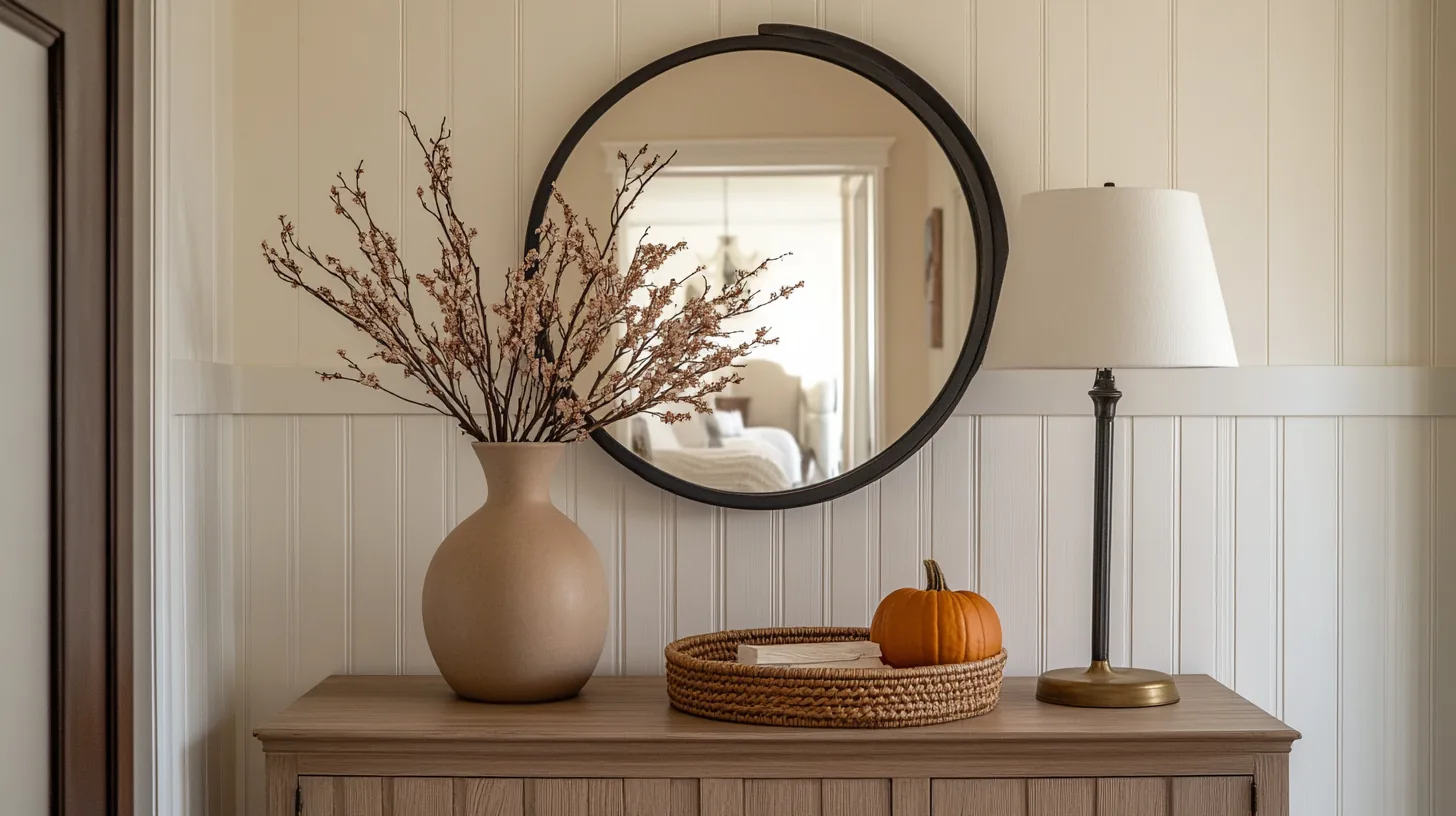
Instead of decorating every surface in every room, pick a single seasonal focal point per space and let the rest of the room stay as it is. An entryway gets one wreath or branch arrangement, not both. A living room gets pillow covers or a coffee-table vignette, pick one. A kitchen gets a stem arrangement, a seasonal towel, or a small tray on the counter, not all three stacked together. A bedroom gets pillow covers or a lightweight throw. A porch gets one planter grouping or a restrained door accent, not a full display.
This does two things at once: it keeps the house from feeling like a theme took over, and it makes the whole edit faster to do and faster to undo when the season changes again.
Early-Fall Decorating for Limited Storage
Every seasonal piece eventually needs somewhere to go when fall ends, so the easiest way to keep the season manageable is to favor things that pack flat or do double duty. Pillow covers instead of whole pillows are the clearest example: a stack of covers takes a fraction of the space a stack of pillows does. Printable art or a digital frame swap avoids storing physical seasonal art entirely. Natural branches can be composted or replaced each year instead of stored at all. Reusable trays and vessels carry from summer through winter with just what's on them changing, and anything that legitimately works through Thanksgiving is worth choosing over something that's only right for four weeks in September.
If storage space is genuinely tight, one carefully edited bin can work better than several large totes, it forces the same edited, one-focal-point approach the rest of this list is built around. Shelves or upper closet space can work well for flat items such as pillow covers and seasonal prints, while a small labeled bin can contain the rest. And when a piece is genuinely useful into November (a warm throw, a set of neutral candles, a tray that works through the holidays) it's not really "fall storage" at all, just something that earns its space year-round.
A handful of pieces sized for exactly that kind of storage are in the same Early Fall Decorating Ideas collection.
What to Wait Until October
The clearest way to keep early fall from turning into a full seasonal reset is drawing an honest line between three stages, and holding to it: early fall, full fall or harvest decor, and Halloween. Large pumpkin collections, heavy plaid, thick winter-weight textiles, full harvest signs, extensive porch displays, and Halloween-specific pieces all belong later, not because they're wrong, but because adding them now uses up the visual space that makes the smaller early-fall layer feel intentional instead of crowded. (When that moment comes, the Halloween edit covers how to add that layer without undoing this one.) If a piece requires clearing out something that's still genuinely useful just to make room for it, that's also a sign it can wait.
The line moves depending on climate and calendar, and that's fine: a home in a warmer climate may stay in the early-fall stage longer than one where the leaves are already changing. What matters is having a line at all, and applying it consistently room to room, rather than deciding case by case in the moment a tempting display shows up at the store.
Keep
|
Warm
|
Wait
|
The Early-Fall Reset Checklist
When it's time to do the edit, a short sequence keeps it from turning into an all-day project: shop your own storage first, remove the most obviously summer-specific pieces, keep the light neutral base in place, add one warm layer, add one natural element, and adjust the lighting. Stop when the room feels seasonal but not themed. The difference is often only one or two extra objects.
SHOP EARLY FALL DECORATING IDEAS
Stems, pillow covers, warm-toned trays, and the other flexible pieces from this edit are gathered in one place, browse the Early Fall Decorating Ideas collection.
The house doesn't need a full changeover to feel like the season has arrived. Keep what's working, add a small amount of warmth, and let the rest wait for October, it will still be there when the weather agrees with it.