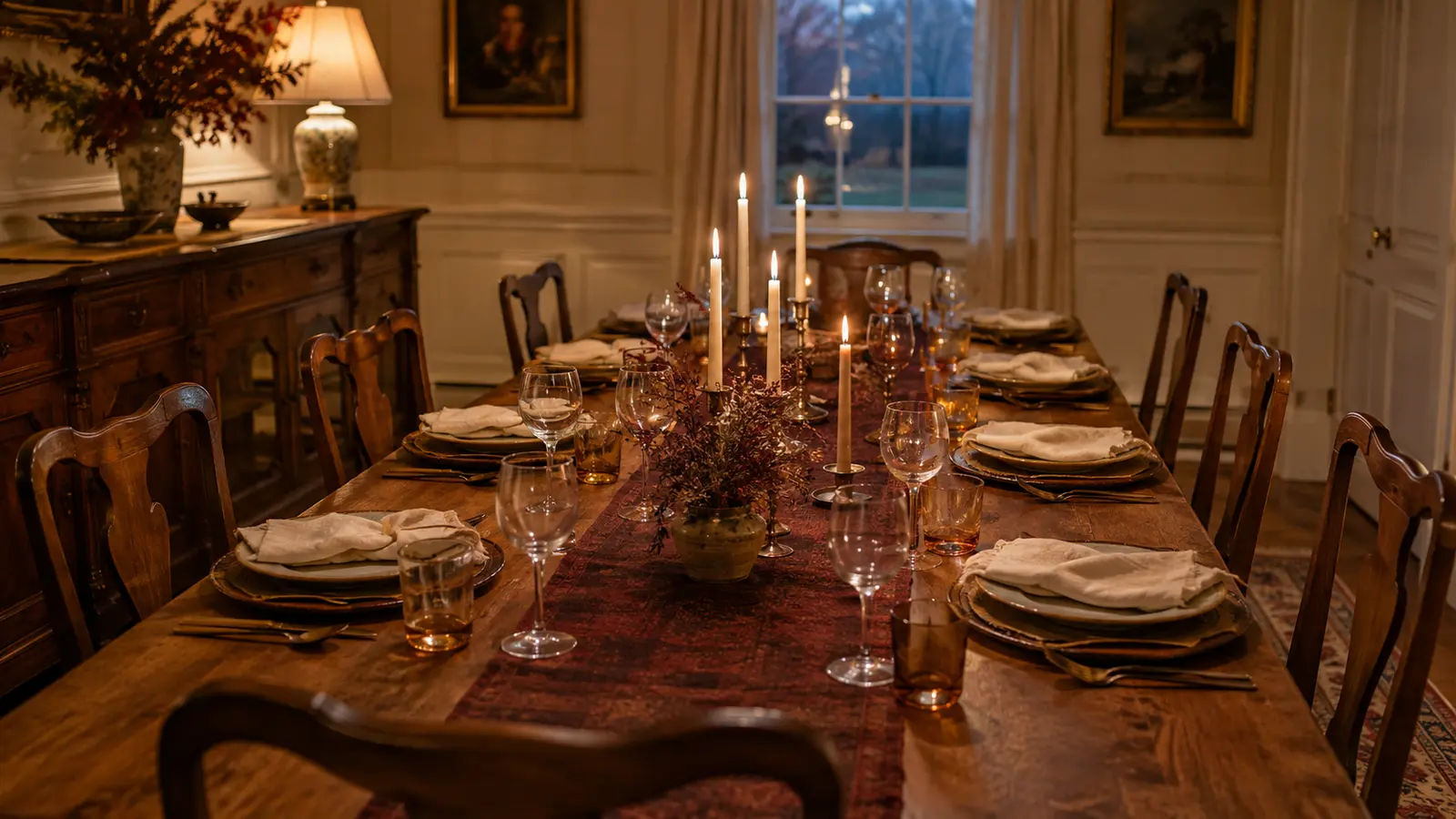
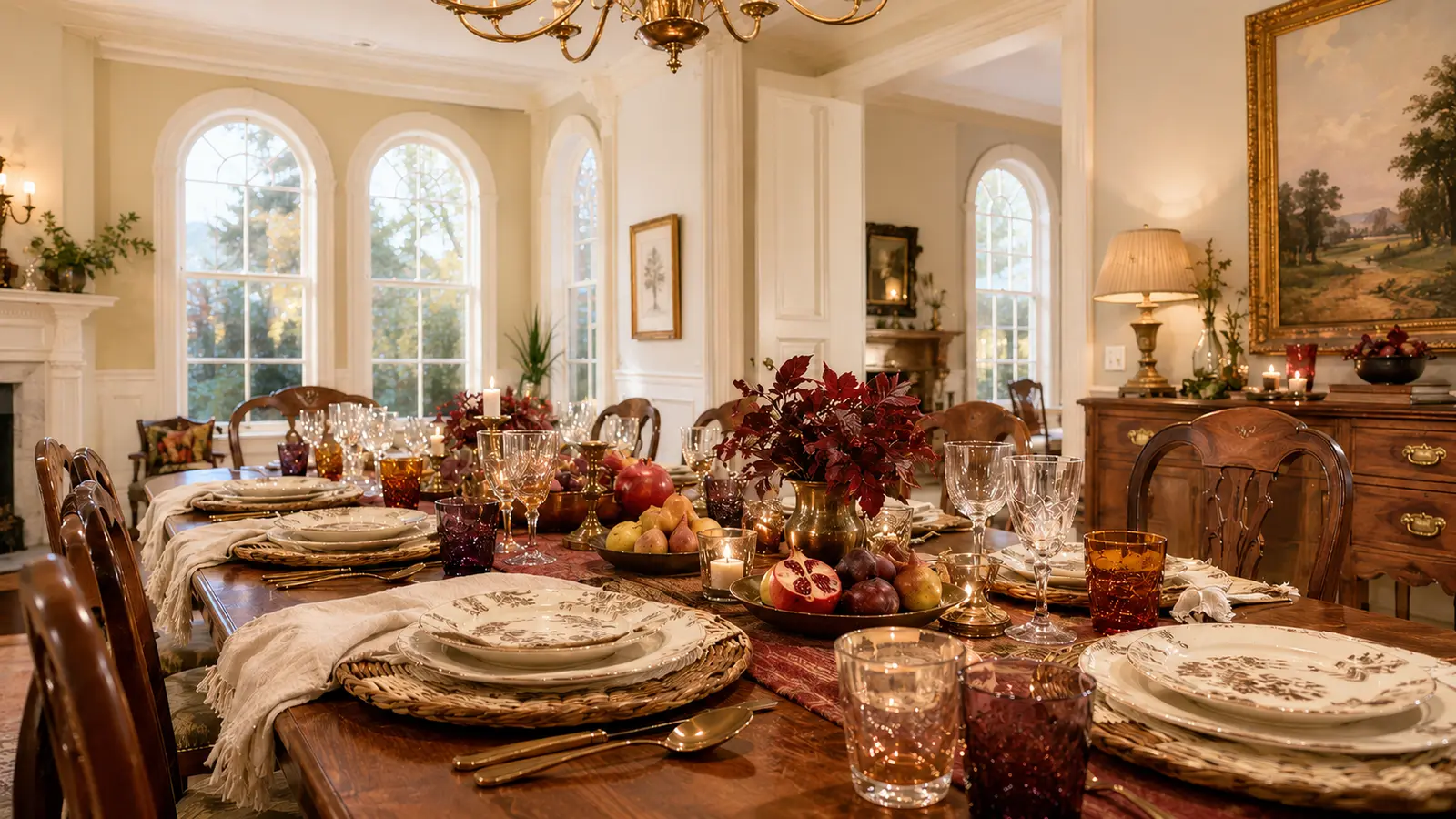
Before the candles are lit and the napkins folded, set the empty serving dishes on the table. That one small rehearsal tells you more than any finished tablescape photograph: where the turkey will land, whether guests can reach the water and how much room is truly left for flowers. The warmest Thanksgiving tables are not necessarily the most decorated. They are the ones that make dinner and conversation feel easy.
This post contains affiliate links. As an Amazon Associate, I earn from qualifying purchases, at no extra cost to you. #ad
Plan the Meal Before Decorating the Table
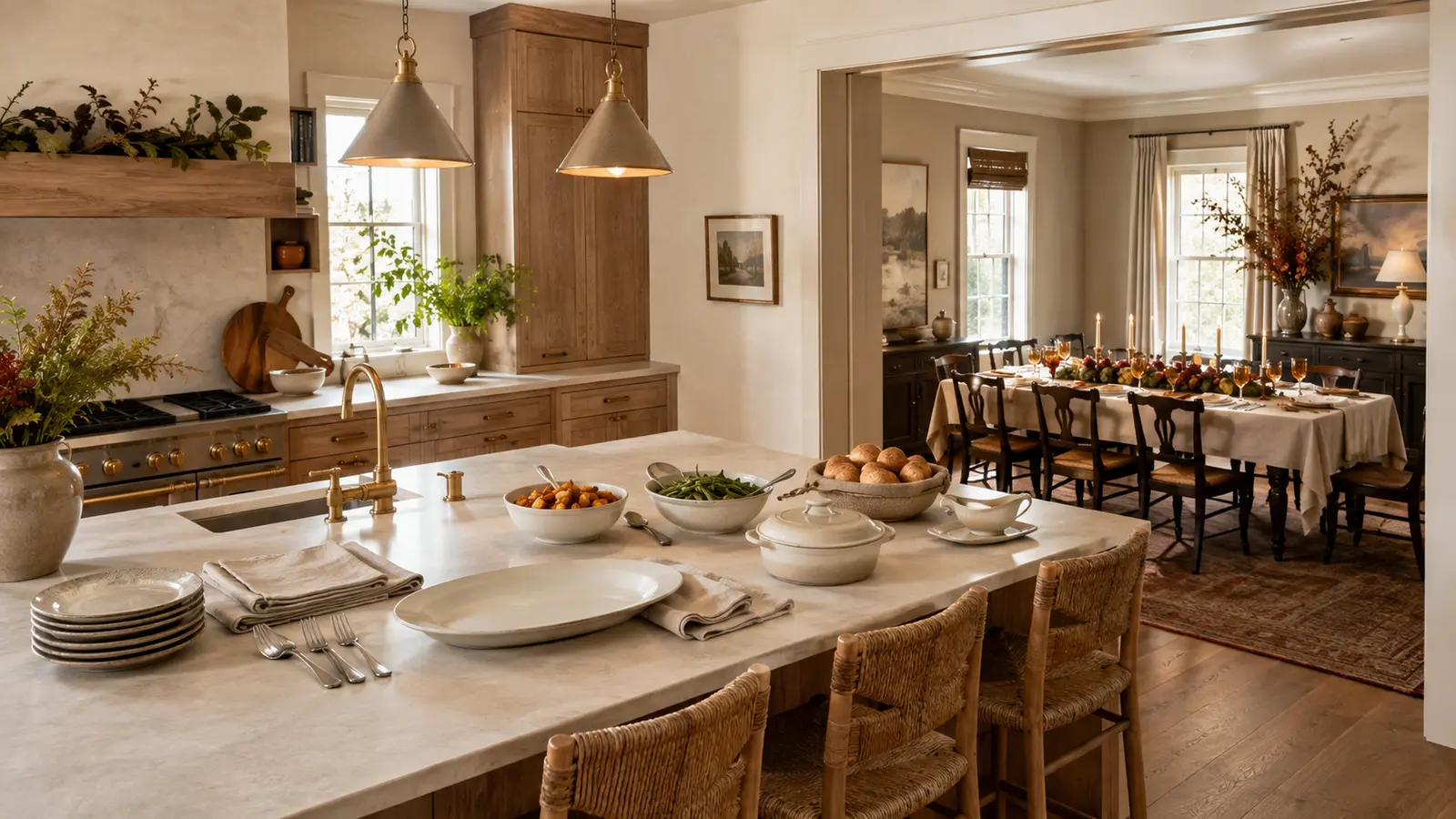
Decide how the meal is going to run before a single candle gets placed. A sit-down dinner where dishes get passed hand to hand needs more elbow room per seat and a centerpiece low enough to see across at every seat, not just from the ends. A buffet, food staged on a sideboard or kitchen island while the table stays set for eating only, changes the math: the table opens up, but the sideboard now needs its own plan. Either way, the real question isn't how much decor the table can hold: it's where the food is going. Settle that first, and the centerpiece decision gets much easier.
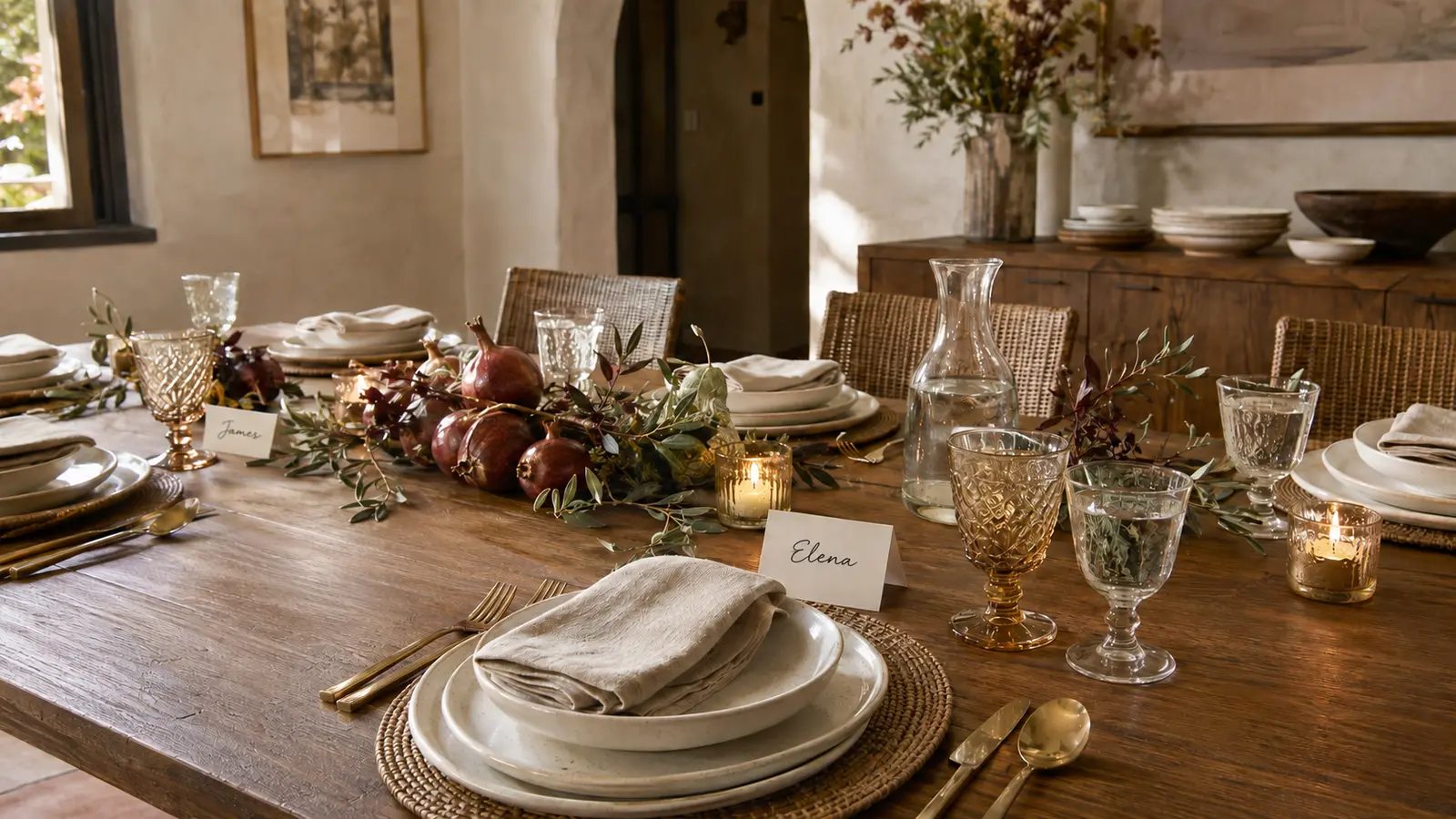
Whichever way the meal runs, a simple place card or handwritten name tag does real work for a table this size. It skips the hover-and-shuffle when a dozen people are looking for a seat at once. It's a small, warm detail that costs almost nothing to add.
Set a Collected Foundation
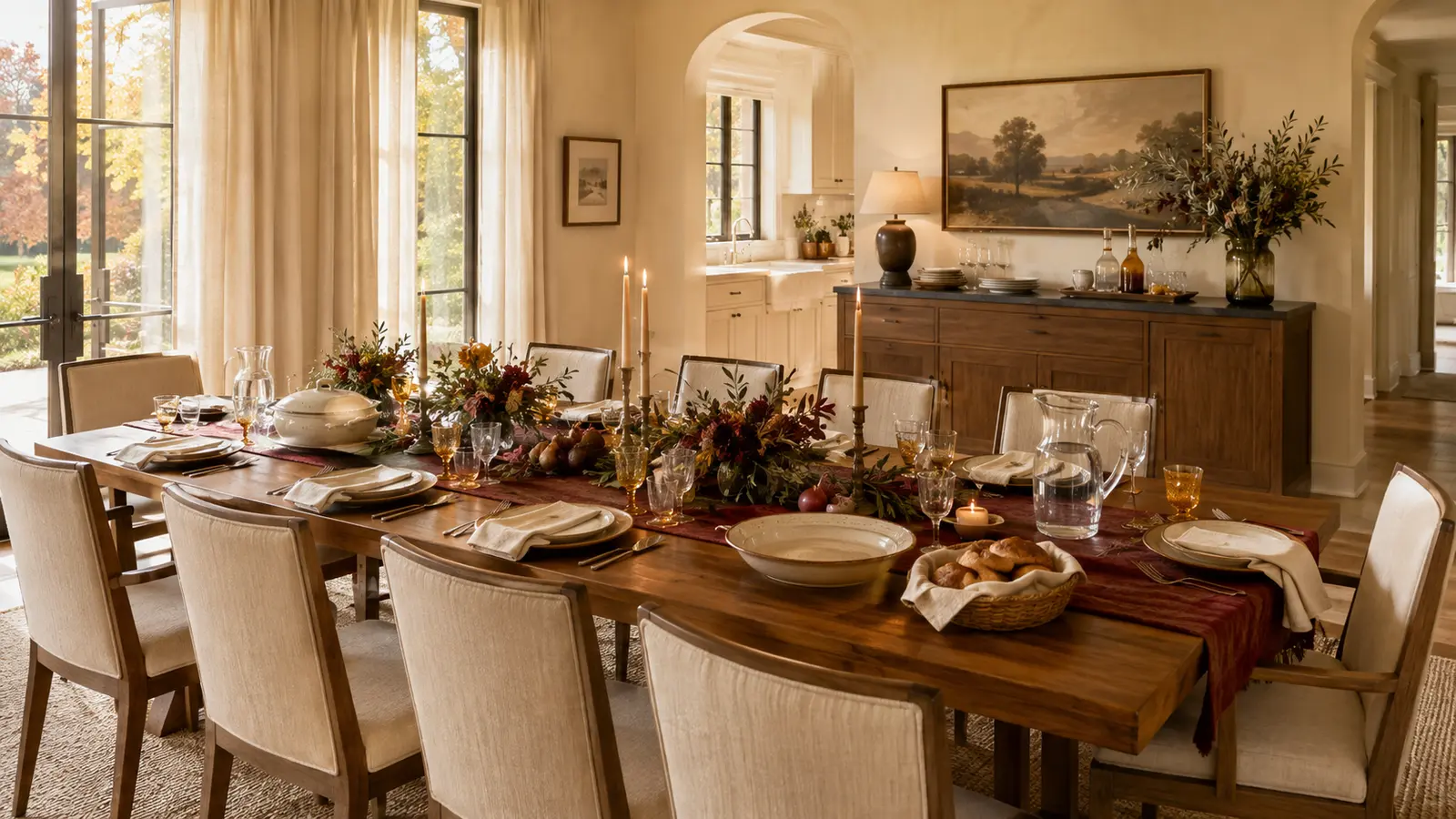
Start with everyday dishes, the plates already in the cabinet. Add one familiar or inherited layer: a runner, a set of glasses, linens passed down or picked up somewhere memorable. Then repeat one color or material across the table, so the varied pieces read as chosen, not accumulated.
That's the whole method: everyday base, one meaningful layer, one repeated thread. It's forgiving to put together, since nothing has to match exactly: it just has to belong. And it gives the table the feel of a collection built gradually and used often.
Try the Dinner Test
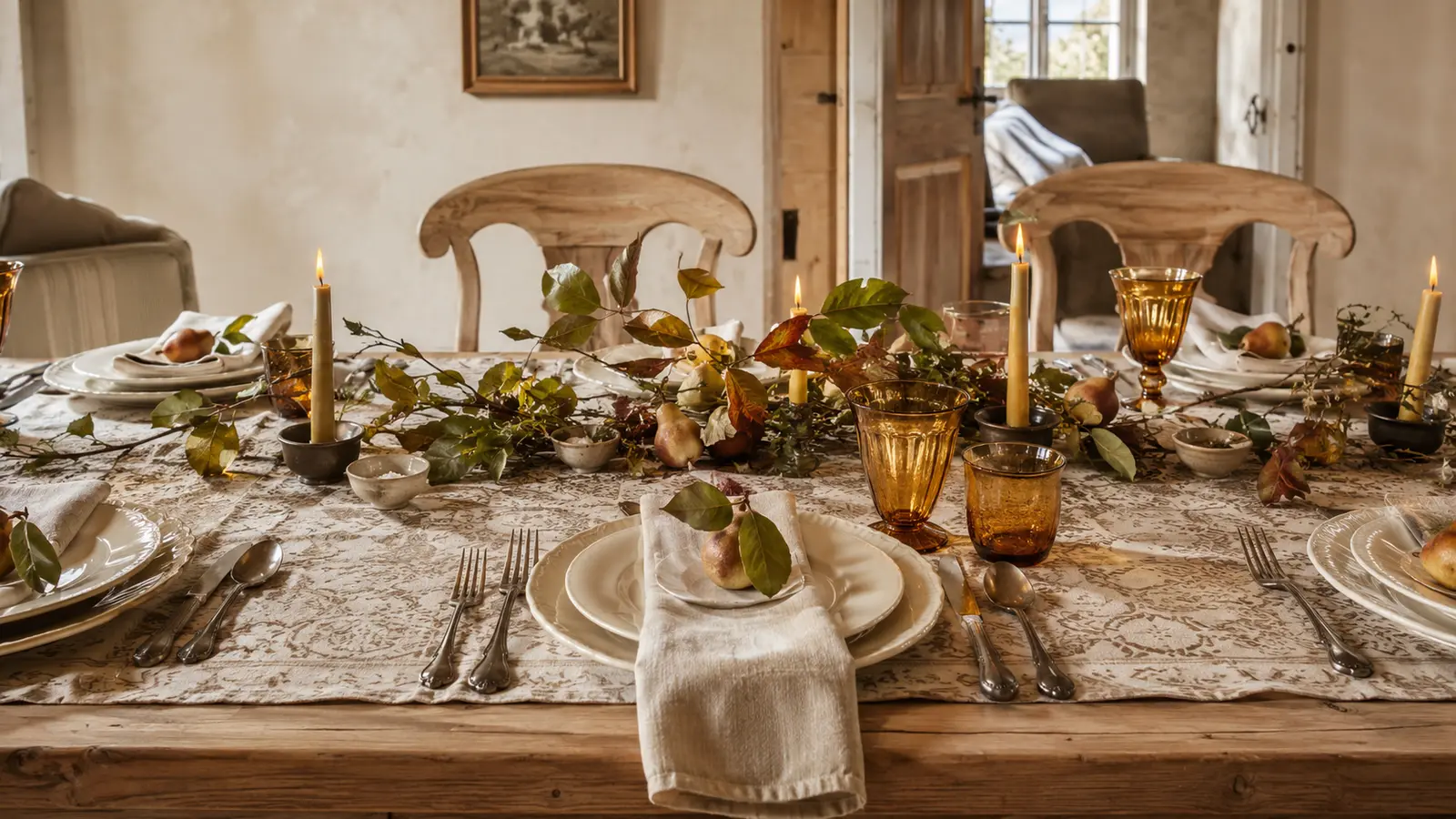
This is worth doing before anything else gets decided, and it takes two minutes. Before adding flowers or candles, place the empty serving dishes, water pitchers, trivets and bread basket exactly where they'll go during dinner. Sit in one of the middle seats. Check whether you can see across the table, reach your glass and pass a dish without moving the decor. Anything that fails that rehearsal belongs on the sideboard.
It's a small physical check, but it catches what a finished tablescape photo never shows: whether the table you styled is actually the table you're about to eat at.
Keep the Centerpiece Low, Stable and Movable
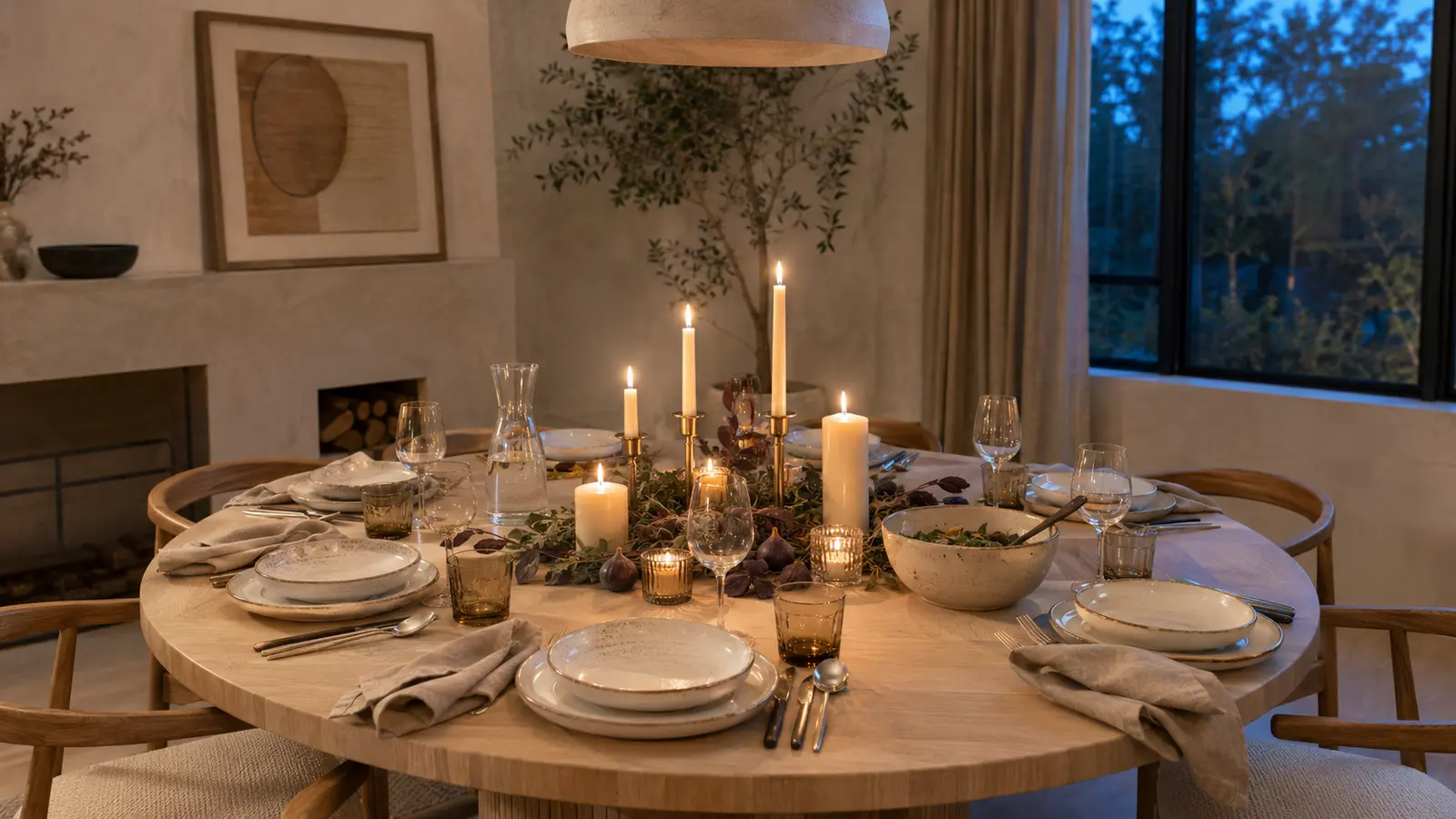
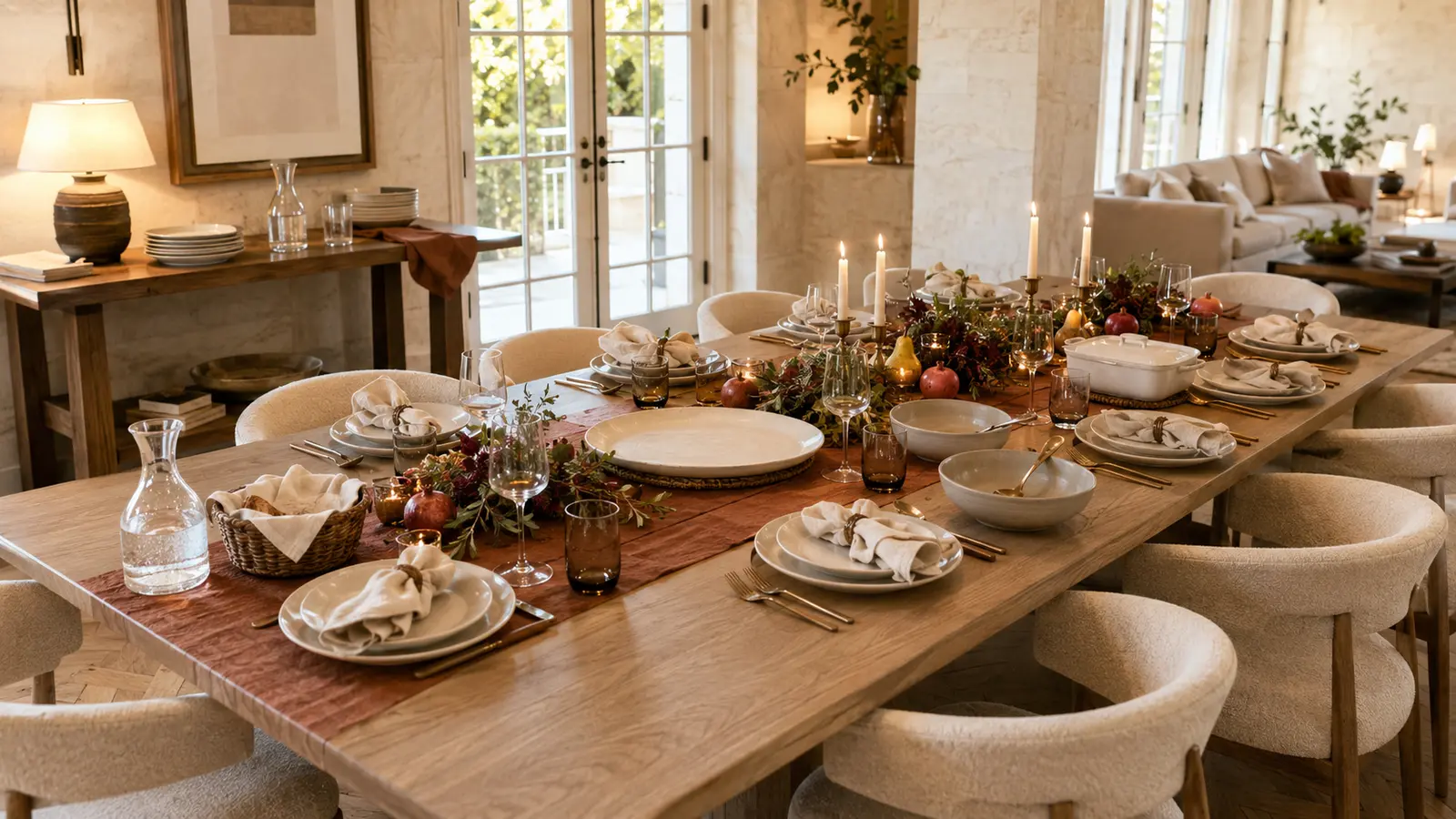
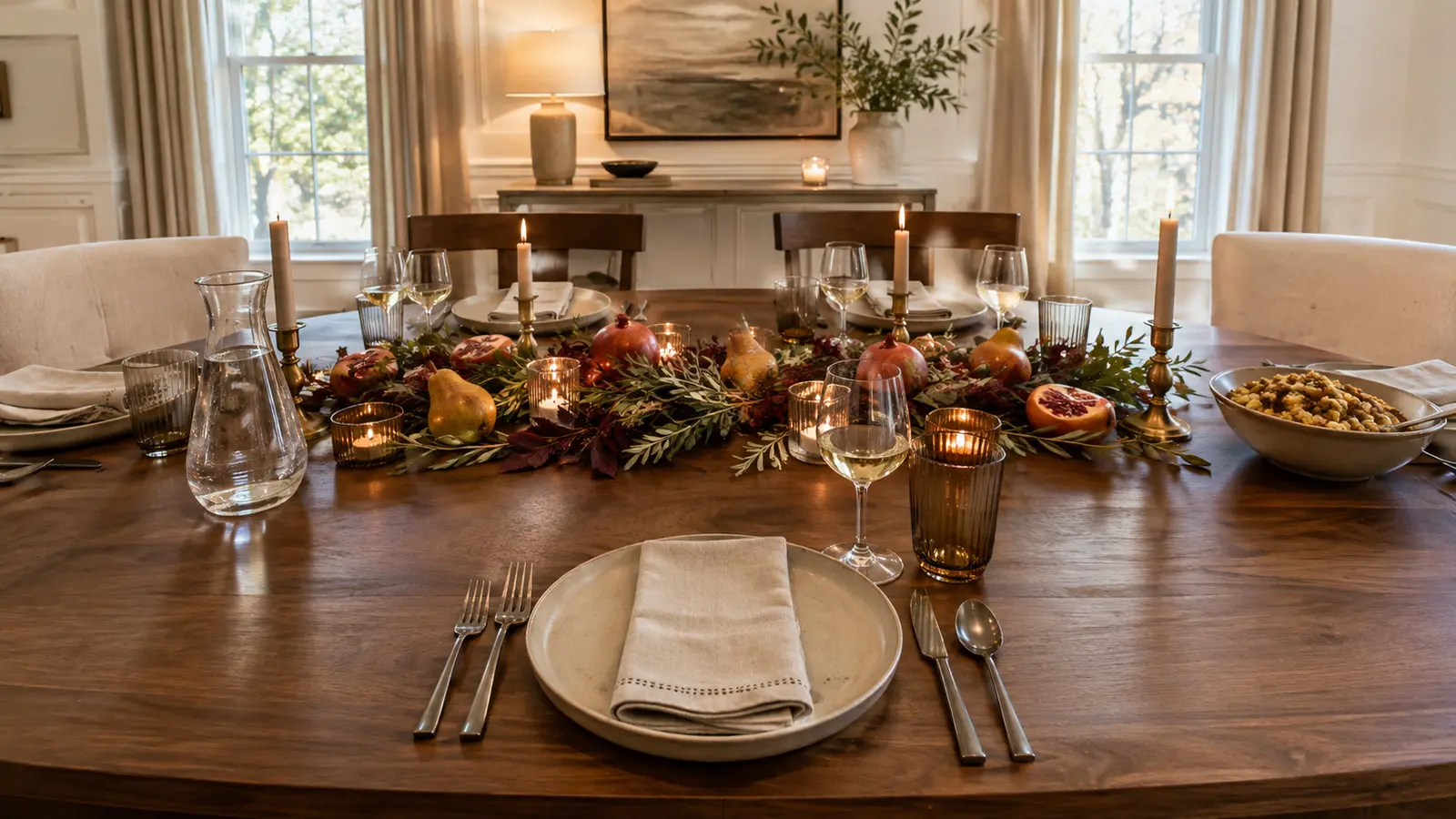
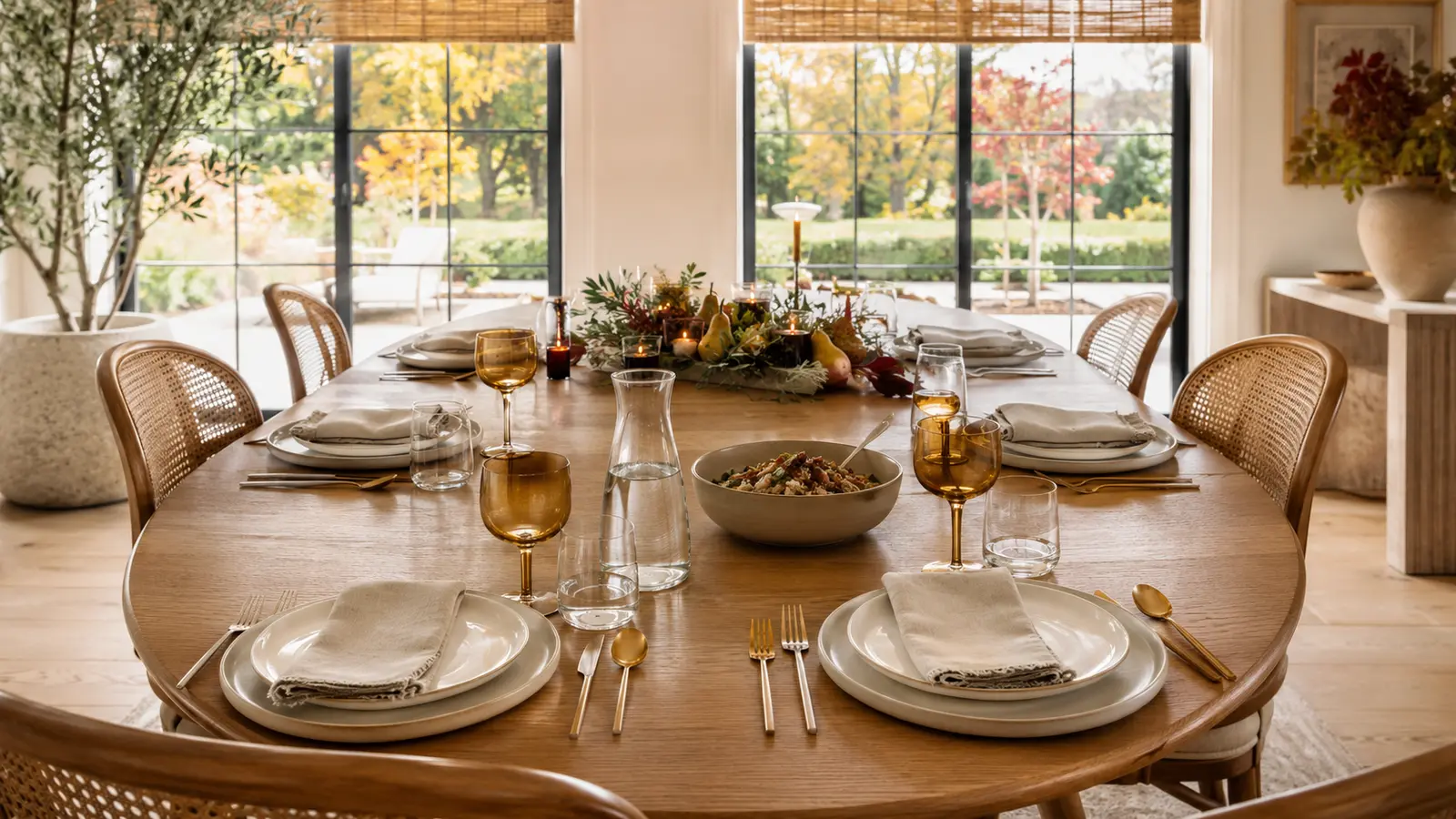
Keep the centerpiece low, stable, and easy to remove: a few candles at varied heights, a small vase of seasonal branches, mini pumpkins as a quiet accent, nothing tall enough to block a conversation across the table. Some hosts treat the centerpiece as fully removable: styled for the moment guests sit down, then cleared once food service starts, which is exactly what the rehearsal above is for. A few low candle holders and a small vase in warm glass or brass are usually all it takes.
If you're using candles, unscented ones let the meal itself be the thing everyone smells. A vintage runner, embroidered napkins, or a linen inherited from family brings quiet history to the table without ever feeling themed.
Give the Food a Second Surface
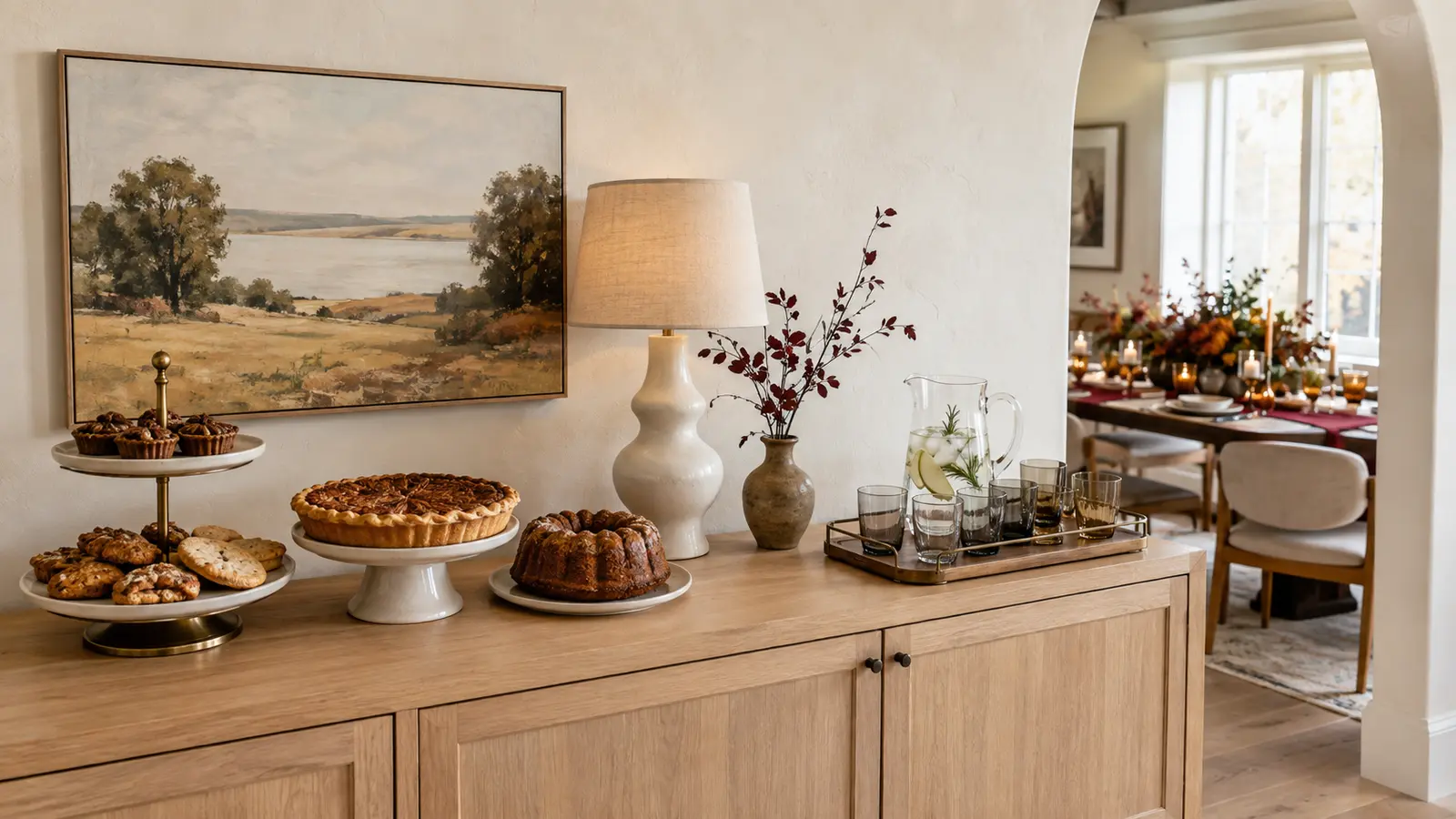
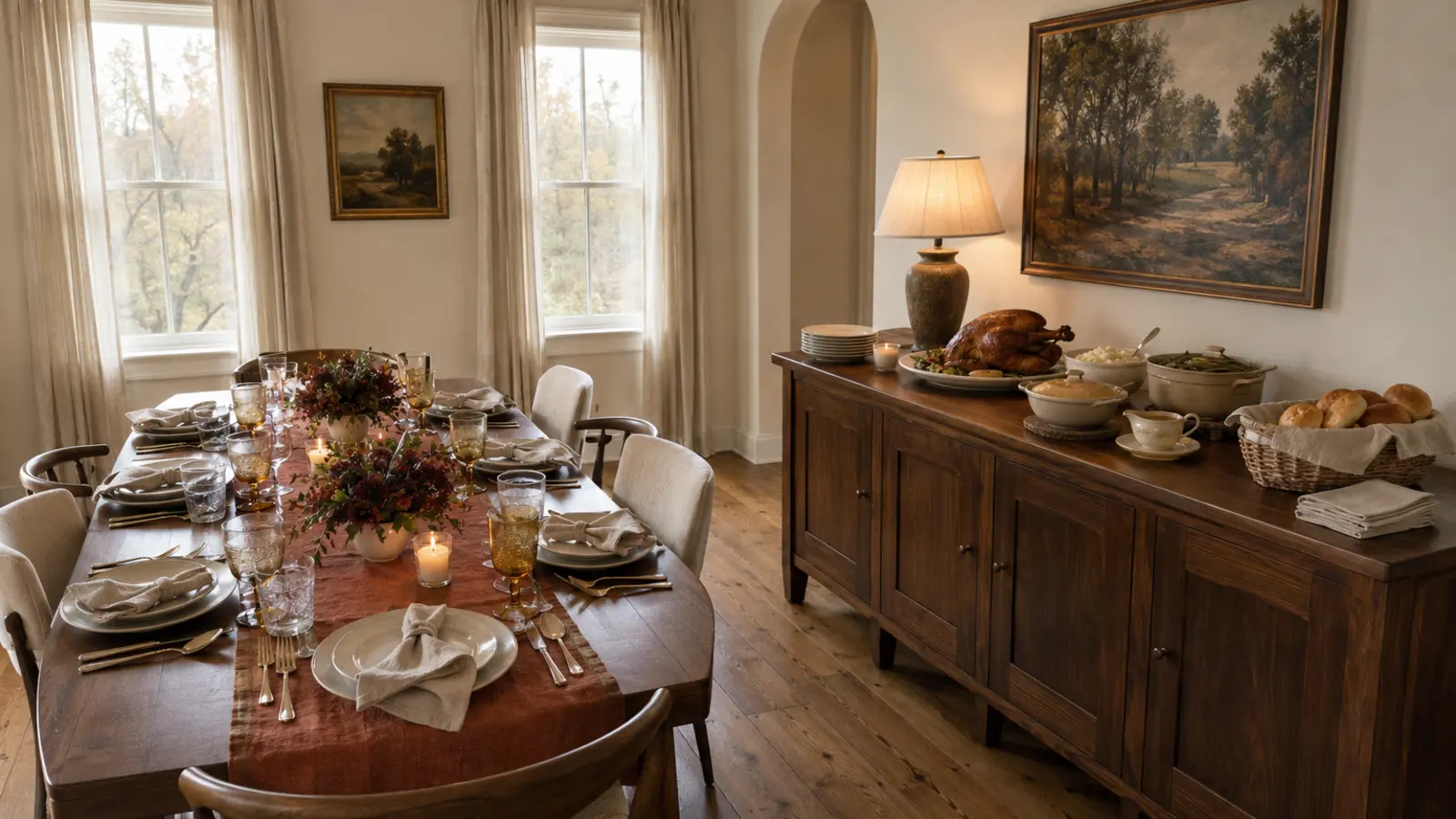
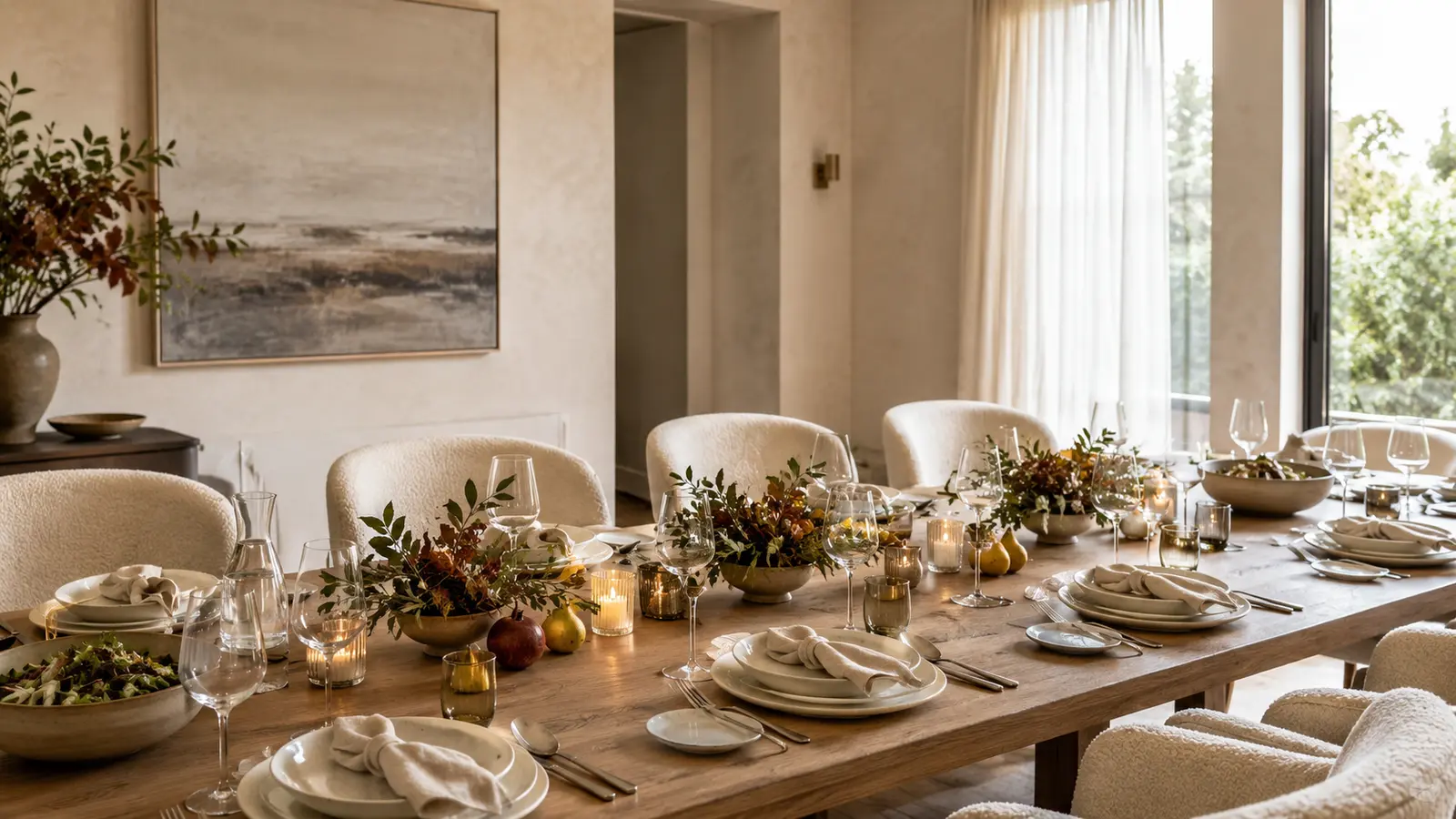
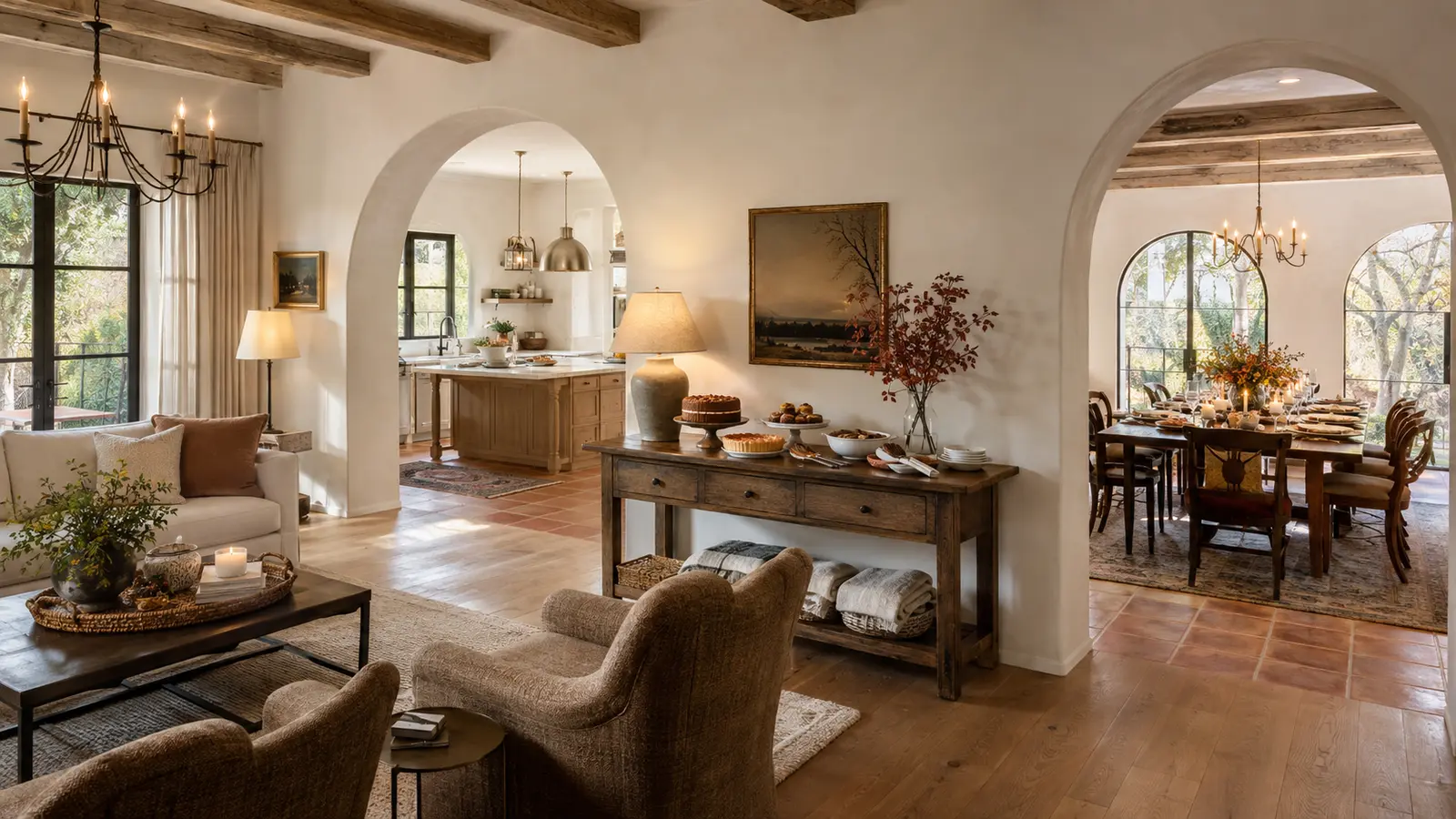
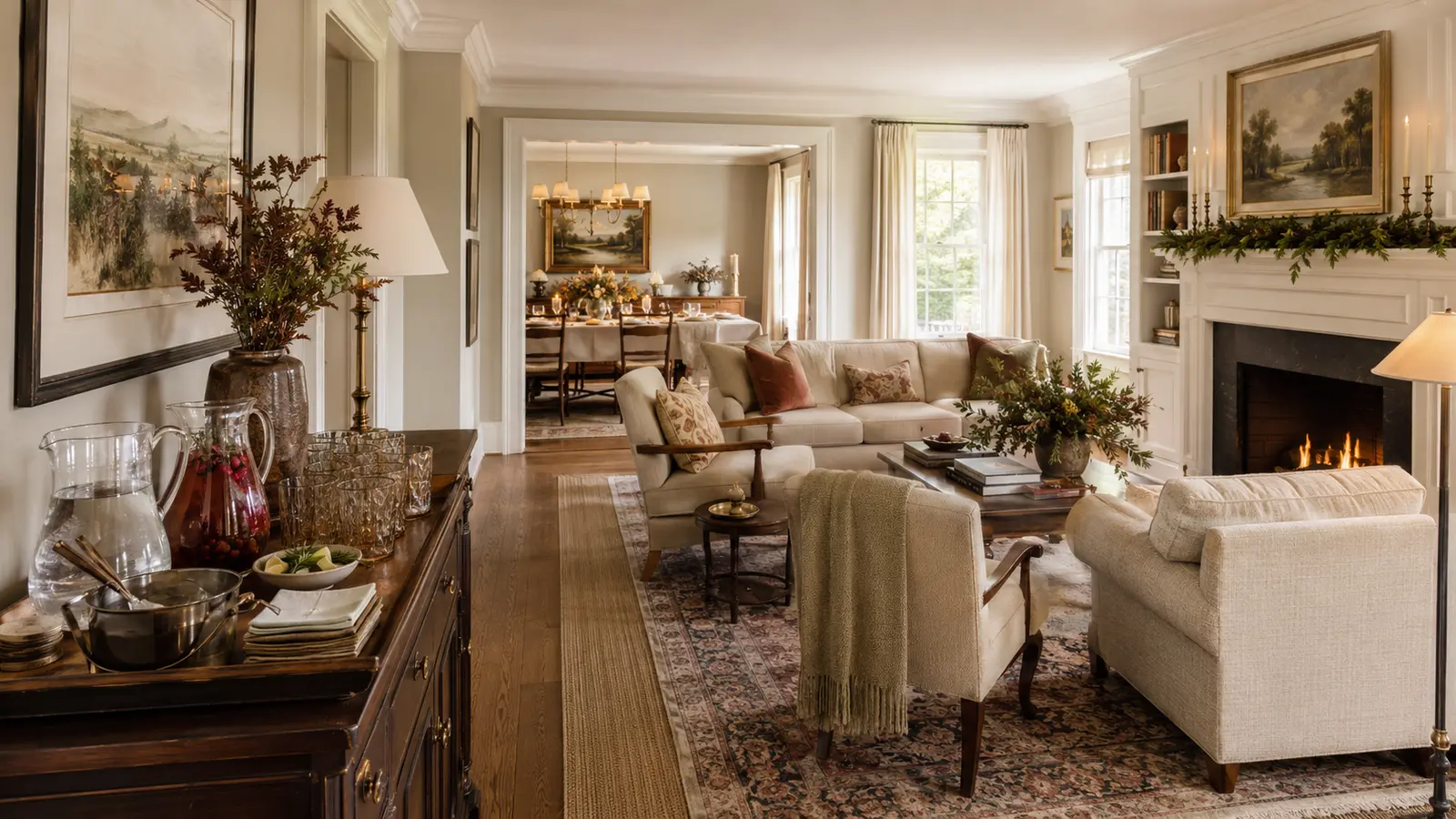
A sideboard or buffet isn't overflow. It's a second styled surface that takes pressure off the main table: a dessert station with a tiered tray, a drink station with a pitcher and glassware grouped together, serving platters that don't need to compete for space with place settings. Treating it as its own design moment, not just a landing spot for extra dishes, is what lets the main table stay simple and low without feeling under-styled.
This matters even more as the guest list grows. As it does, every inch of the eating surface becomes more valuable: move the bread, the cranberry sauce, and dessert to the sideboard before the table starts feeling crowded. That's not just a styling choice at that point; it's what keeps the table itself usable for the meal your rehearsal just tested.
Create Warmth Without Creating a Theme
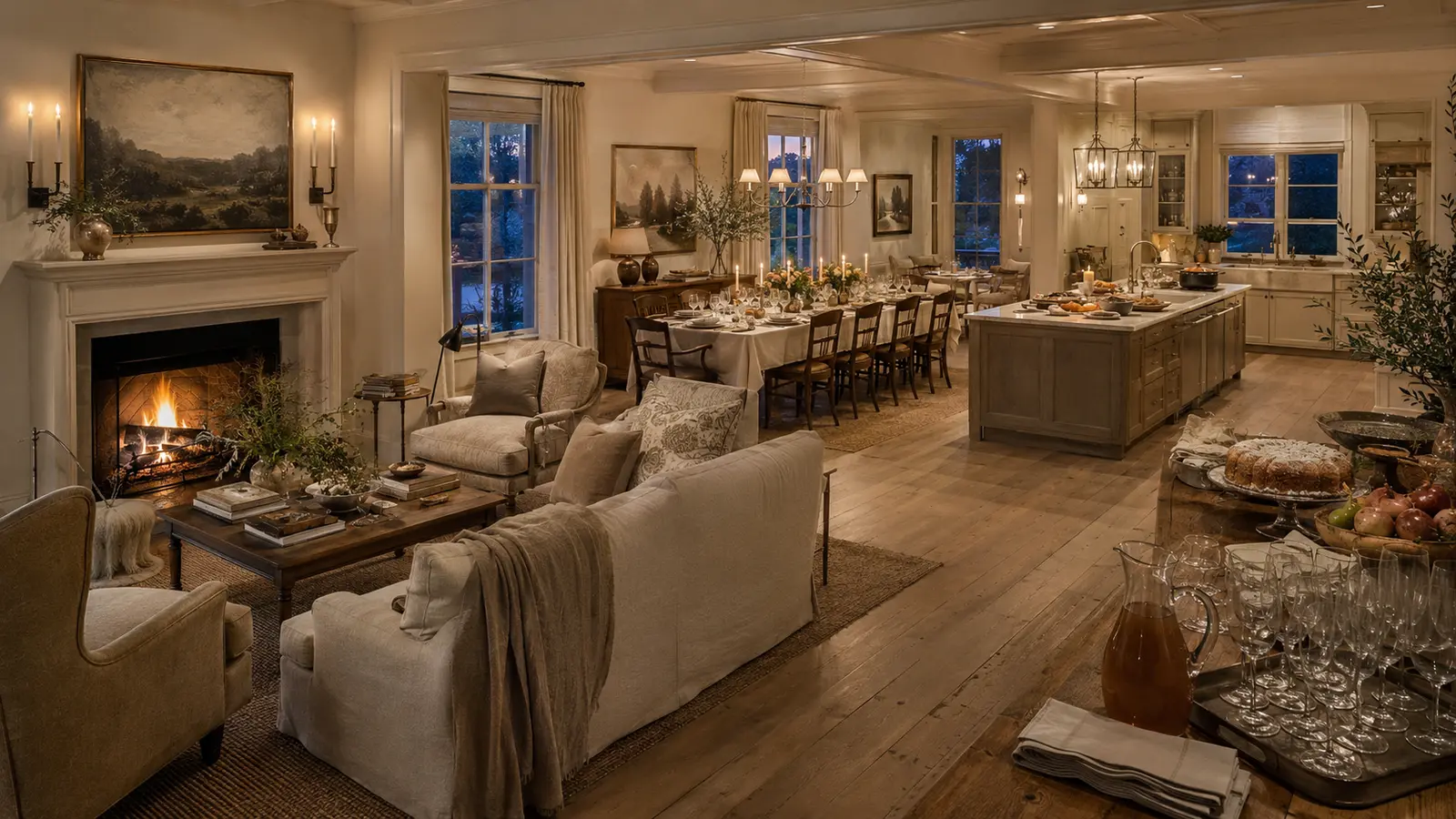
Warmth here comes from layering, not from a single theme. Cream linen against warm wood, a few pieces in amber or clear glass, aged brass or silver catching the candlelight, a bowl of pears or seasonal branches instead of anything overtly "Thanksgiving." Let a few things stay slightly imperfect: a candle burned unevenly, a napkin folded simply rather than sculpted into a shape. That's what makes a table feel like a home in use rather than a photograph waiting to be taken.
If the kitchen is still going and dessert is already staged on the sideboard, let that show. A lamp glowing nearby and extra plates waiting within reach make the room feel ready for people to eat and linger, not a room shut up and waiting for company.
Choose Pieces With a Life After Thanksgiving
Before anything goes in the cart, ask whether it will still make sense at the table in December, or at a dinner party that isn't Thanksgiving at all. Candle holders, a neutral runner, glassware in a shape you'd reach for any week of the year, all of it answers yes, and all of it keeps earning its place long after this one day. A good gut check: if you can picture using it on a random Tuesday, it's a keeper. If you can only picture it once a year, it's probably not.
This is less a rule than a filter: everything on this table is chosen the same way. Each piece reads as intentional today and keeps being useful afterward, at Christmas, at a regular Sunday dinner, at whatever comes next.
SHOP THIS ARTICLE