Fall porch decorating often starts with good intentions and ends with a second reset in early November. The easier approach is to build one warm, weather-ready base in September, something for the door, a pair of sturdy anchors, natural texture, and a few seasonal accents. If you enjoy decorating for Halloween, keep that layer small and removable. Once it comes down, the rest of the porch is already ready to welcome Thanksgiving guests.
This post contains affiliate links. As an Amazon Associate, I earn from qualifying purchases, at no extra cost to you. #ad
One Fall Foundation, From September Through Thanksgiving
The porch is the first room a guest experiences, well before the door opens. In the late-afternoon light of a Thanksgiving arrival, it's what tells someone they're expected: a warm glow, a door that's clearly been thought about, a house that looks like it's been getting ready for company rather than caught off guard by it.
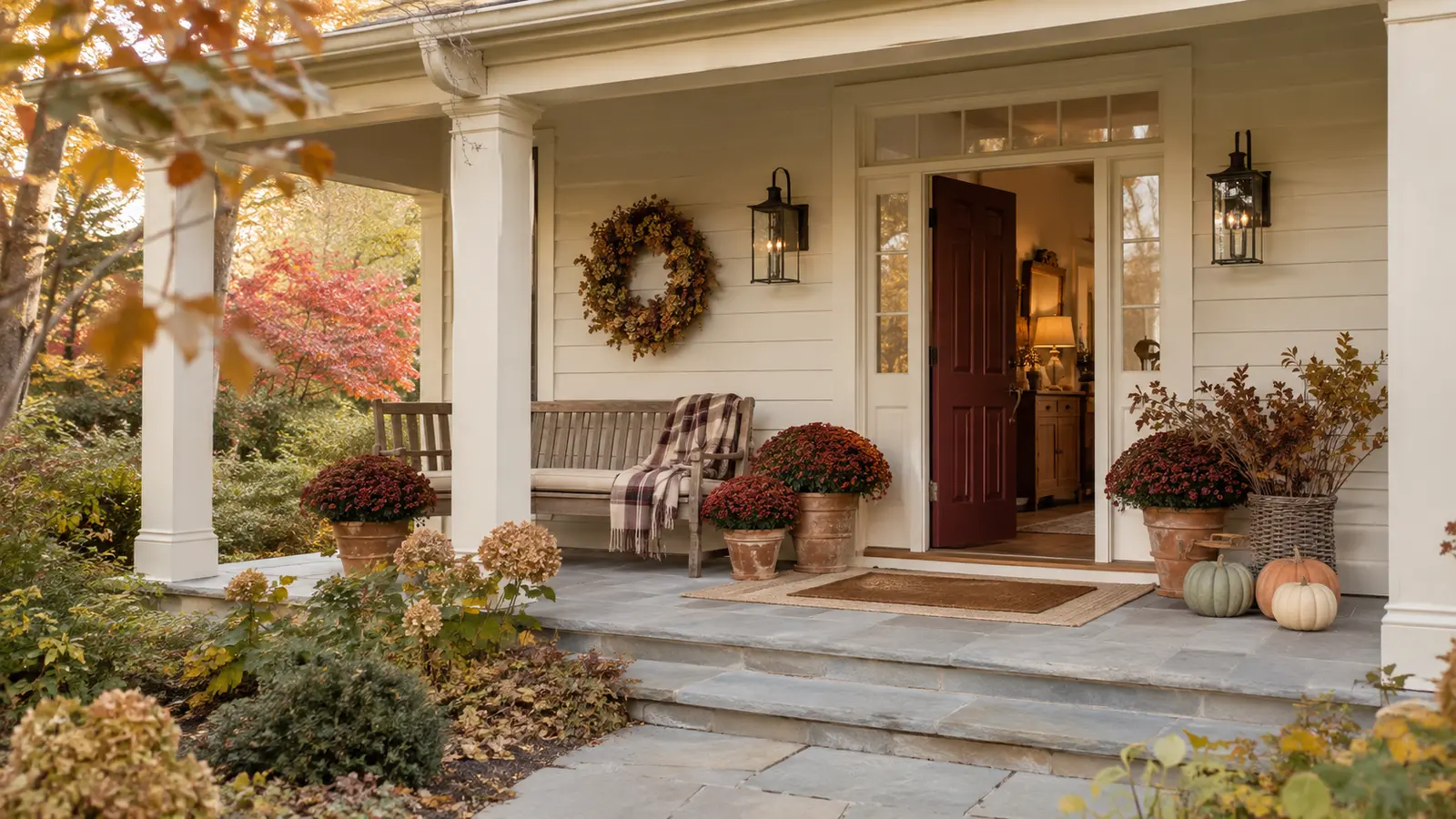
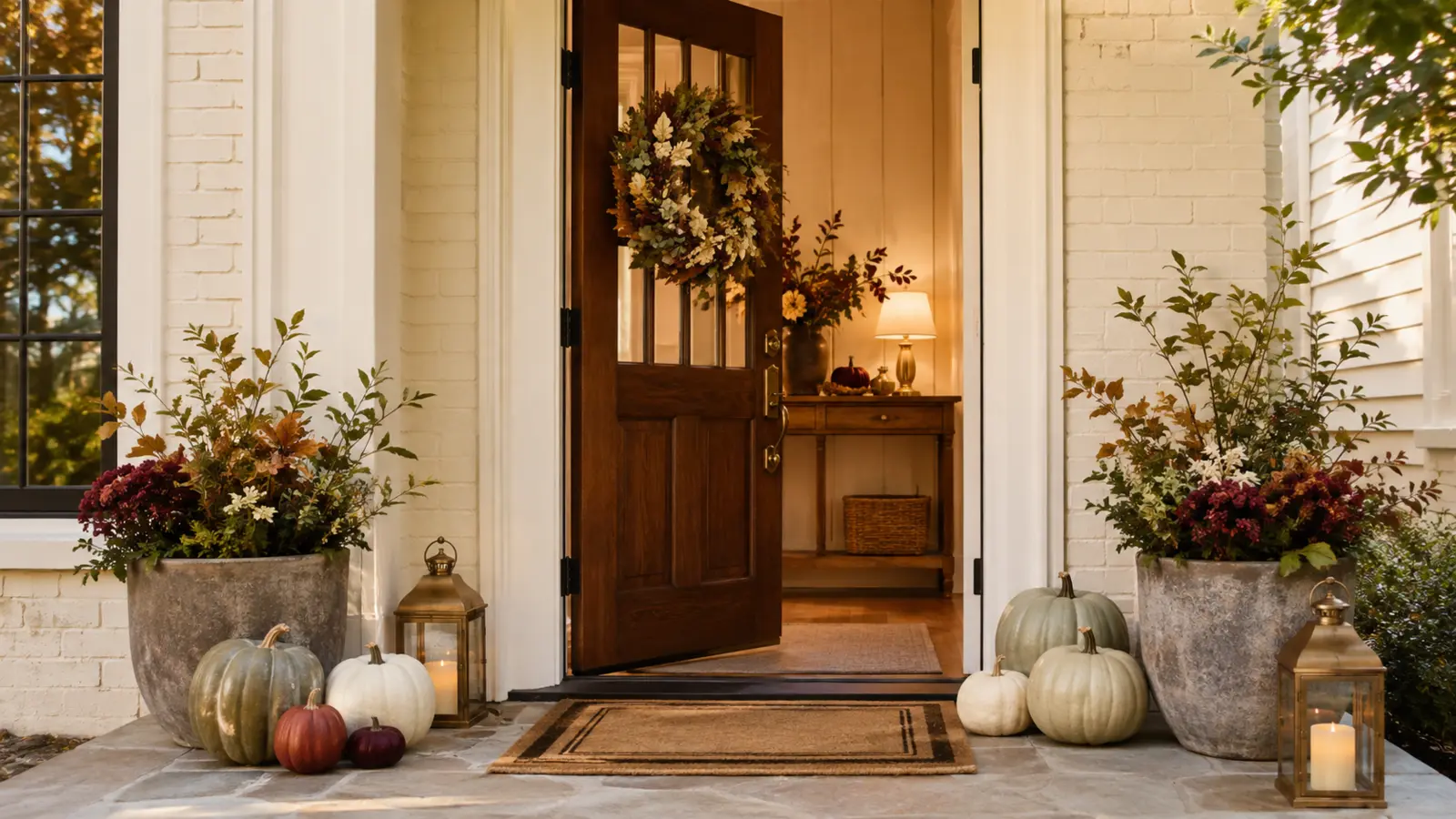
Pumpkins, mums, warm lantern light, dried wreaths, natural wood and woven texture already read as fall on their own, so nothing about them needs a swap before Thanksgiving guests arrive. The porch that welcomes them on an ordinary Tuesday in September can be the exact same one that welcomes them for dinner in November, with no second styling moment required in between.
Use a Simple Porch Formula
You don't need a design background to make a porch feel intentional. You need a formula, chosen once and left alone through Thanksgiving. Ours has five parts:
- One door element: a wreath, a basket, or a seasonal swag
- One or two visual anchors: planters, lanterns, or tall baskets
- One ground layer: an outdoor rug or a layered doormat
- Three to five seasonal accents: grouped pumpkins, branches, or potted color
- One repeated detail carried inside the entryway
Use the formula as a stopping point rather than a checklist to fill. Once each layer has a purpose, leave enough open space for the entrance to breathe and for guests to move through it comfortably.
The same formula works whether the entrance is a narrow stoop or a wraparound porch. It just resolves differently:
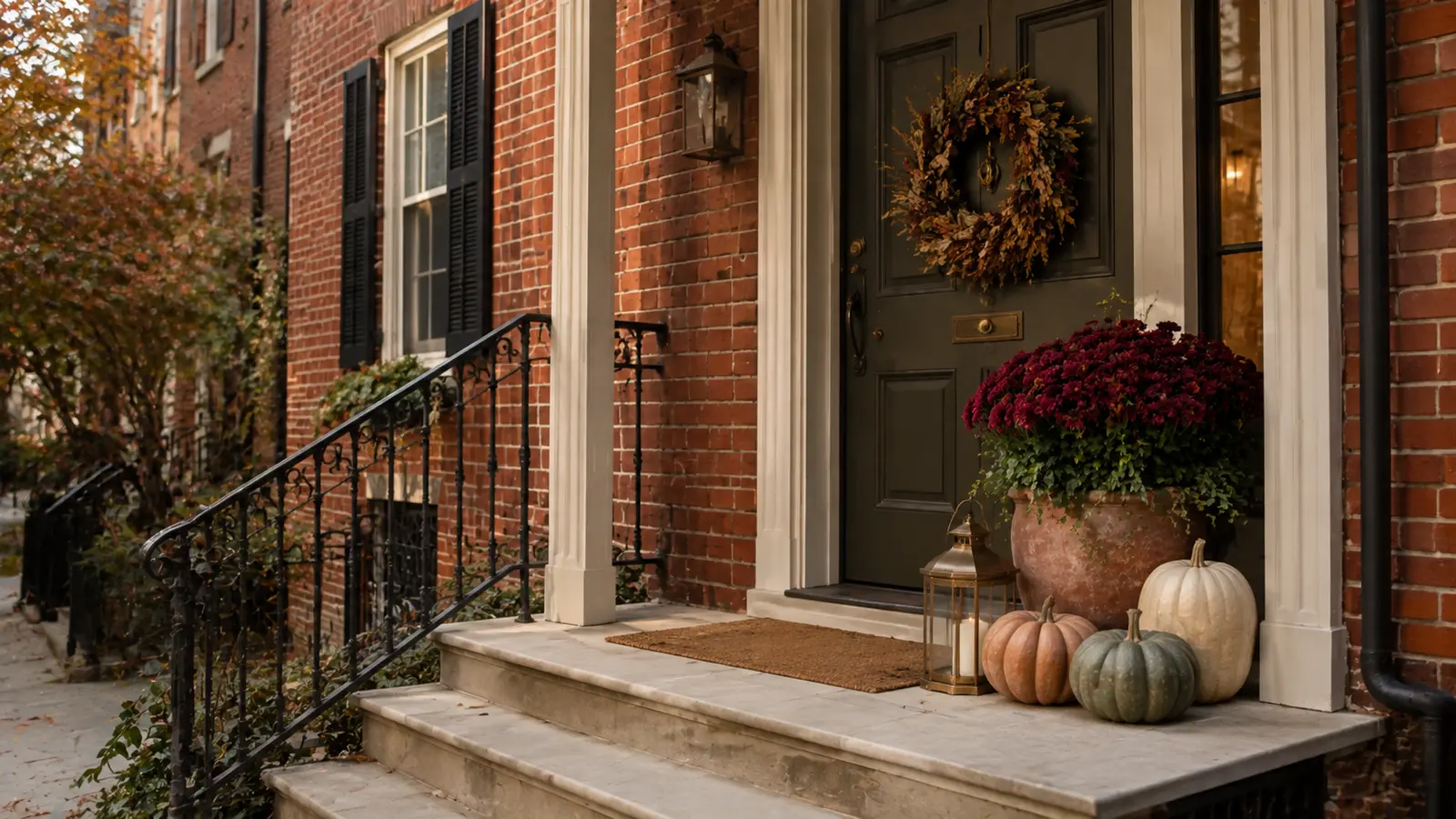
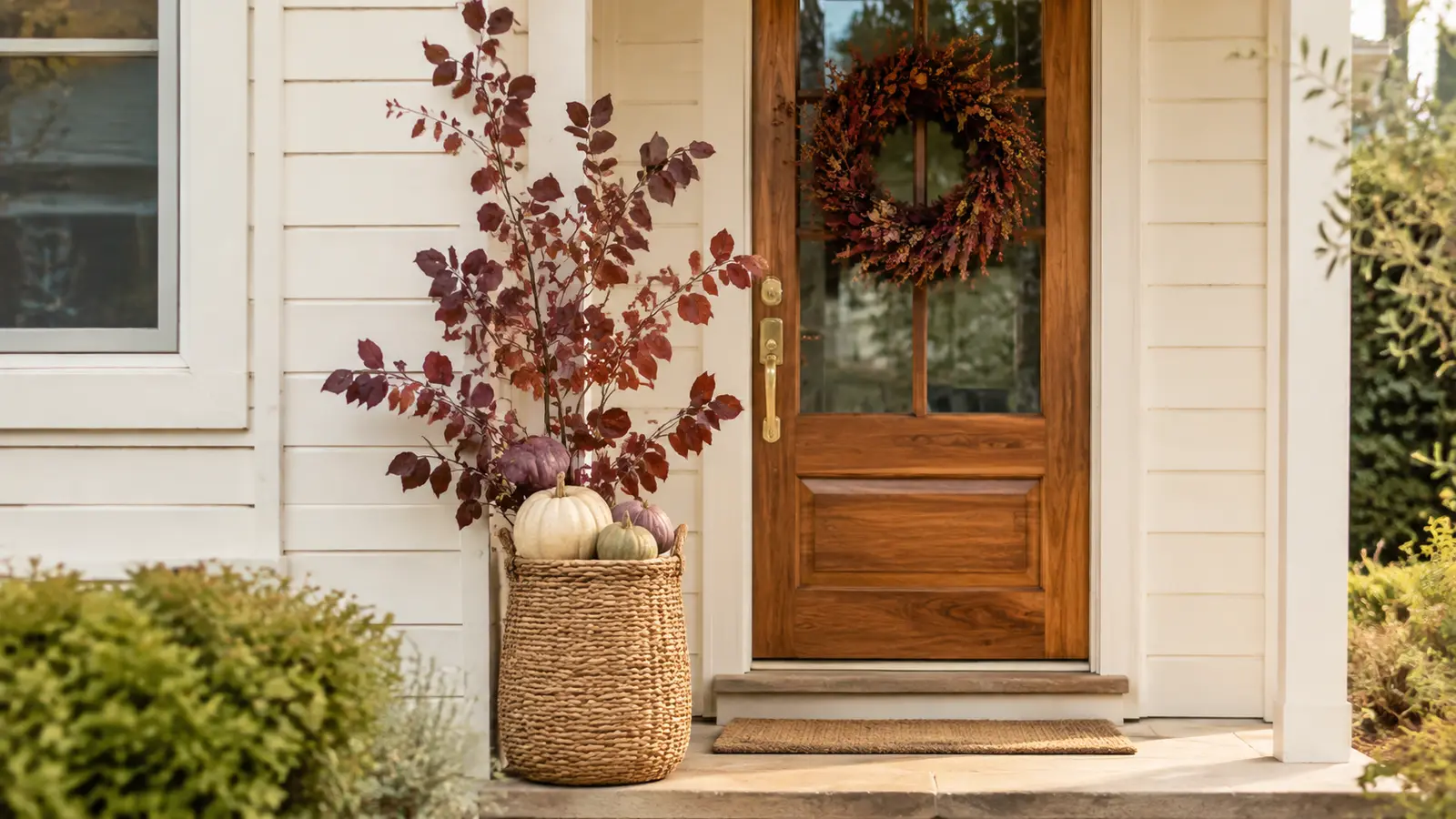
A narrow stoop, townhouse landing, or compact front entry: skip the matching pair entirely. Use one door element, one vertical grouping (a tall basket or a leaning branch) placed to one side instead of two anchors, one secure doormat, and one repeated detail carried indoors. Keep the step itself completely clear, since there's no room to spare.
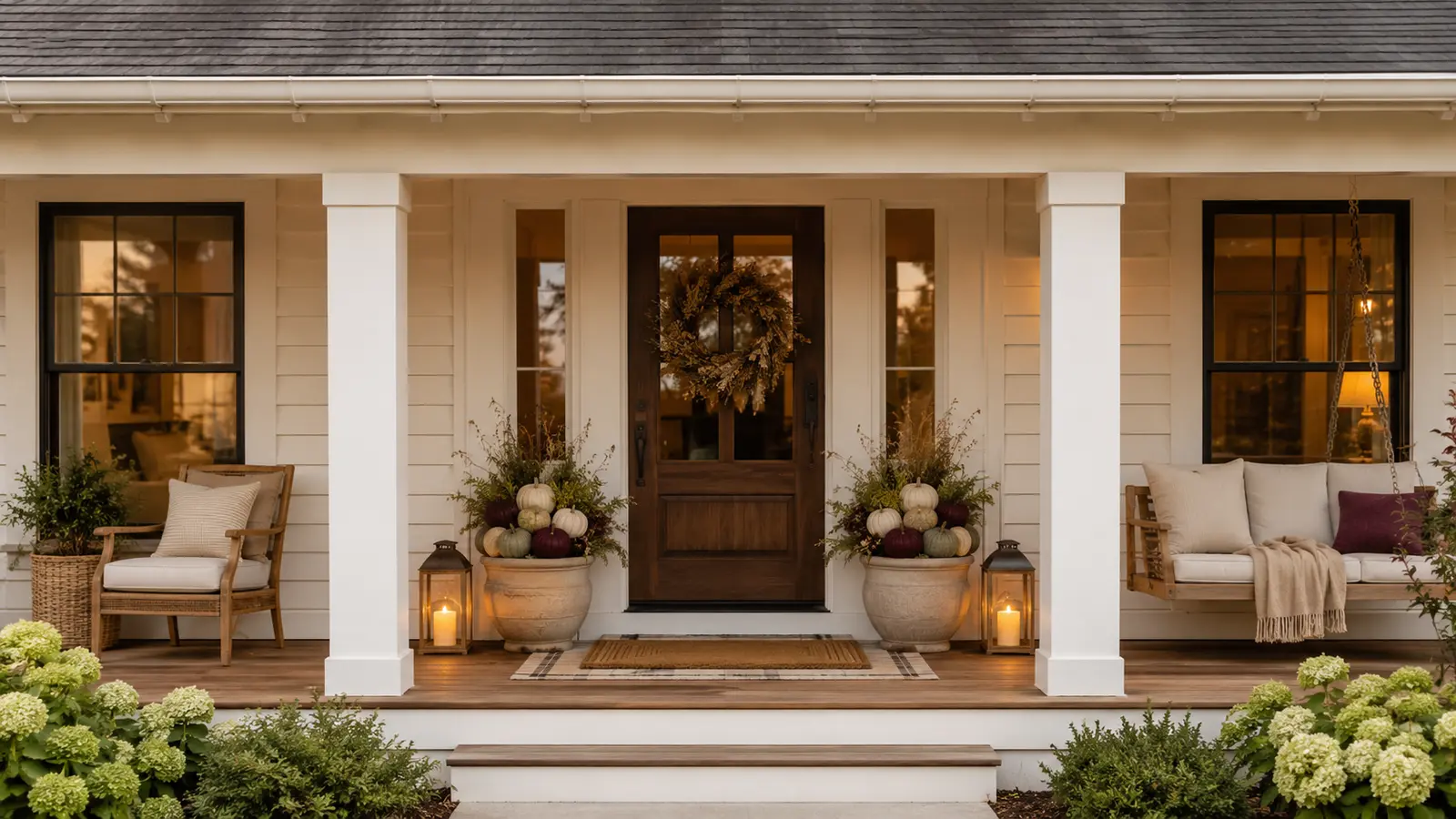
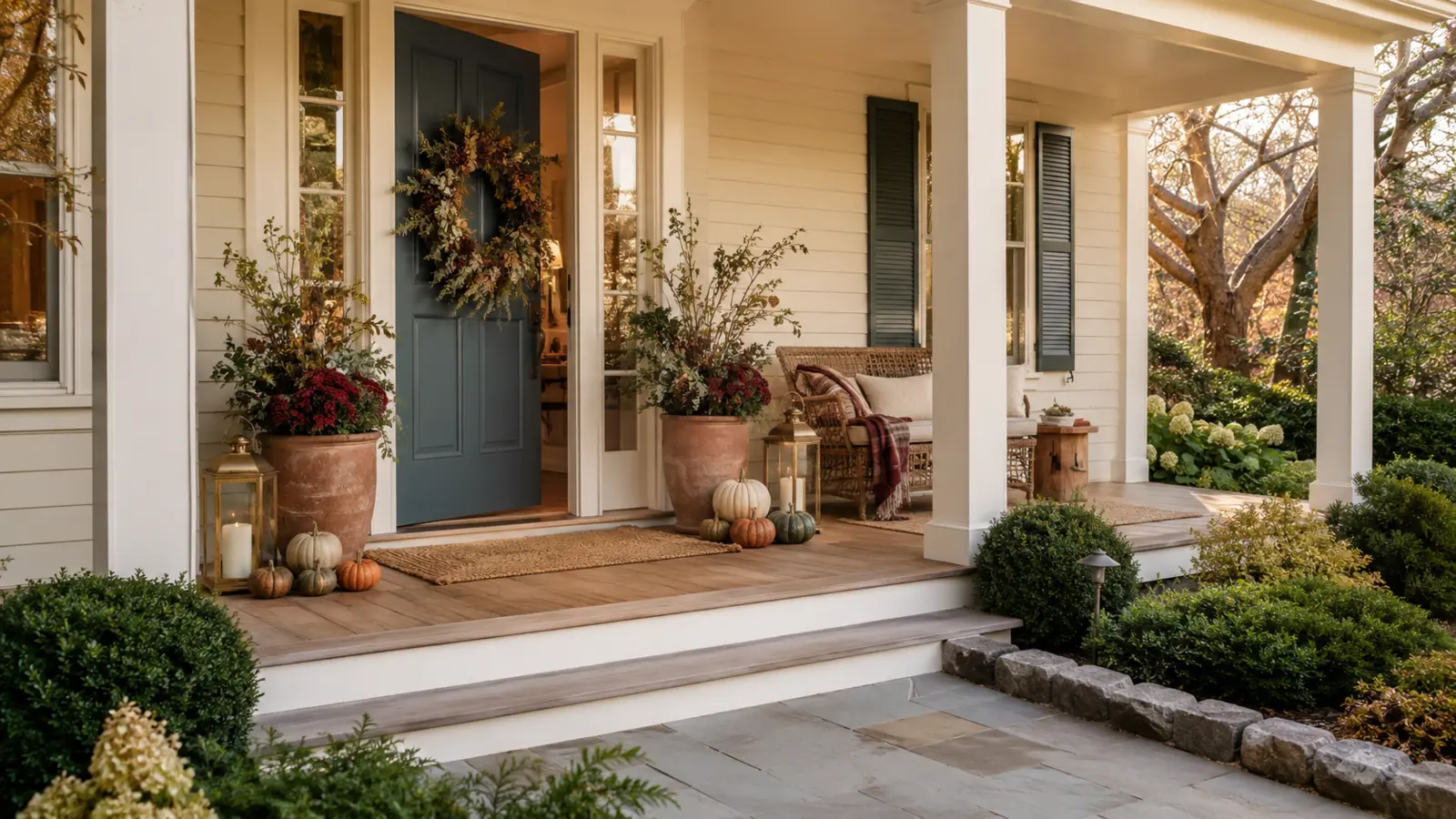
A standard covered entry: this is the formula in its simplest form, a wreath on the door, a planter or lantern on each side, a layered doormat, and three or four grouped pumpkins or a potted mum near the threshold.
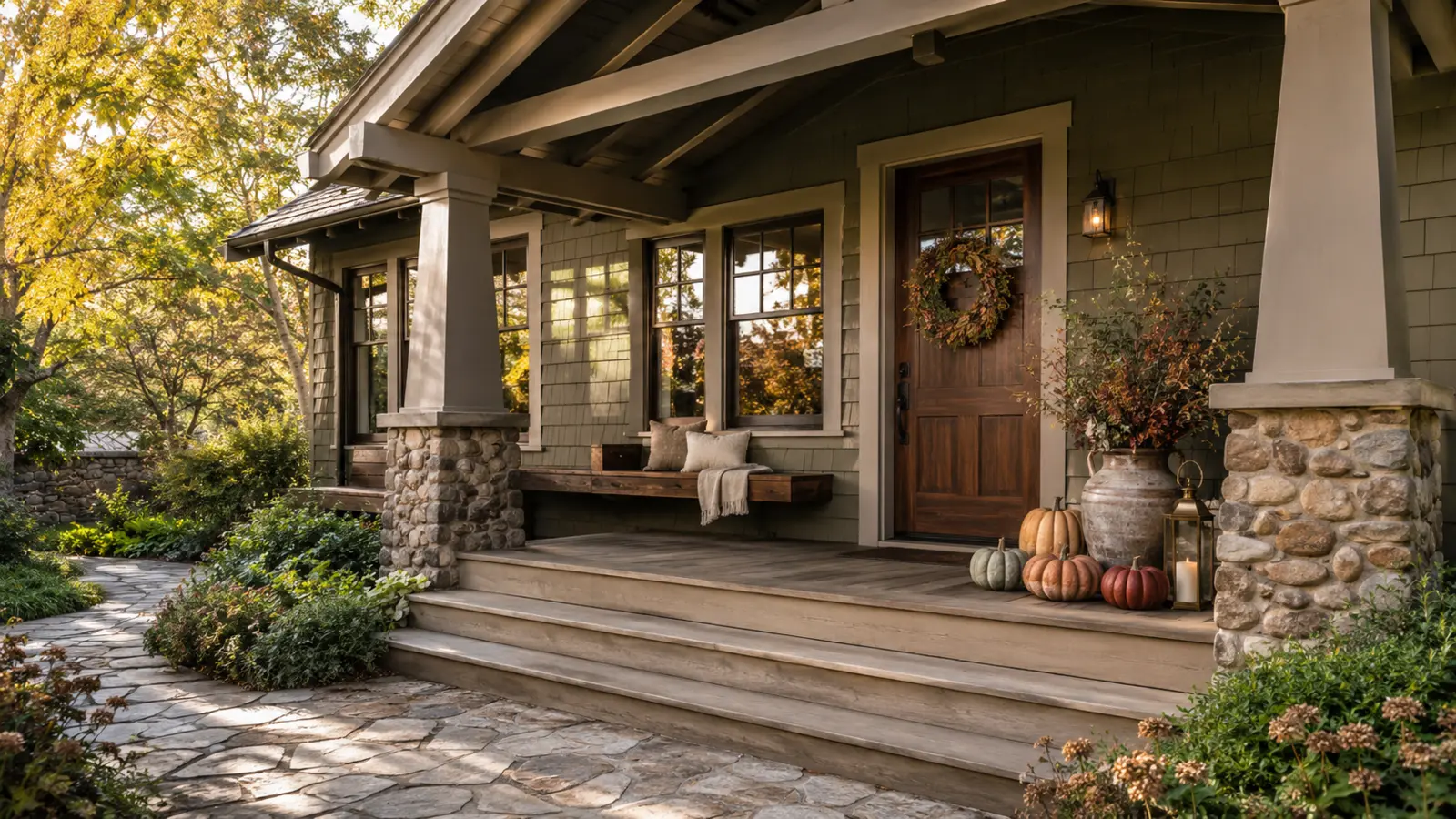
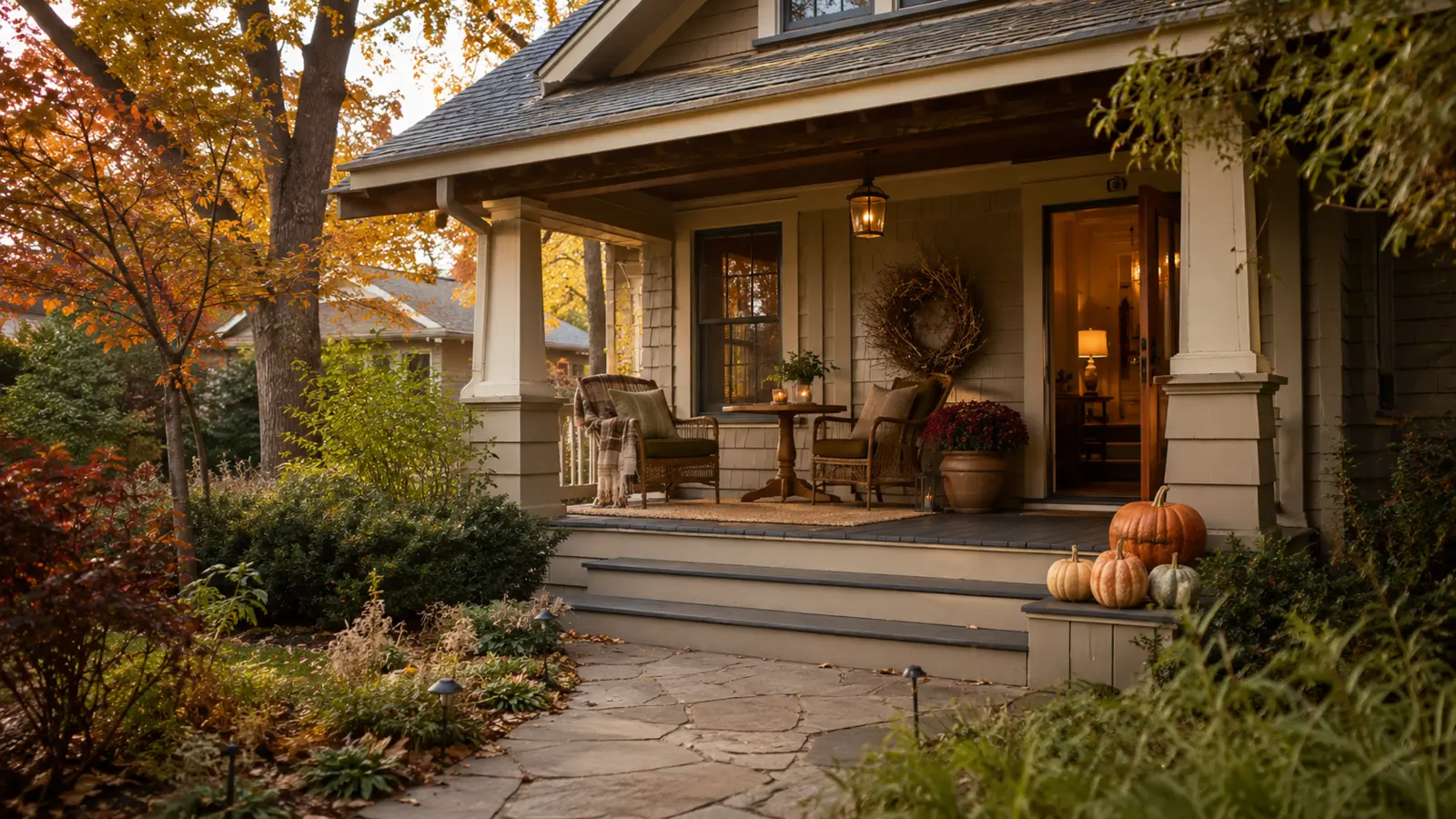
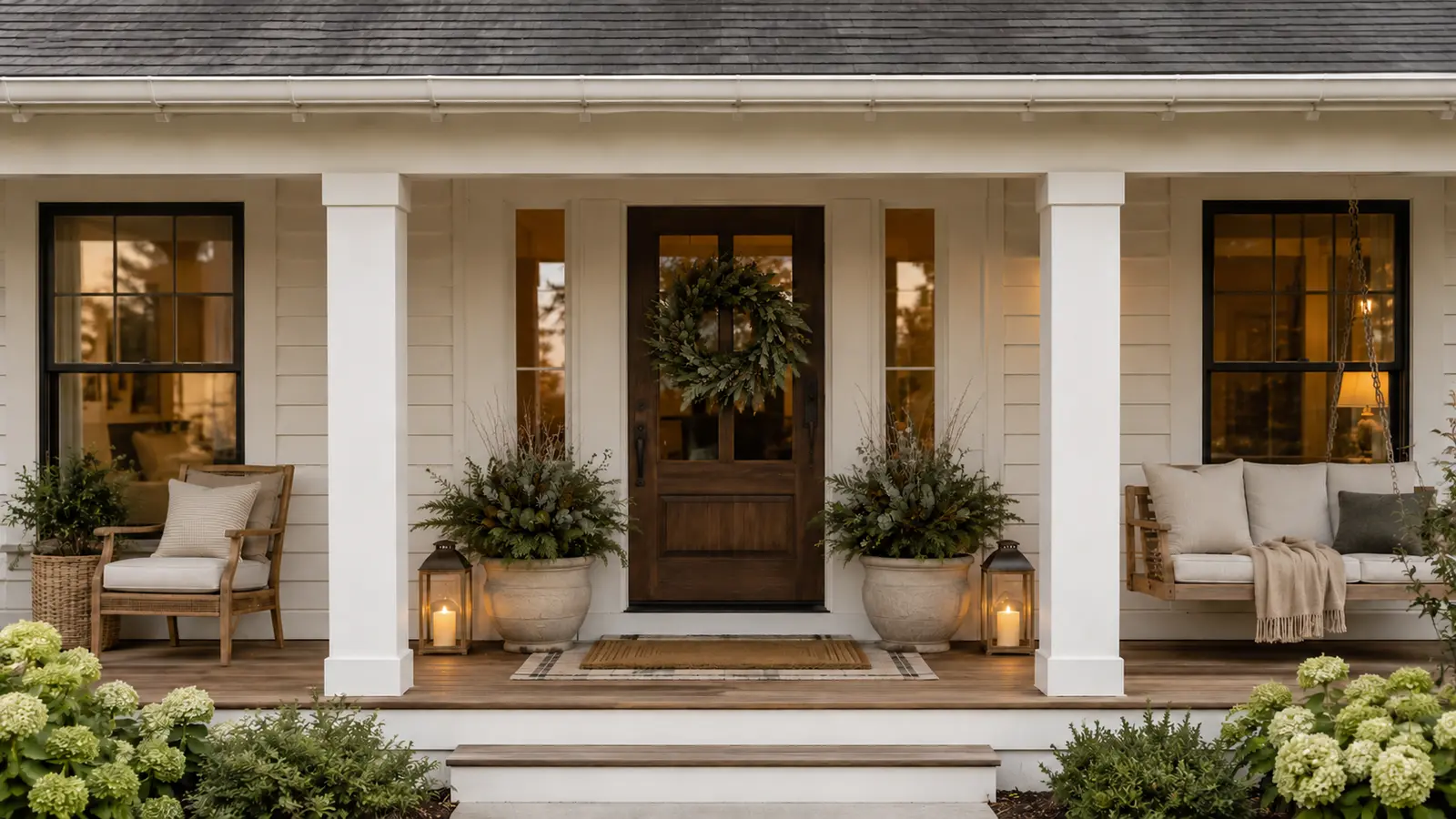
A larger porch with room for seating: let the formula repeat rather than multiply: a wreath at the door, anchors placed at the outer edges of the landing, beyond the walking path, then a second, smaller grouping near the seating so the whole space feels considered, not just the entrance.
Whatever the size, the walkway and the door swing stay completely clear in every version. The formula should never compete with the path guests actually walk.
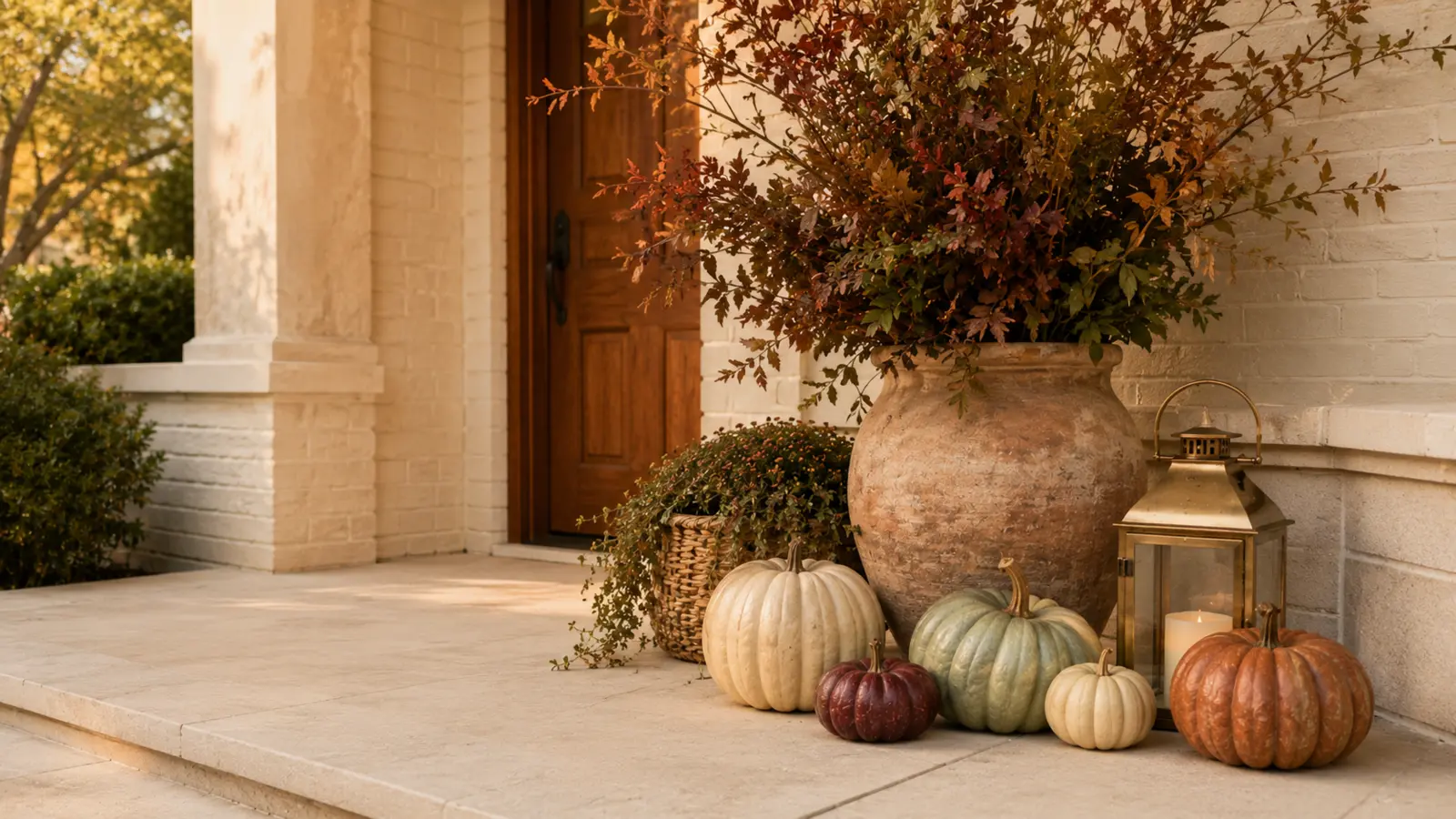
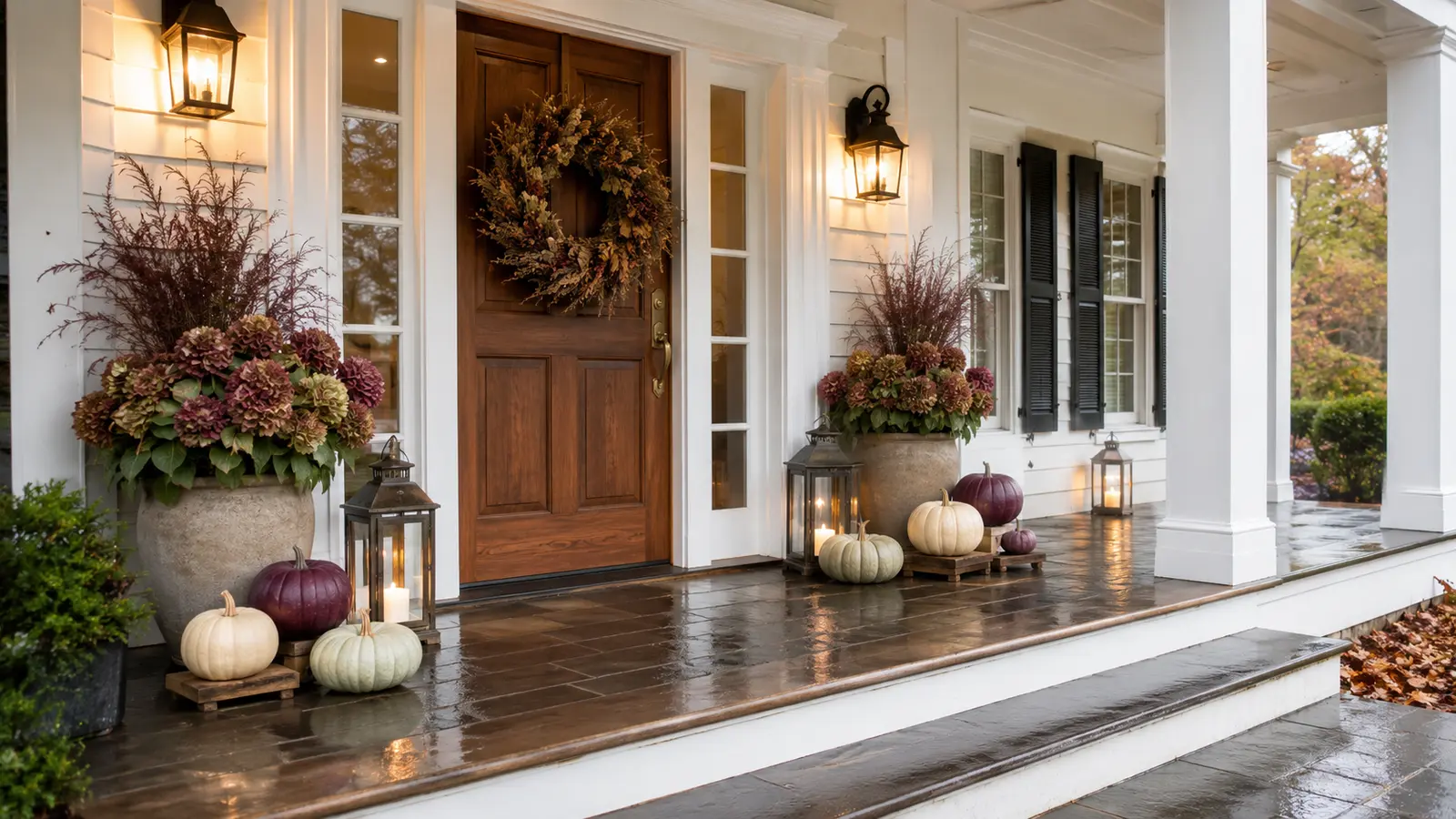
Mixing ceramic, wood, metal, and woven texture on purpose gives a porch the collected quality of pieces gathered over time. A few outdoor lanterns, woven planters, and heirloom-style pumpkins in these varied materials build exactly that kind of layered, considered look.

Choose a Rich Fall Palette That Still Works in November
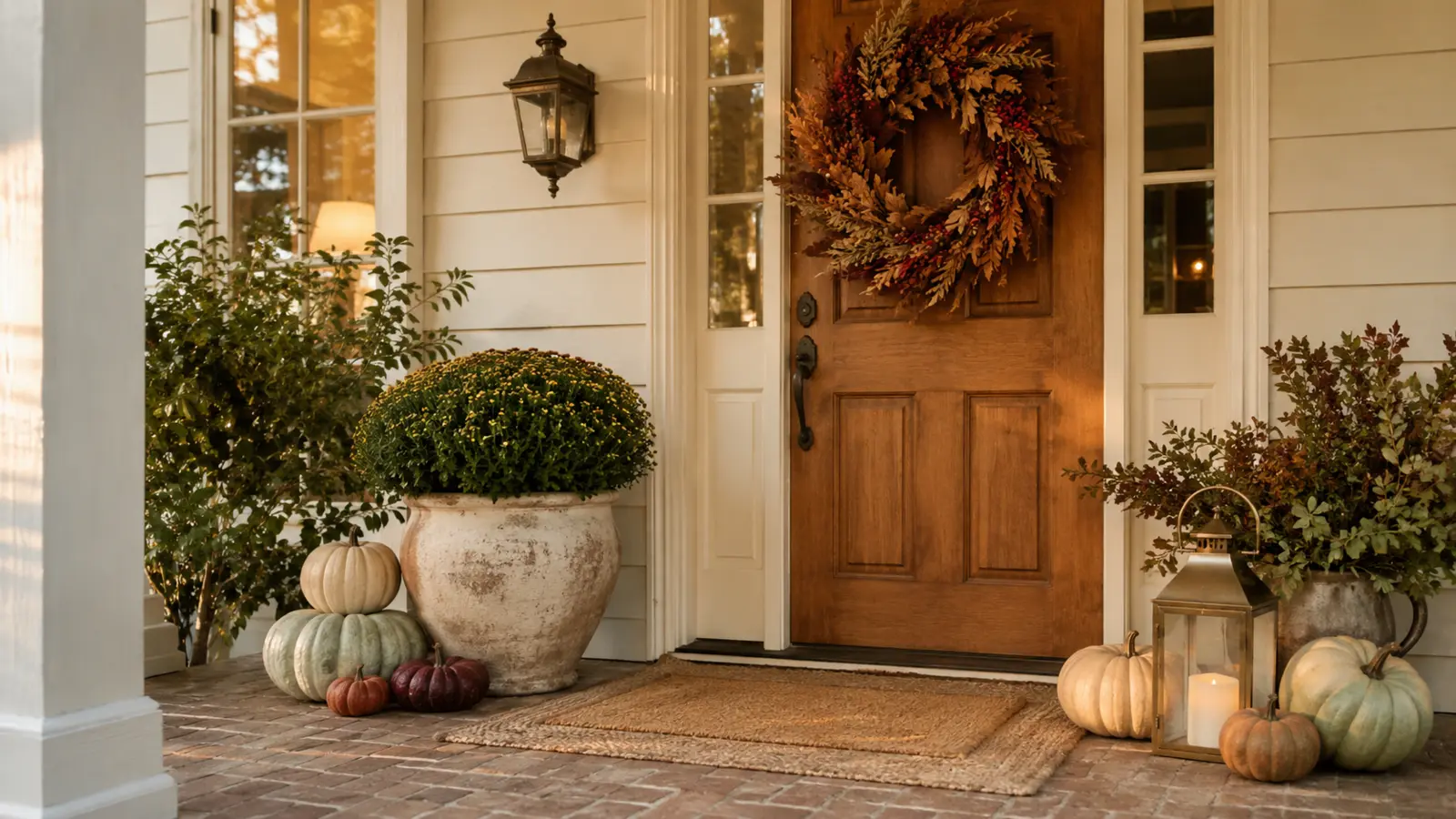
Three moves are all it takes. Choose one quiet foundation: cream, oatmeal, natural wood, or muted greenery. Add one deeper seasonal color: burgundy, rust, plum, chocolate, or aged brass. Repeat that one warm finish two or three times, in a wreath, a cluster of pumpkins, a lantern, or a few small burgundy, plum, and oxblood accent pieces, so it reads as a choice, not an accident. Amber glass catches candlelight beautifully and brings its own warmth to an evening porch. In practice, a cream wreath with a few burgundy stems tucked in, or a cluster of oatmeal-and-rust pumpkins grouped by the door, both follow the same three moves.
Match the Materials to Your Porch's Exposure
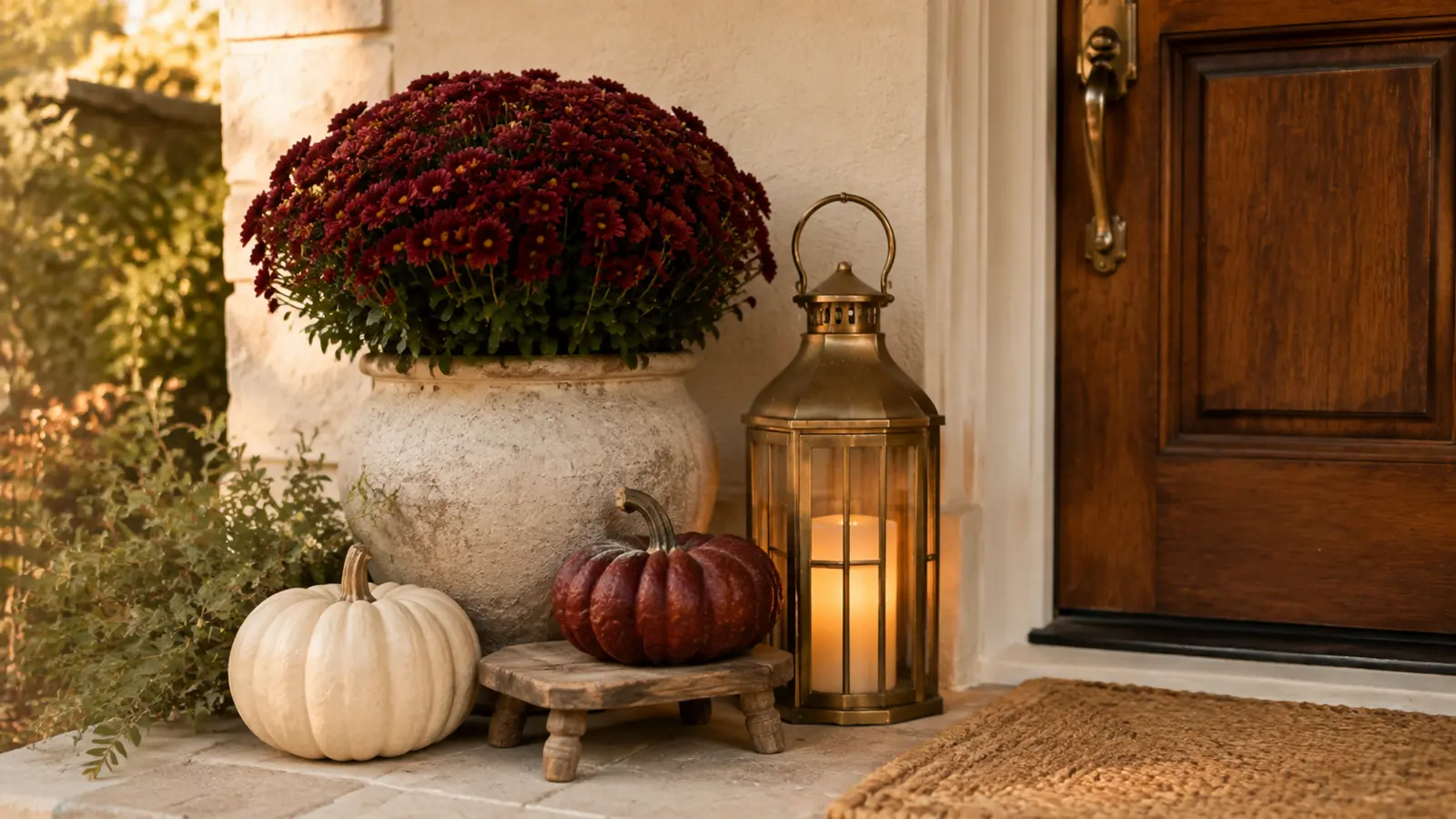
How well a porch holds up depends more on exposure than on the calendar. A covered porch shields most materials from the worst of it; a fully exposed stoop sees more sun, wind, and rain, and needs sturdier choices. Live mums with regular watering and a bit of afternoon shade can hold color for weeks. An outdoor-safe, heirloom-style faux pumpkin in the right finish is the option for anyone who'd rather not think about watering at all.
Uncarved pumpkins hold up well for weeks when they're kept off direct wet ground. Carving shortens their life to days, and moisture is what drives the rot, so a spot with partial cover from hard rain matters more than how many weeks are left until Thanksgiving. Resting a pumpkin on a small stand or an overturned crate instead of bare wood or stone helps too. It keeps air moving underneath, so the base isn't sitting in whatever puddles after rain. Fabric and paper elements sag and fade outdoors faster than people expect, so lean toward weatherproof planters, natural dried materials, and metal or glass instead.
Plan on a quick weekly check rather than a one-time setup: twist off anything that's softened, swap a wilted stem, wipe down glass or metal after a hard rain. Five minutes, not a project, and it's the habit that keeps a porch looking intentional the morning guests walk up, not just on day one.

Keep the Welcome Safe and Easy to Walk Through
A welcoming porch still has to be one people can walk through without thinking twice. Before guests arrive:
- Clear the door swing and the main walkway, nothing on stair edges where a foot could catch in the dark
- Secure a layered doormat so the top layer doesn't curl or slide underfoot
- Use outdoor-rated flameless candles in lanterns, not an open flame near dry seasonal materials
- Skip lightweight vases or baskets anywhere that catches wind, since they tip more easily than people expect
- Double-check that anything called "weather-resistant" is rated for your porch's exposure specifically, not just "outdoor use" in general
Try the Arrival Test
Once the porch is styled, walk it the way a guest will. Head out to the driveway or sidewalk and come back toward the house, carrying something with both hands the way a guest might with a covered casserole, a pie carrier, or flowers and a handbag. Check that the steps and the house number are easy to see from the walkway. Open the door all the way without bumping or moving anything you've set out. Notice whether the lighting feels warm without leaving the walkway itself dark. Then step inside and see whether one color, material, or object carries the welcome forward into the entryway.
Repeat the test close to the time guests are actually expected, when the steps and walkway are beginning to fall into shadow. It's the porch equivalent of setting the table before deciding how to decorate it: the arrangement that looks right standing at the door isn't always the one that works for someone walking up with their hands full.

Carry One Detail From the Porch Into the Entryway
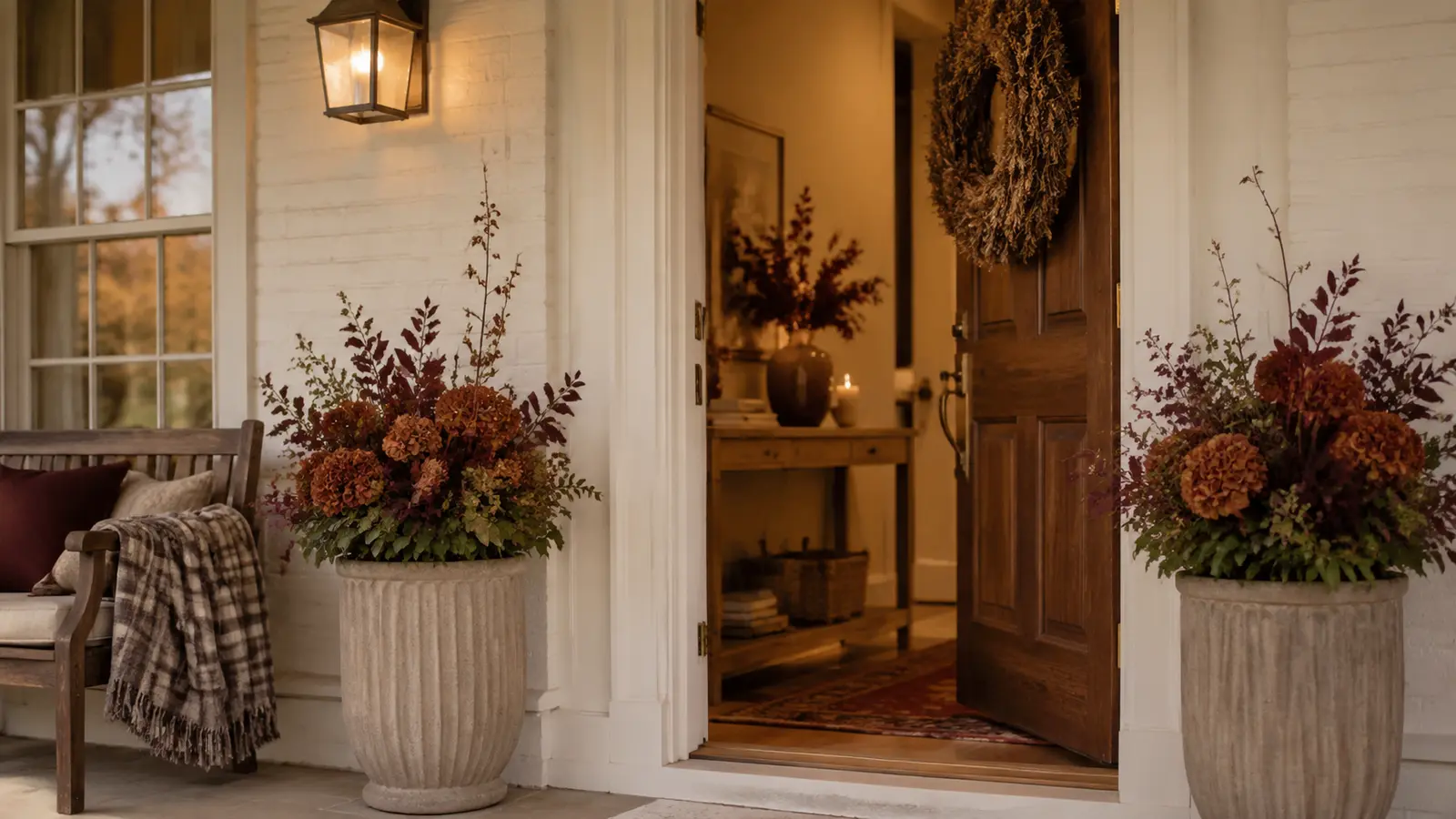
If the welcome seems to stop at the threshold, carry one detail indoors. Let it continue past the door with a candle on the console table, a small vase of branches from outside, or a familiar basket brought out every fall. These small details are what make a house feel gathered for company rather than simply decorated for the season, and someone walking in for Thanksgiving dinner should feel like the house has been expecting them since before they knocked.
It doesn't take more than one echoed piece, brass or warm wood, holding a candle and a few stems in the same tones as the porch. That's enough for the entryway to feel like part of the same warm thought, not a separate room nobody got to yet.

Reuse the Base for Winter
Begin with what you already own. A lantern, a neutral planter, or a natural-fiber base mat may only need a seasonal layer added beside it, not a full replacement. If there's a genuine gap, choose one durable piece that can return next fall or transition into winter styling with almost no change. Brass and metal lanterns, weatherproof planters, and a layered doormat base all carry forward easily.
In practice, that means only the smallest pieces need refreshing year to year, a new wreath, a different stem in the vase, while the planters, lanterns, and doormat base stay exactly where they are. A wreath swap is usually the whole job: dried florals and pumpkins come down; magnolia leaf or fresh winter greenery goes up. Everything else stays put. The porch keeps working long after this particular Thanksgiving is over.
SHOP THIS ARTICLE