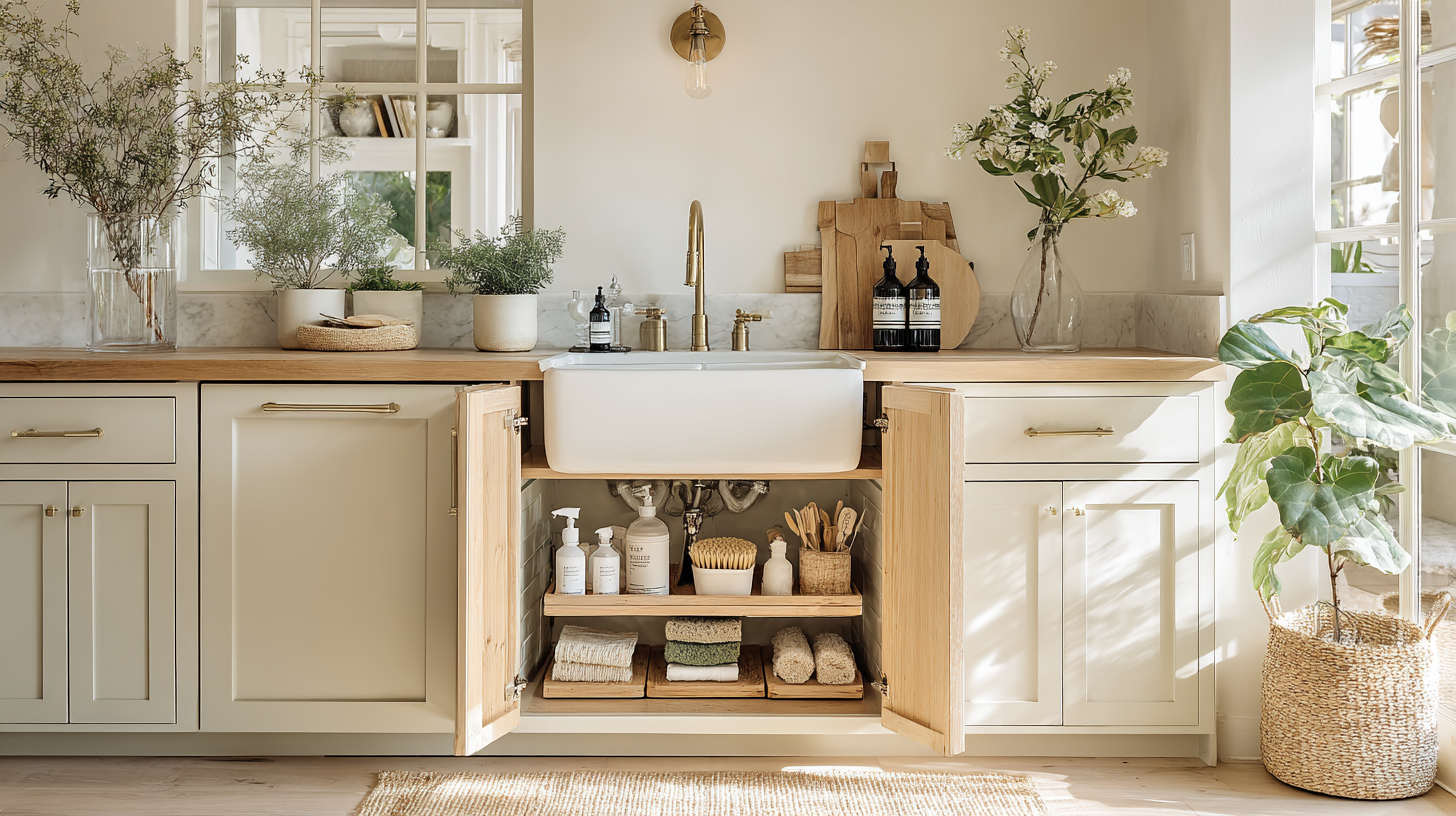
The cabinet under the kitchen sink is the one most people open, wince at, close again, and deal with later. It collects everything that doesn't have a place: the extra dish soap, the cleaning supplies that came in a bundle, the scrubbing pads that fell behind the pipe. It's not chaotic because you're not trying — it's chaotic because the space is genuinely awkward and most organization approaches ignore that.
Standard shelves and drawer systems are built for a plain rectangular cabinet with nothing in the middle. The pipe is exactly what most products don't plan for, which is part of why so many under-sink organizing attempts fail within a month — not because the person gave up, but because the product never fit the space to begin with.
This one doesn't.
This post contains affiliate links. As an Amazon Associate, I earn from qualifying purchases, at no extra cost to you. #ad
Start with Everything Out
Pull everything out. All of it. The bottles in the back that have been there since you moved in, the mystery cleaners, the things you bought and never used. Put it all on the floor and look at what you have.
Toss anything empty, expired, or that you've never once reached for. Cleaning products that seemed useful once but never get used are not useful — they're just taking up space you need. Be ruthless here. The goal is a cabinet where you can see and reach everything, and that only works if there's less to see and reach.
While it's empty, wipe down the cabinet floor — there are almost always drips from something, and cleaning while it's bare takes thirty seconds. Check around the pipes for moisture while you're at it. A small amount of condensation is normal. A damp cabinet floor is something to address before anything goes back in, not after.
The space under the sink is awkward. The fix is not to fight the awkward — it's to organize around it.
Work Around the Pipe, Not Against It
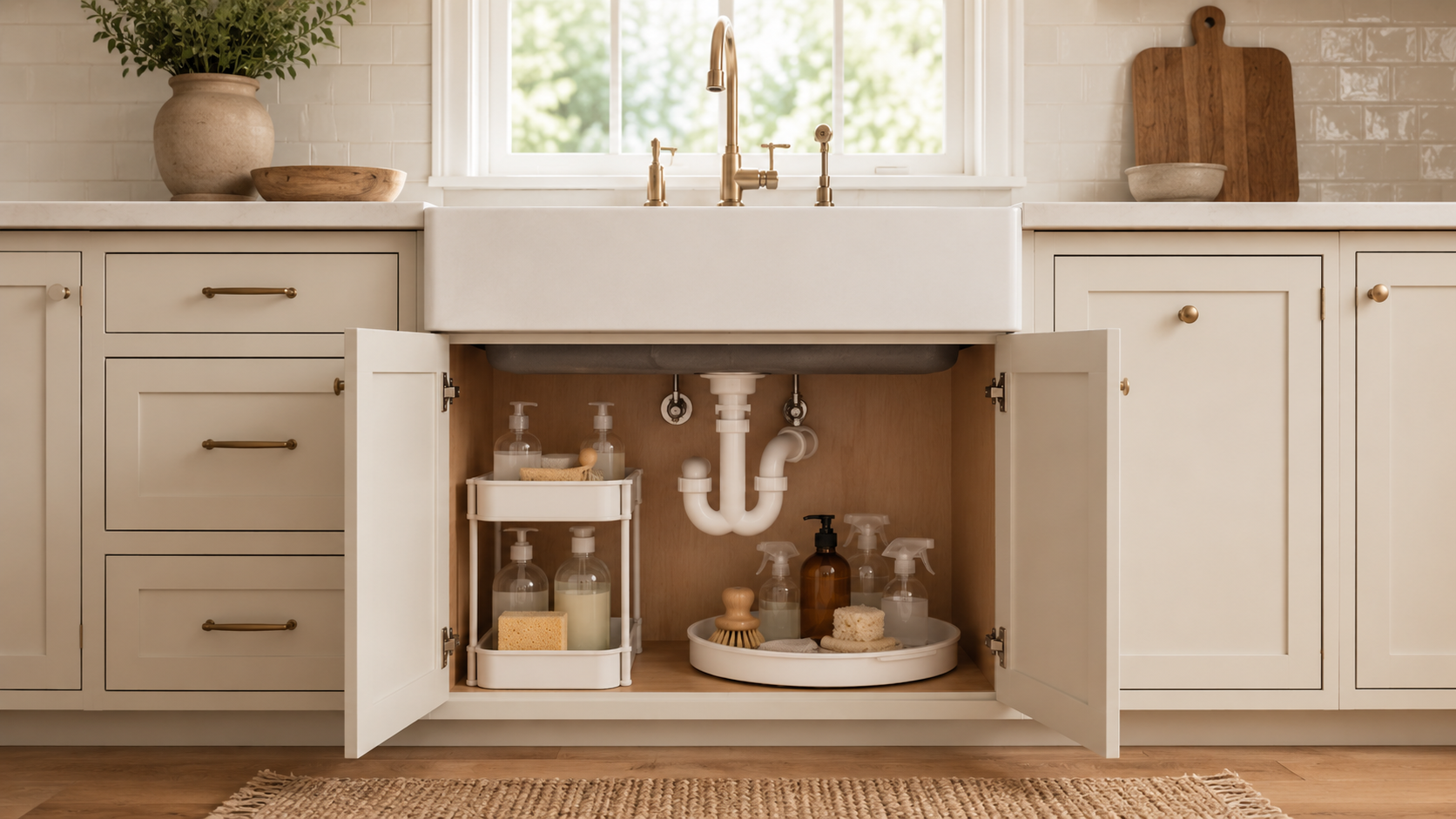
The pipe in the middle of most under-sink cabinets is the reason standard organizers don't work. A flat shelf placed straight across hits it. Most drawer systems can't accommodate it. The solution is a two-tier adjustable caddy with a lazy susan turntable — specifically, one that fits on either side of the pipe and rotates so you can reach what's behind it without moving everything in front.
Two small turntables (one for each side) or one large one placed strategically makes the full cabinet accessible. Cleaning sprays go on the turntable — you spin, you reach, you're done. No more knocking bottles over to get to the one in the back.
What goes where on the turntable matters too. The spray you use today goes front and center. The backup bottle of dish soap, the spare sponge, the thing you reach for once a month — those go toward the back, where the slight extra effort of spinning further is exactly the right amount of friction for something you don't need immediately. A cabinet works best when the easiest things to reach are also the things you reach for most.
The Door Is Storage
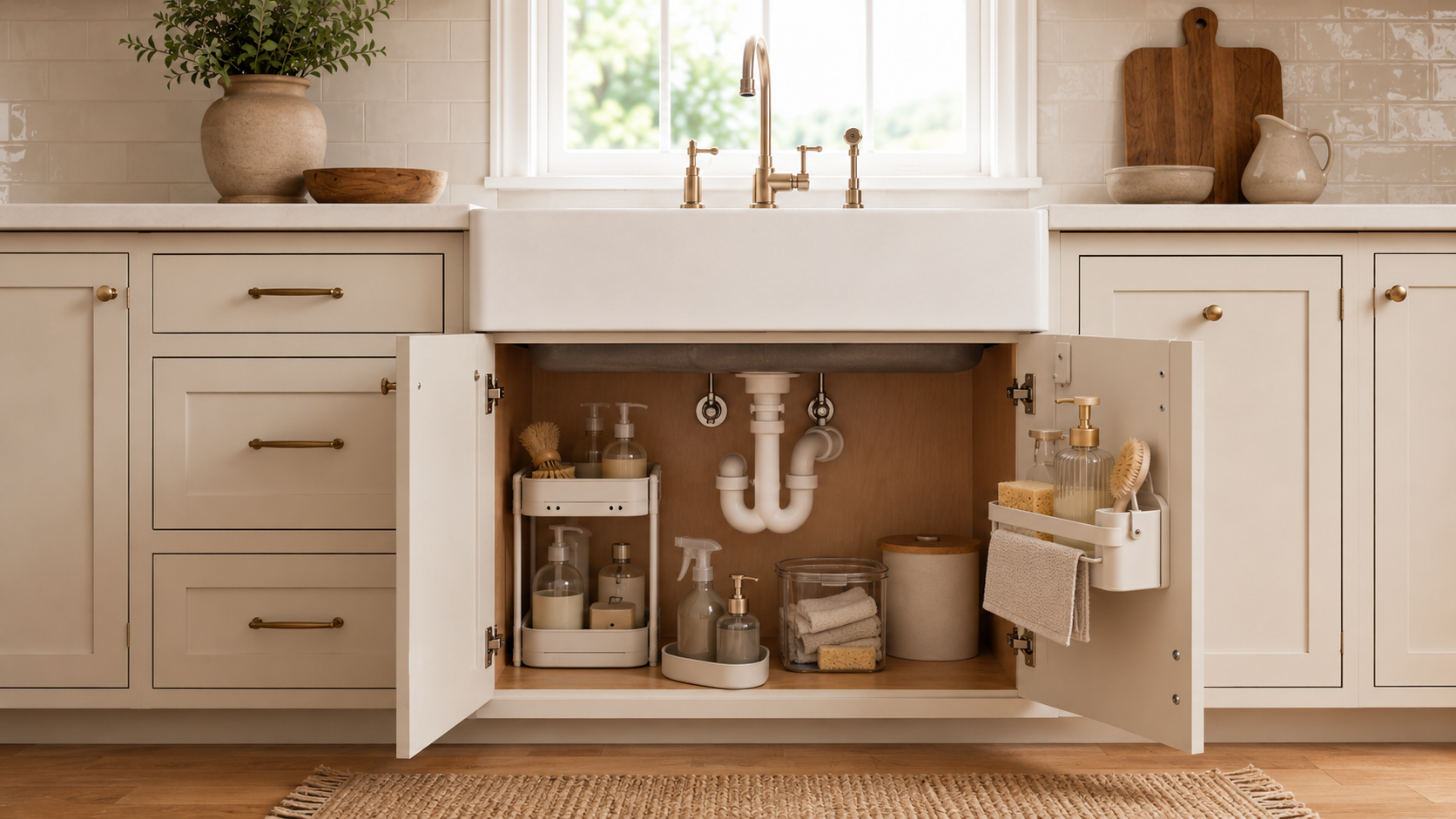
The inside of the cabinet door is the most underused surface under the sink. A simple over-door organizer or a mounted holder turns that vertical space into practical storage: dish soap refills, extra sponges, a small bottle brush, scrubbing pads, the things you reach for constantly but don't need a whole shelf for.
What goes on the door: small, frequently used items. Not the heavy things, not the large bottles, not backup supplies. The door is for daily reach — the things you grab every time you're at the sink.
An over-door cabinet organizer for this specific use is a different category from the over-the-door hooks you'd hang on a pantry — they're shallower, sized for narrow bottles and a sponge rather than a stack of towels, and they mount close enough to the door surface that they don't catch on anything when the door swings shut. Look for one that mounts with screws rather than adhesive if the door gets opened and closed several times a day; adhesive backing tends to give out faster under that kind of daily use than people expect. The same fix works under a bathroom sink for the same reason — see our Bathroom Finds for more of what we'd use there.
The One Rule That Keeps It That Way
Don't keep things under the sink that don't belong there. This sounds obvious, but the cabinet becomes a catch-all because the rule doesn't exist — anything that doesn't have a home ends up under the sink by default.
Under the sink is for cleaning supplies and dish essentials. Not the extra paper towels (those go in a pantry or closet). Not the tools (those go with tools). Not the mystery items that drifted there from another room. One category, one cabinet. The category is cleaning.
The things that belong: dish soap, a backup sponge or scrub brush, cleaning spray for counters and appliances, trash bags, rubber gloves if you use them, a small bottle of wood cleaner if you have wood cabinets. That's the core list. If it's a kitchen cleaning supply, it can live here. If it's something else — food, paper goods that absorb moisture over time, medications, anything you'd need to grab quickly while standing rather than crouching — it needs a different home, even if this cabinet happens to have room for it today.
When you bring something new under the sink, something old leaves. Cleaning supplies accumulate faster than they get used — three half-empty sprays for the same job is a more common problem than people admit — and the cabinet only stays organized if the volume stays manageable.
The Restocking Habit That Keeps It That Way
The cabinet reverts to chaos when restocking doesn't have a specific place to go. A cleaning spray runs out, the replacement goes onto a random shelf instead of directly under the sink, and the system starts to fragment from there. The backup item stops being a backup and becomes an orphan — and the cabinet fills up with things that don't belong there because there's suddenly empty space inviting them in.
The habit is this: when something runs out, the new one goes directly back under the sink. Not onto the counter, not onto a shelf, not onto the grocery list until the space clears out — directly back into its spot, immediately. This is the only maintenance the system needs. Done consistently, the cabinet stays organized indefinitely without any extra effort.
The whole process takes less than an hour. The result is a cabinet you open without wincing.