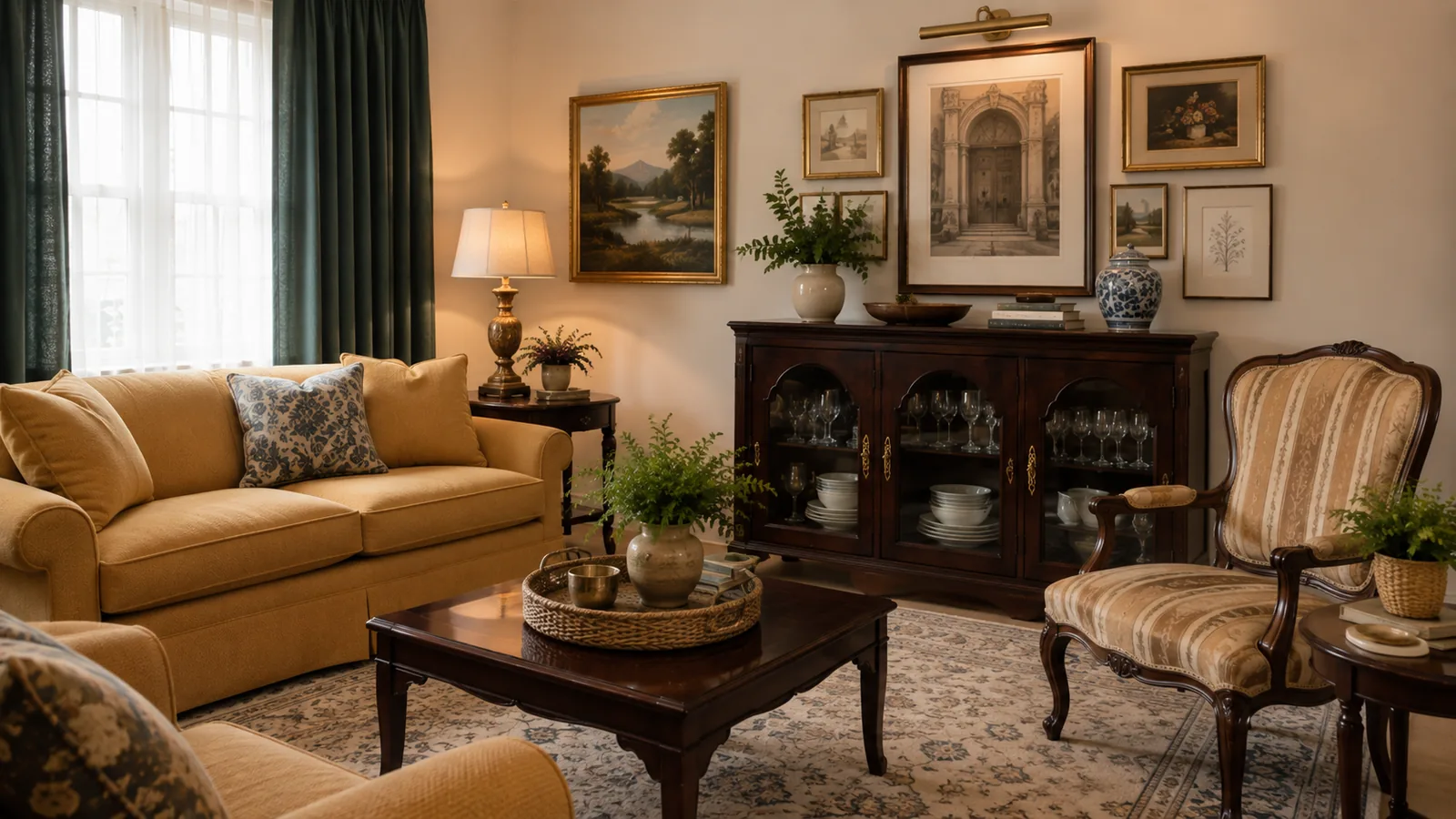
There is a particular decorating problem that only fully makes sense after arriving at a Foreign Service post. The house may be new to you, but most of the largest things inside it have already been chosen.
The sofa is there. So are the armchairs, coffee tables, lamps, dining set, bedroom furniture, and, quite often, a substantial dark-wood china cabinet. For many Foreign Service families, that furniture is some version of the Drexel-heavy inventory that has become so recognizable that an entire community earned the nickname Drexpat.
Some posts also have Ethan Allen pieces, particularly in newer inventories, but Drexel remains the reference point that gave the Drexpat nickname its meaning.
Not everyone who reads this article will relate to it right away, and that's alright. If you've never had a house arrive already decorated by someone else's decisions before you've even unpacked, some of what follows may not fully make sense. I'm a diplomat myself, and this post is written specifically for that world: Foreign Service families, other diplomats, and military families living through a government-furnished assignment. If you've lived it, you already know exactly the feeling I mean: arriving somewhere new and being handed furniture you didn't choose, can't easily change, and still have to make feel like home. This is the guide I wish I'd had the first time.
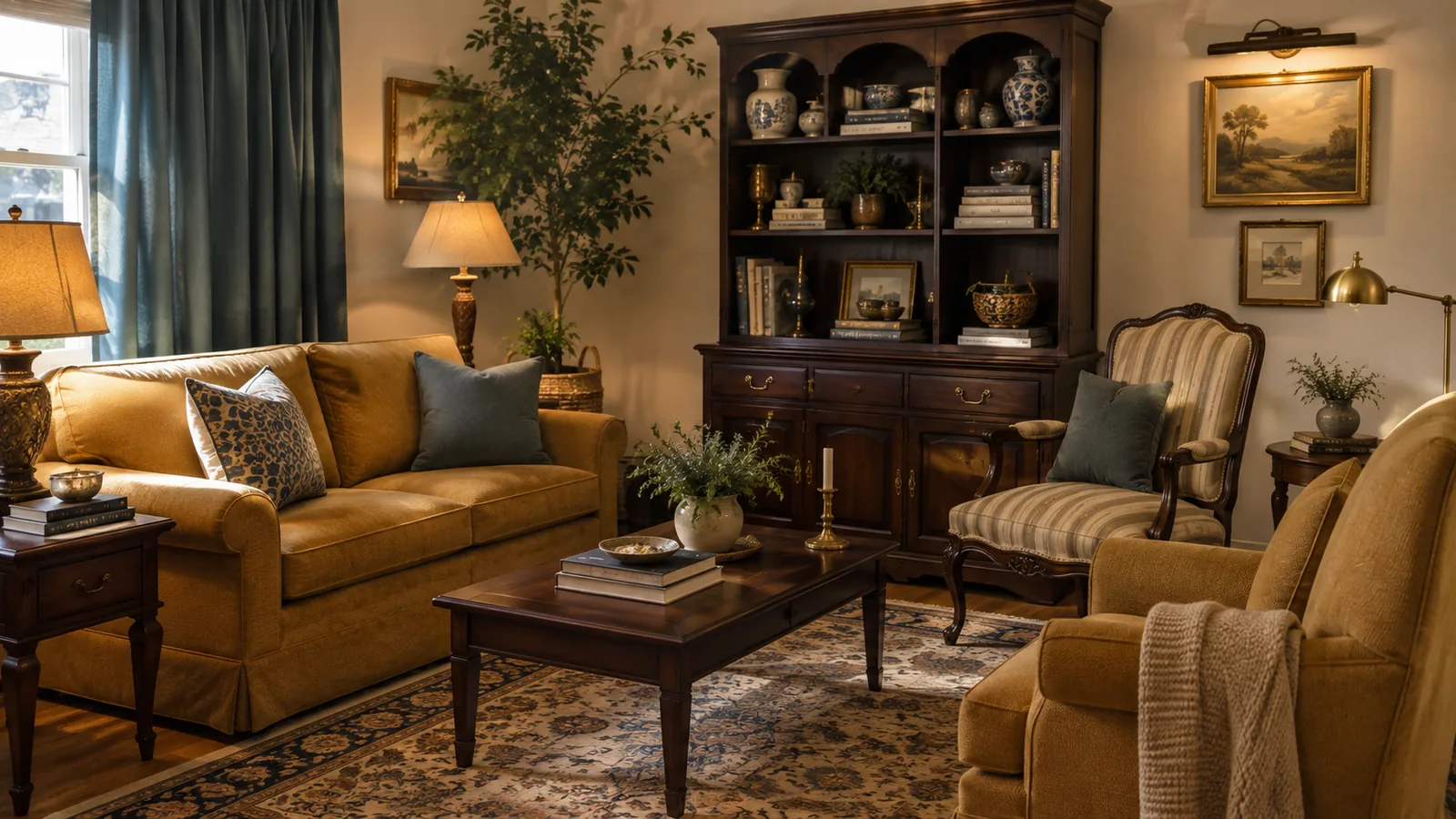
Dark wood. Brass hardware. Traditional silhouettes. Skirted sofas. Mustard, brown, beige, blue, or patterned upholstery. Formal dining chairs. Heavy dressers. Distinctive lamps. Occasionally a chair that appears to have arrived from an entirely different decade than the sofa beside it.
And although furniture policies vary by post, it is usually smartest to decorate as if the furniture you've been assigned is staying. Some posts may permit certain pieces to be removed or exchanged depending on policy, condition, and warehouse capacity. If your post allows it and that works for your family, absolutely take advantage of the option. But it is not something most families should build an entire decorating plan around.
The more useful question is: how do you make a room look intentional when you didn't choose its biggest pieces?
Usually, the answer is a combination of two things: learning which traditional pieces can actually work in your favor, and knowing how to soften the ones you simply cannot love.
This post contains affiliate links. As an Amazon Associate, I earn from qualifying purchases, at no extra cost to you. #ad
Before Buying Anything, Work the Room
Sometimes the furniture isn't the entire problem. The arrangement is.
Government furniture may be placed wherever it fits when a house is prepared, but that does not necessarily mean it has to stay in exactly that configuration.
Two traditional chairs pushed against unrelated walls may look accidental. Turn them toward one another and they become a conversation area. A sofa does not always need to hug the wall. A large china cabinet may make more sense as the visual anchor on one wall than squeezed into the dining area simply because it contains glass doors. Moving an end table and lamp can create symmetry where the room previously felt disconnected.
Try the furniture in a few arrangements before purchasing anything to "fix" the room. Sometimes the largest improvement costs nothing at all.
Not Every Drexel Piece Needs Fixing
Traditional furniture has become the villain in a lot of decorating conversations, but some of the pieces Foreign Service families inherit at post have much better bones than they first appear to.
The dark wood sideboard. The dining table. The bookcase. The substantial dresser. Even the enormous glass-front china cabinet.
Trying to force every one of those pieces into an ultra-minimal pale modern room can actually make them look more awkward. Sometimes the better approach is to work with the visual language already present.
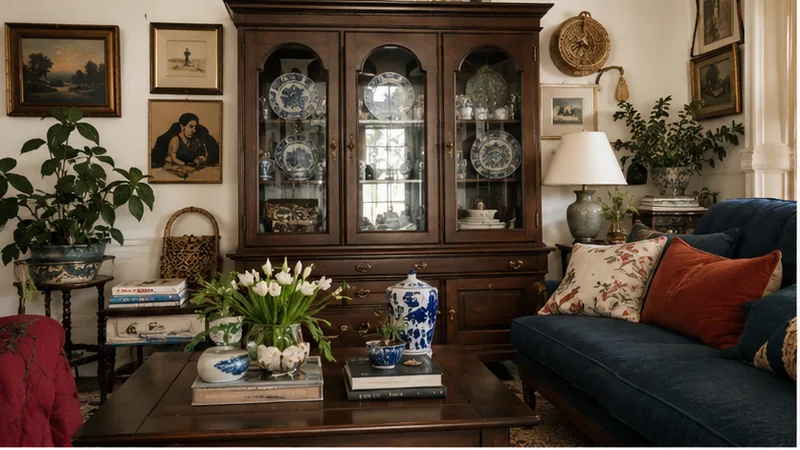
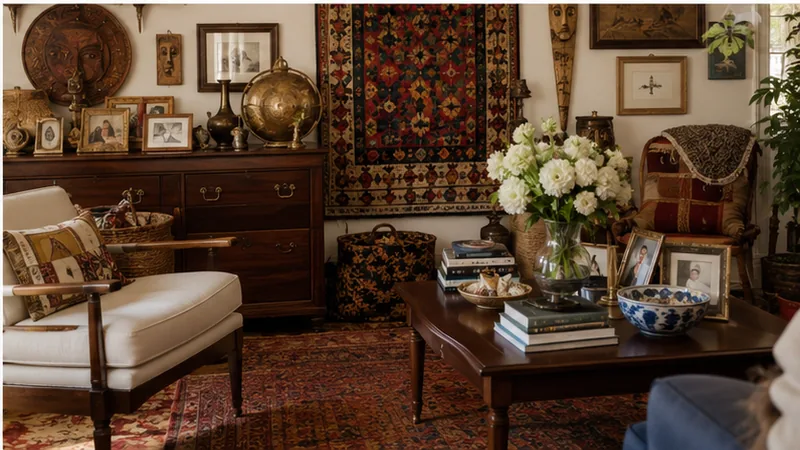
Dark wood responds beautifully to texture. Traditional silhouettes work naturally with books, ceramics, art, textiles, brass, baskets, and pieces collected over time. A heavy cabinet looks less imposing when the objects around and inside it give the eye somewhere else to travel.
The goal isn't to make the Drexel invisible. It is to make it stop being the most interesting thing in the room.
Traditional Furniture Doesn't Mean One Decorating Style
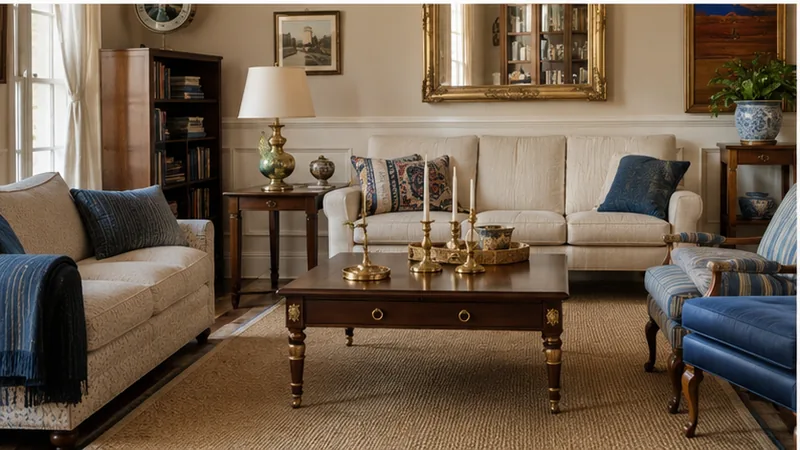
Ralph Lauren Home is an easy reference because dark wood, rugs, books, brass, tailored textiles, and collected objects all sit comfortably in that world.
But not everyone wants a dark, tailored Ralph Lauren room, and traditional furniture doesn't require one.
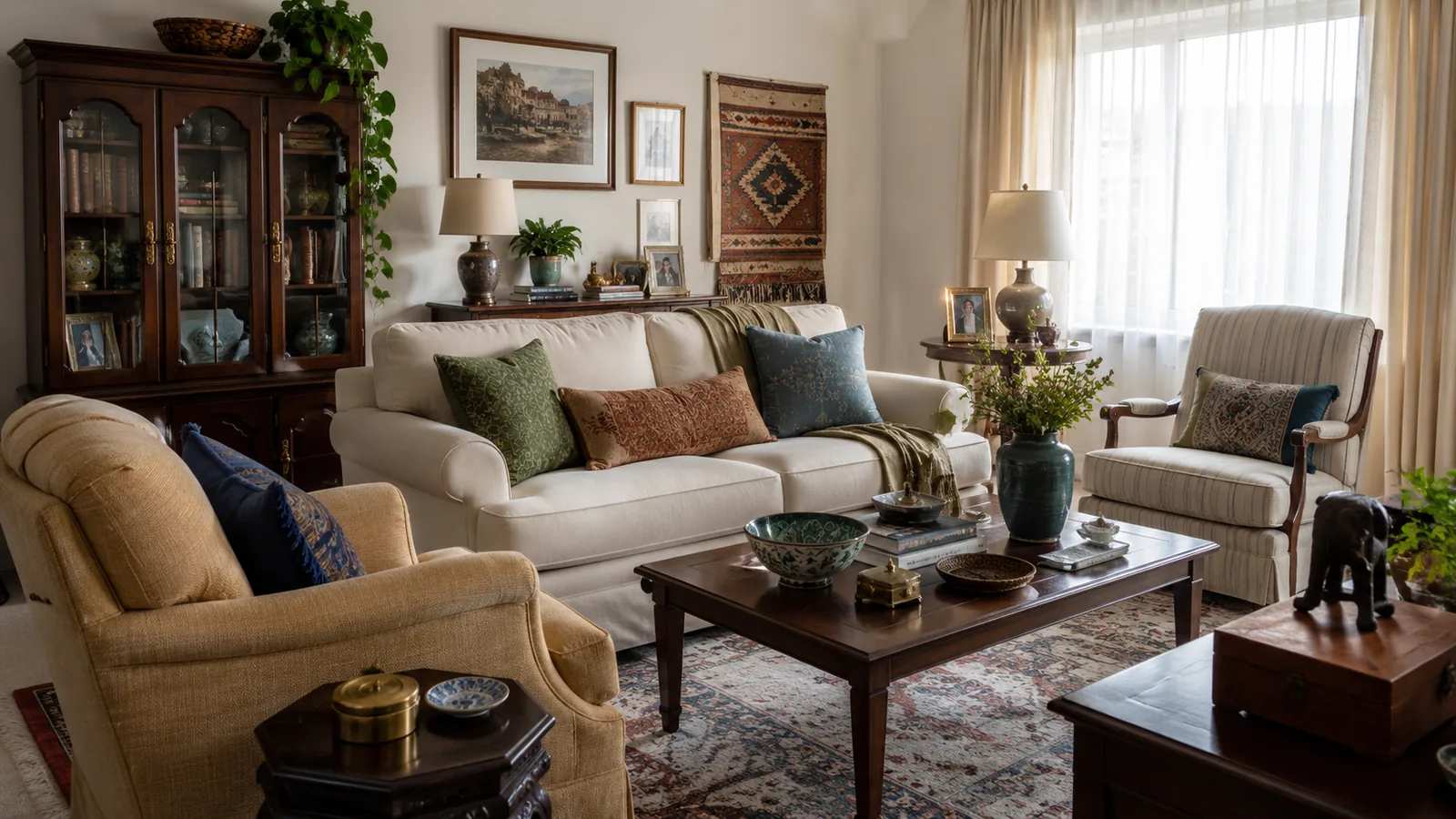
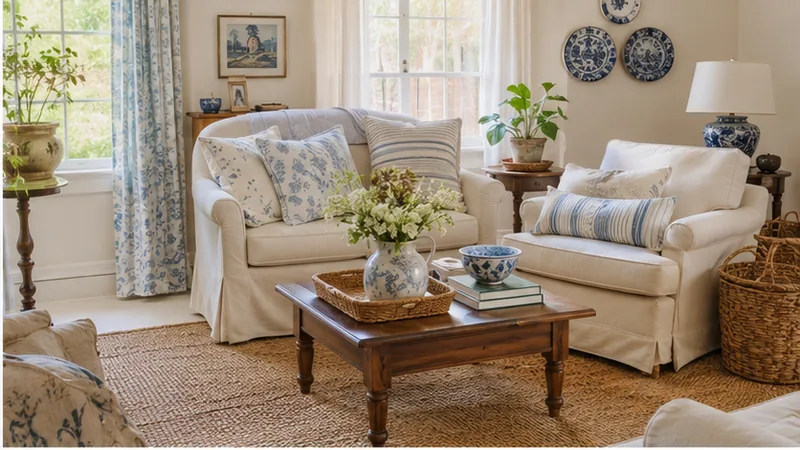
A Drexel cabinet can lean collected traditional, with the sort of comfortable mix associated with Bunny Williams: old and new pieces together, art, pottery, books, textiles, and things that appear to have accumulated naturally over time.
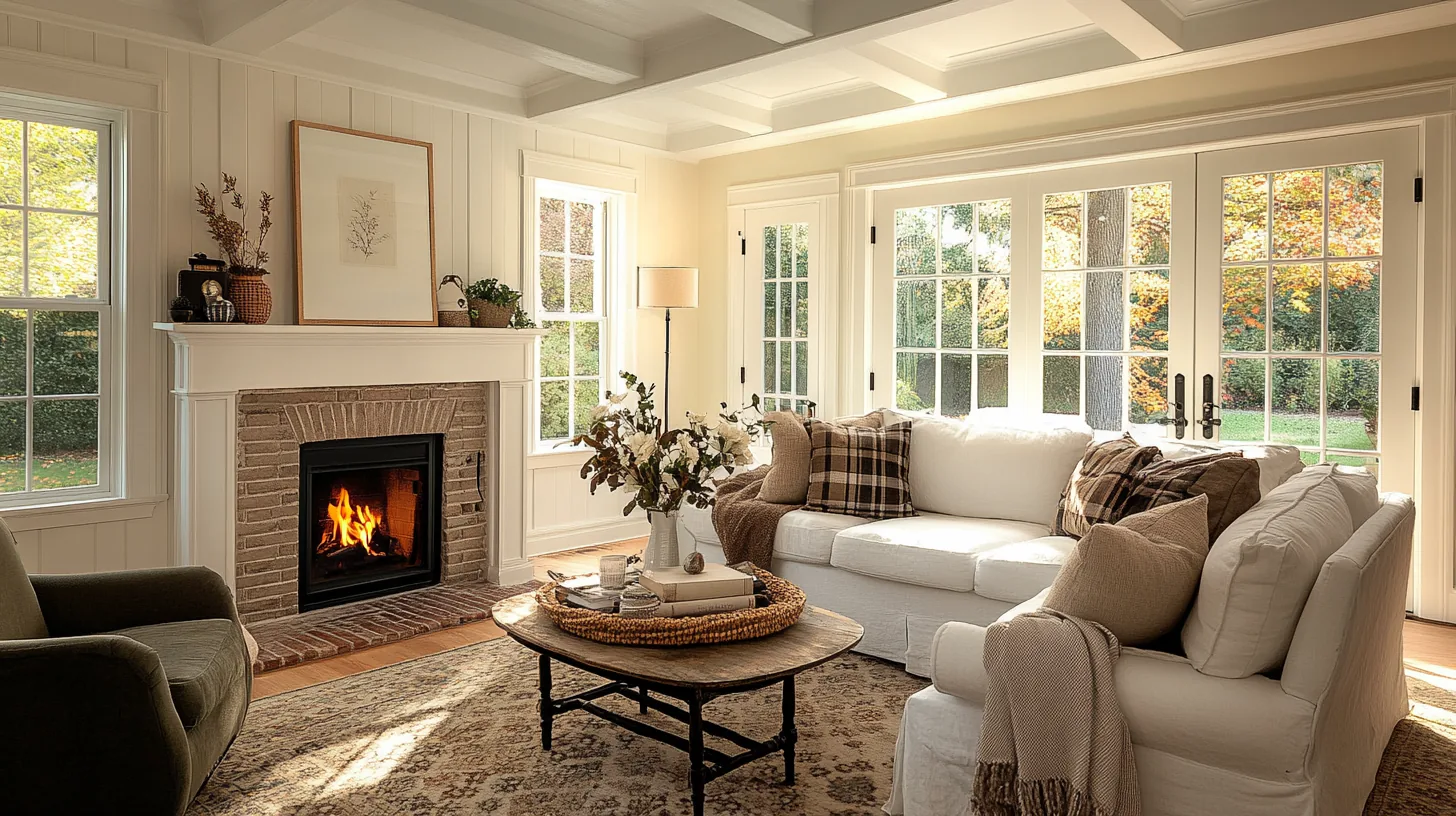
The same furniture can move toward a lighter English-country or updated-traditional direction with softer textiles, pattern, blue-and-white ceramics, woven elements, brighter rugs, florals, and less visual weight.
Or it can stay closer to classic American, with stripes, tailored upholstery, brass, neutral textiles, and just a few stronger decorative pieces.
The lesson isn't to reproduce a designer's room. It is that government furniture does not get to choose your decorating style for you. The layer around it does that.
A Foreign Service Home Already Has Something Most Rooms Can't Buy
Foreign Service families tend to accumulate a different kind of decor. Not because anyone planned a collection, but because life created one.
A bowl from Mexico. A textile from Central America. Brass from the Middle East. Pottery from a market near a former post. Art bought from a local artist. A woven basket. A carved object. Books gathered during several moves. Family photographs from places that once counted as home.
Those pieces are one of the greatest advantages a furnished post house has. They do not need to match. Actually, they often look more interesting when they don't.
A room decorated from objects accumulated over many years naturally feels different from a room ordered from one retailer in one afternoon. And traditional dark furniture can be an unexpectedly good background for those pieces.
The government furniture becomes the structure. The family's life becomes the decoration.
Collected Shouldn't Mean Crowded
There is one catch. Foreign Service families can accumulate a lot. A cabinet does not become more meaningful because every souvenir from every post is visible at the same time.
Leave breathing room. Use a few larger objects rather than lining every shelf with small ones. Stack two or three books and place one object on top. Pair a ceramic piece with a framed photograph. Let an interesting textile stand alone rather than surrounding it with five other patterns.
Rotate what is displayed. Some pieces can have their season. A collected home feels layered because the objects have history, not because every object owned is currently on display.
The China Cabinet Doesn't Have to Hold China
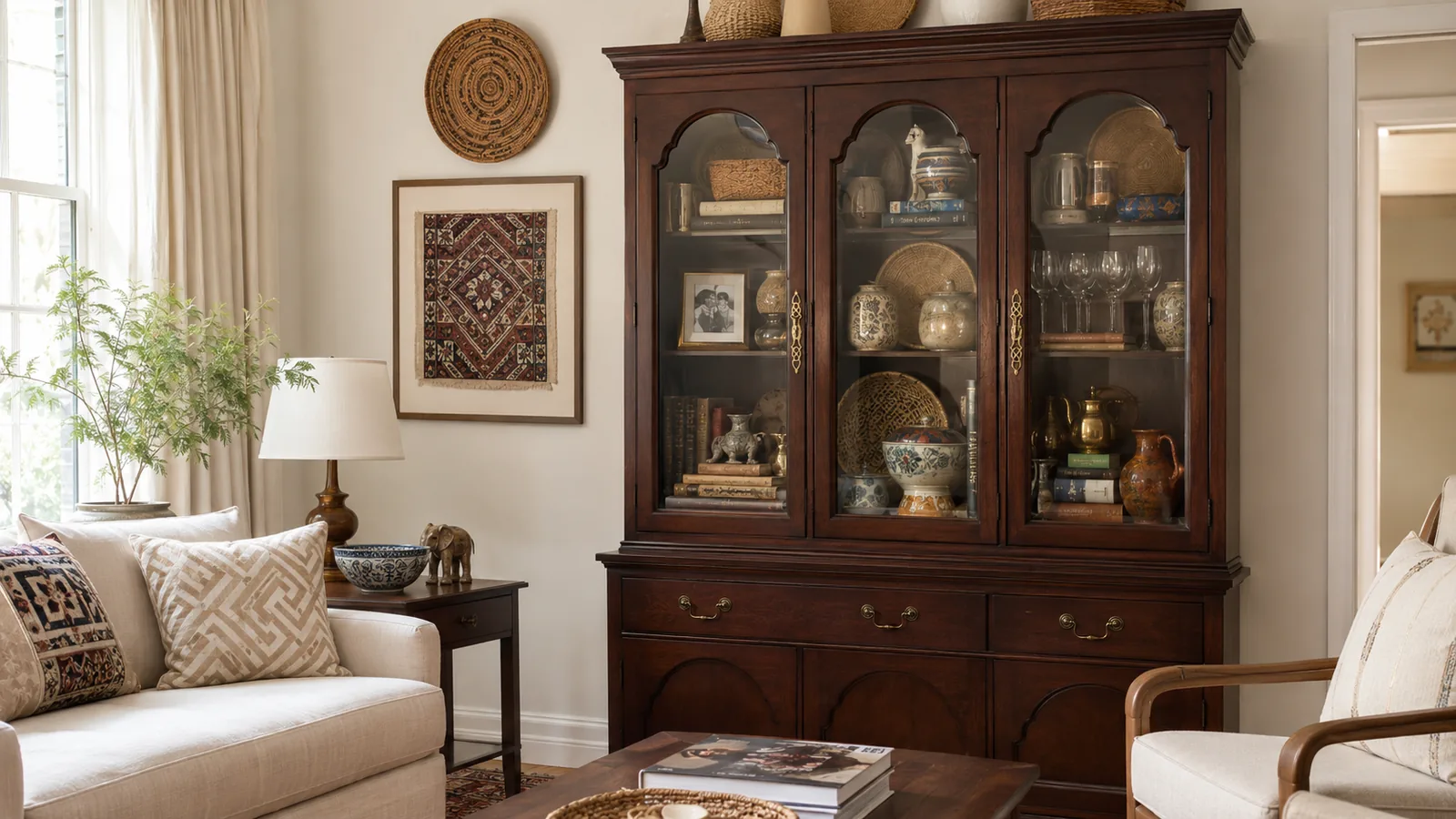
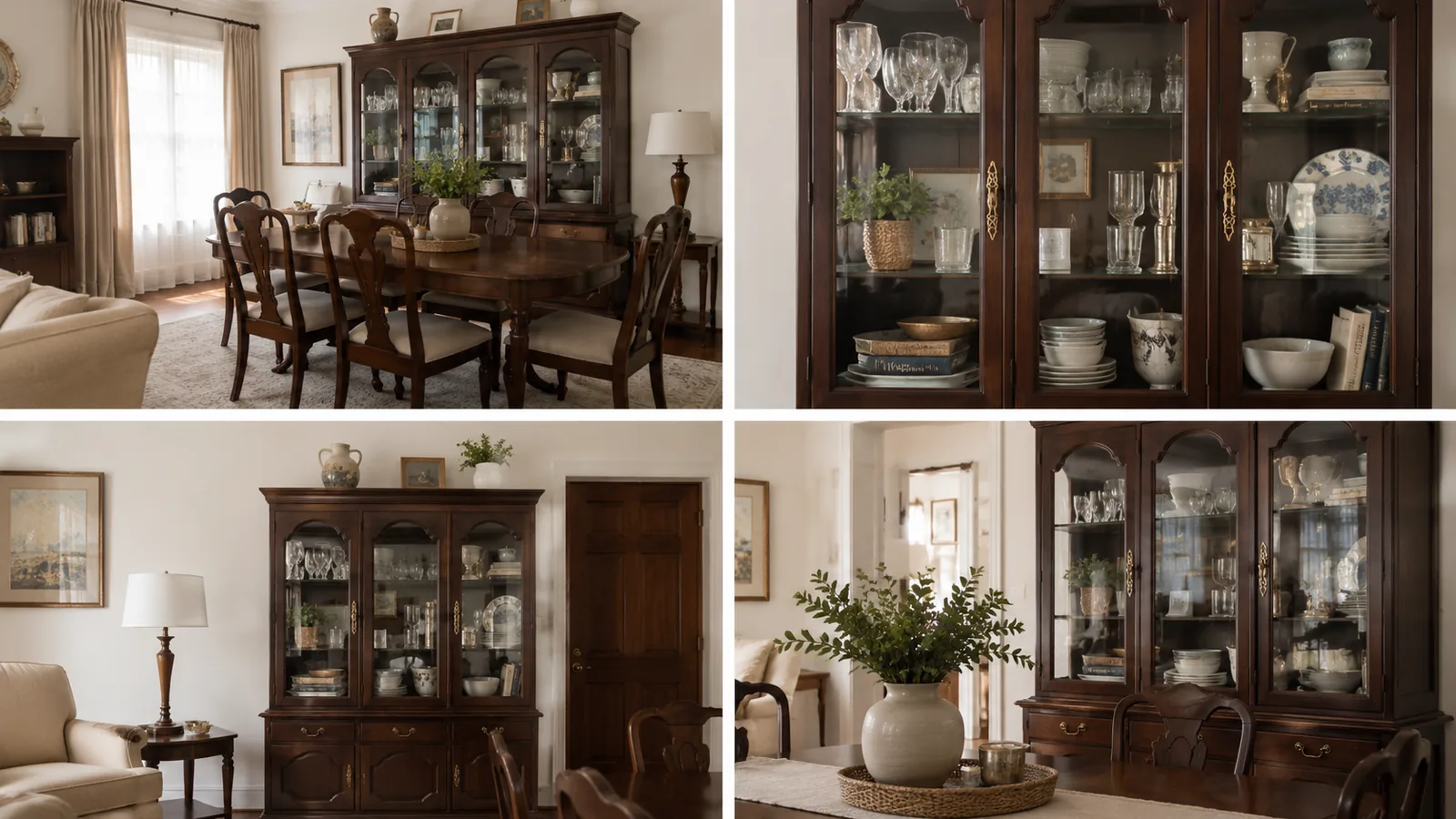
Of all the pieces in the typical Drexpat vocabulary, the china cabinet may have the most unrealized potential. It is large. It is formal. And when it is mostly empty, it can dominate an entire room.
So stop treating the manufacturer's intended purpose as a rule. Turn it into a collection cabinet.
One shelf can hold pottery gathered during different tours. Another can have books laid horizontally with a small object on top. Mix glassware with framed photographs. Display one beautiful serving bowl rather than an entire matching china service. Let one shelf become a small bar. Add baskets or linens to closed storage. Use it for entertaining pieces, games, or practical items that need somewhere to live.
Suddenly the cabinet becomes much more interesting. It isn't "the government china cabinet" anymore. It is where the family's story lives.
When the Sofa Really Is the Problem
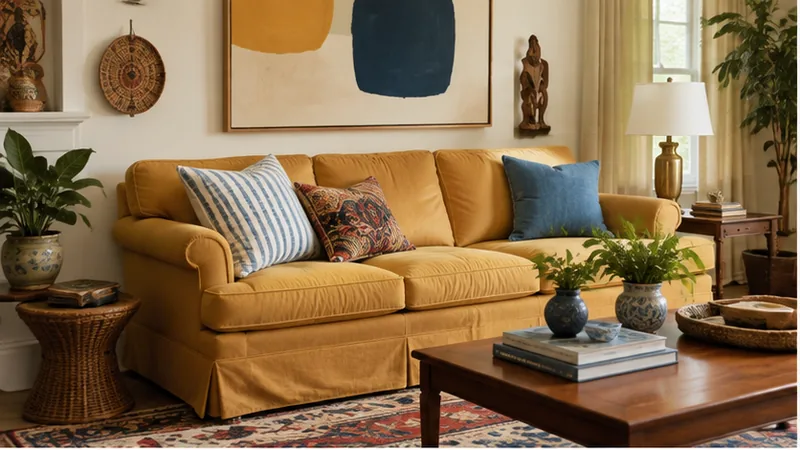
Then there are the pieces that are harder to embrace. The mustard sofa. The chocolate-brown sofa. The beige one. The patterned one. The upholstery that seems determined to dictate the entire room whether anyone asked it to or not.
This is where the other Drexpat strategy becomes useful: reduce the visual influence of what you don't love.
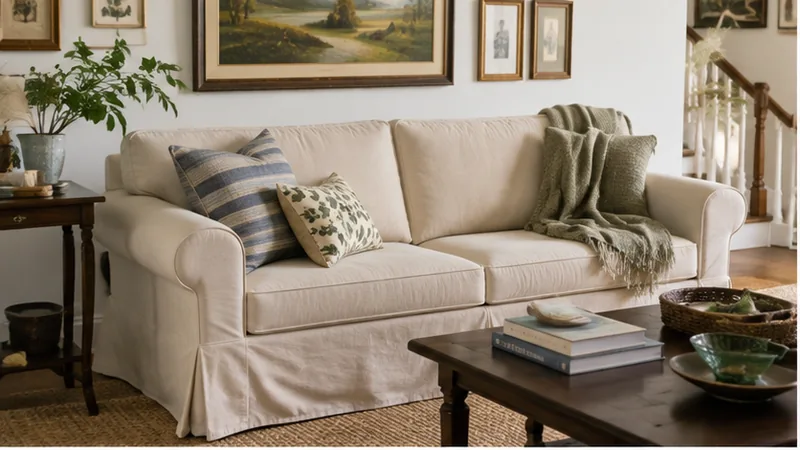
A slipcover can completely change the largest color block in the room without changing the furniture itself. It doesn't need to be a custom upholstery job. A washable cover that sits neatly, stays in place, and works with the sofa's proportions may be enough to quiet the piece so everything around it becomes more important.
Before ordering one, however, measure the sofa. Government sofas are not all identical, even when they look familiar. Check overall width, back height, arm width, seat depth, cushion configuration, and whether the piece has a skirt or unusually rounded arms.
A reasonably well-fitting cover will always look more intentional than one selected only because the color looked good online.
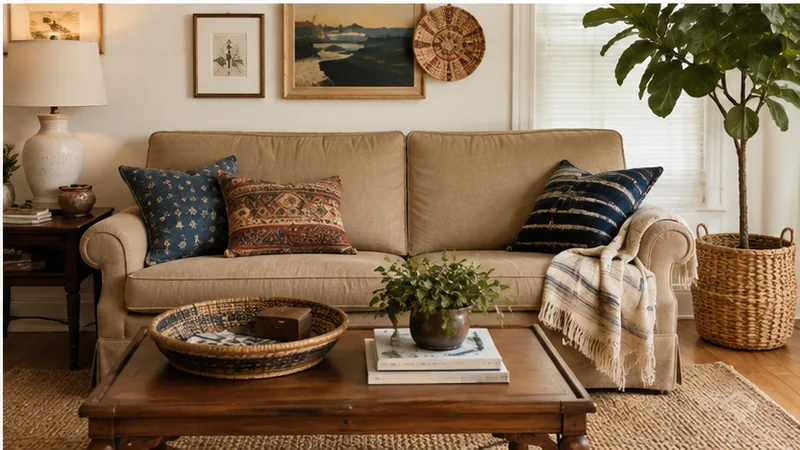
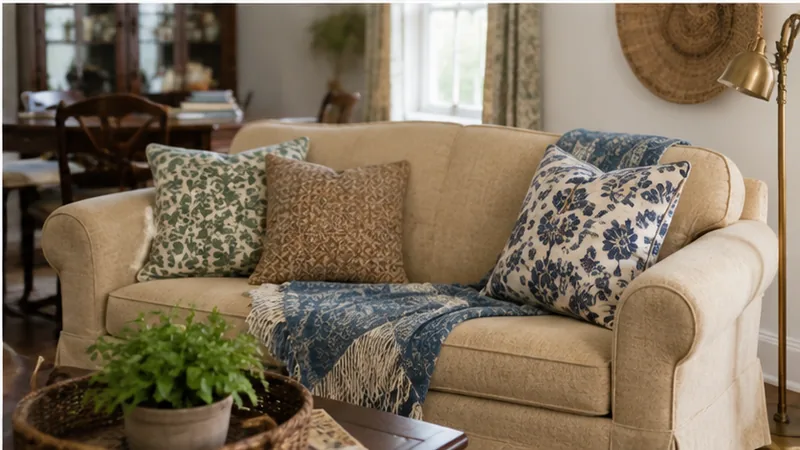
And sometimes the sofa does not need covering at all. Fresh pillow covers, a throw, a stronger rug, artwork, lamps, and better styling around it can redistribute enough visual attention that the original upholstery becomes much less important.
A Difficult Chair Can Become an Accent
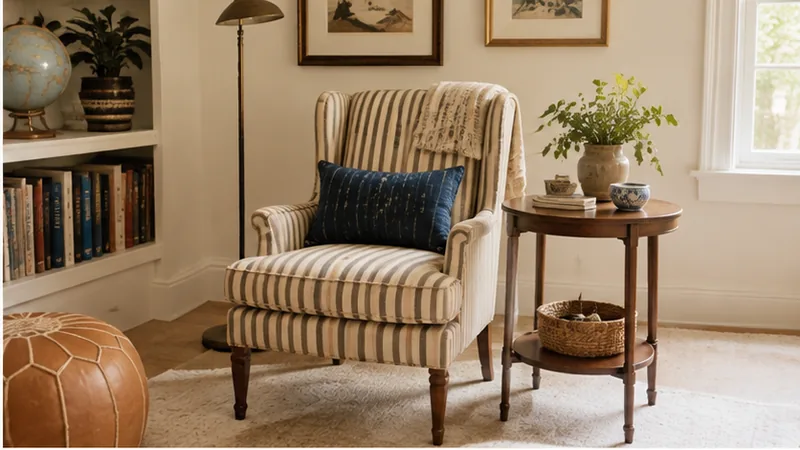
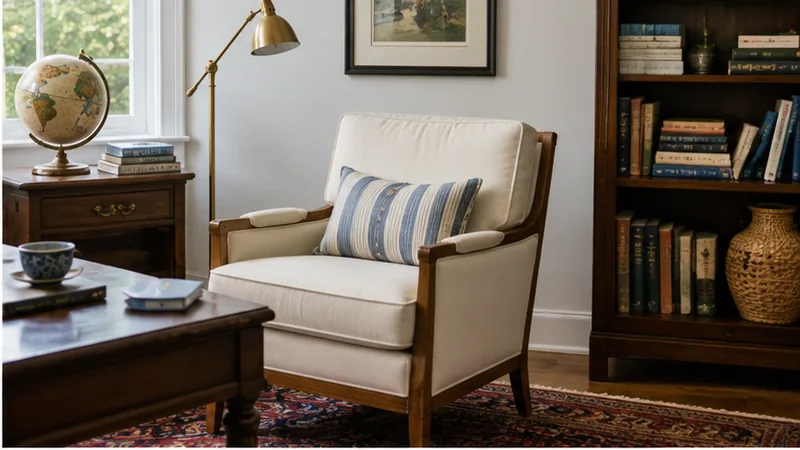
The occasional chairs may be some of the strangest pieces in the furniture mix. Striped. Damask. Blue. Rust. Geometric. Traditional carved wood frames. Sometimes two chairs that don't seem to have any relationship whatsoever to the sofa sitting beside them.
One option is a chair cover. Another is making the upholstery look deliberate. If the chair contains blue, repeat a little blue in the art or a pillow. If it has rust or brown, let that tone appear subtly in a rug or ceramic piece.
Two traditional chairs can be positioned as an intentional pair even when they were never part of the same furniture suite. The room can create a relationship the furniture itself never had.
And if the upholstery truly cannot be reconciled with anything else? Cover it. There is no prize for decorating around a pattern you dislike for three years.
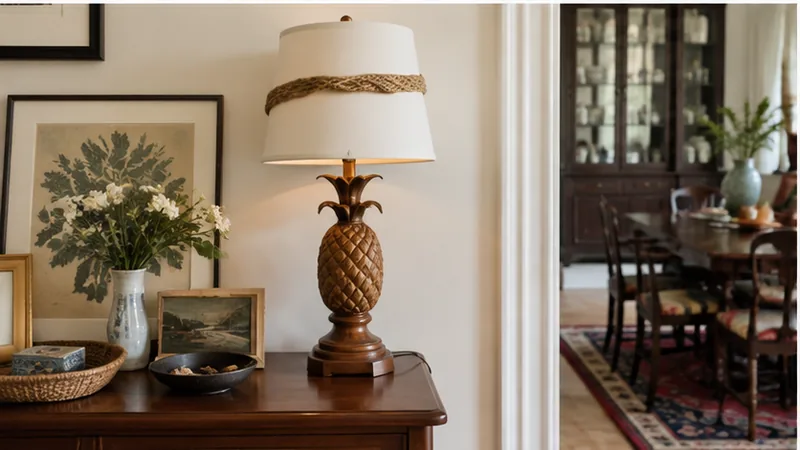
Even the Pineapple Lamp Can Become Less... Pineapple
Foreign Service families know the lamps. The ornate bases. The brass or gold tones. The stacked carved-looking shapes. And, yes, the pineapple-inspired ones.
Then there is an oddly specific detail some Drexpats will recognize immediately: the reddish-brown discoloration that seems to show up on more than one of these lamps. Once you've noticed it, it's difficult not to notice it.
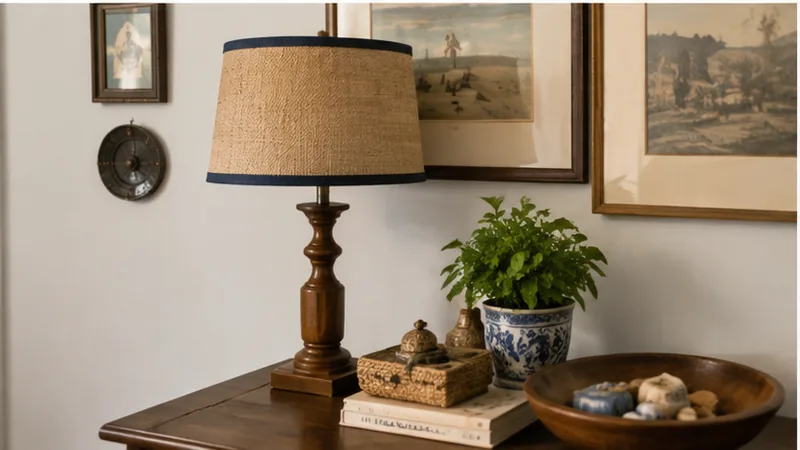
Fortunately, lamps are one of the easier government pieces to visually quiet. A cleaner shade can change the entire personality of an ornate base.
Some families go further and wrap a lampshade in a beautiful fabric, add trim, or use removable decorative details to make the shade feel intentional rather than standard-issue. If you do this, keep the intervention reversible and use materials appropriate for lampshades and the fixture's heat level; decorative fabric or trim should never interfere with the bulb or ventilation.
Then repeat one small warm-metal detail somewhere nearby: a frame, tray, candleholder, or decorative object. Suddenly the lamp stops looking like an isolated oddity. It becomes one traditional note in the room.
The Dining Room Is Often Easier Than It Looks
Dark dining furniture can feel especially heavy because the table, chairs, cabinet, and side pieces may all share the same wood tone. This is where contrast helps.
Keep the table. Keep the chairs. Then stop matching everything else to them. Use a lighter runner or tablecloth. Bring in collected ceramics. Add woven texture. Use candles. Let the rug break up the expanse of dark wood.
If chair upholstery is the problem, fitted seat or chair covers can soften the entire set without disguising its traditional structure. And once the china cabinet becomes a collection cabinet instead of an extension of the dining suite, the room begins to feel much less like a matching furniture package.
The Bedroom Usually Needs Softness, Not New Furniture
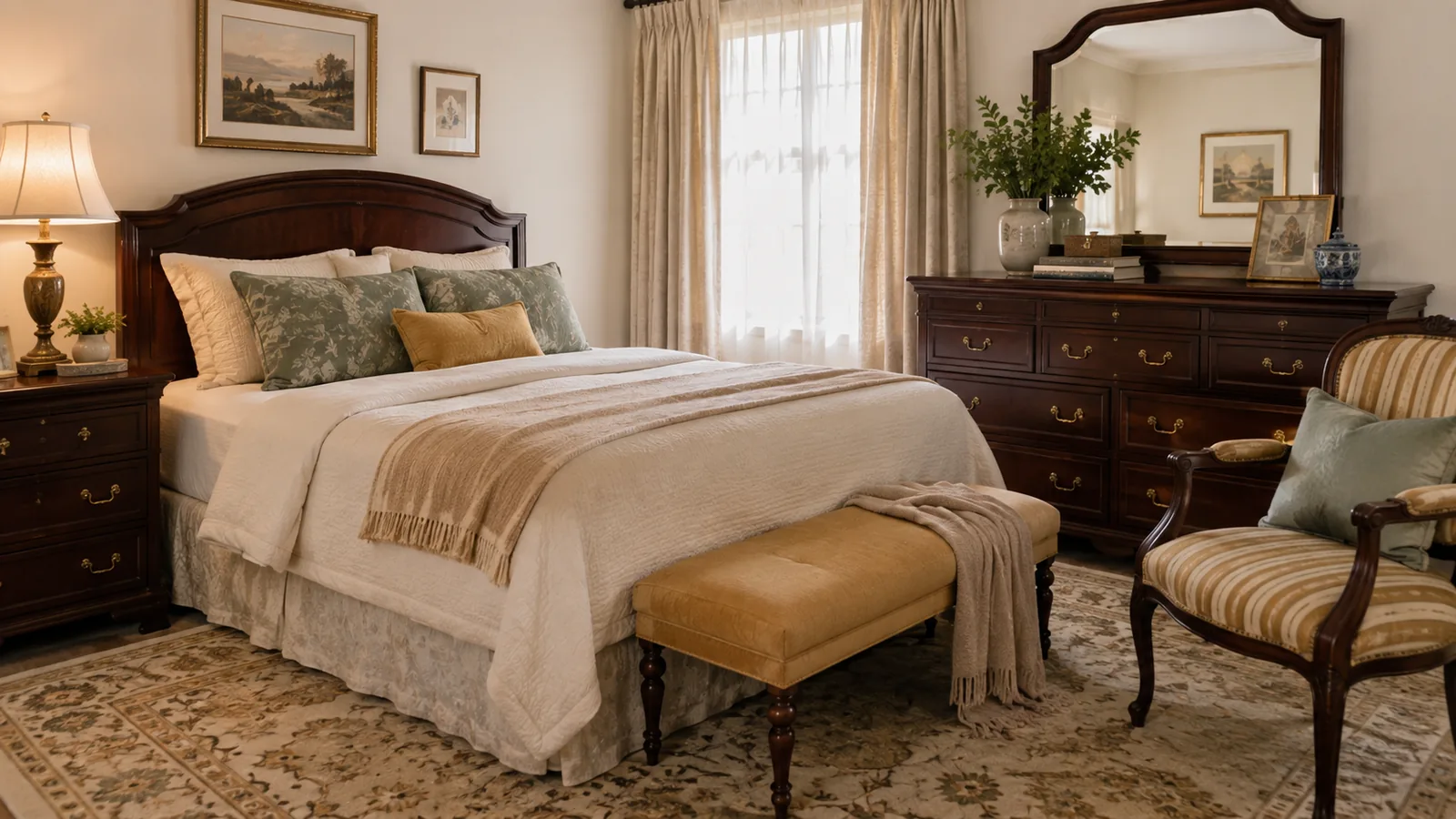
Government-furnished bedrooms tend to repeat a familiar formula: dark headboard, dark dresser, dark nightstands, large mirror, traditional lamps.
Fortunately, the bedroom is one of the easiest rooms to transform without touching the furniture at all.
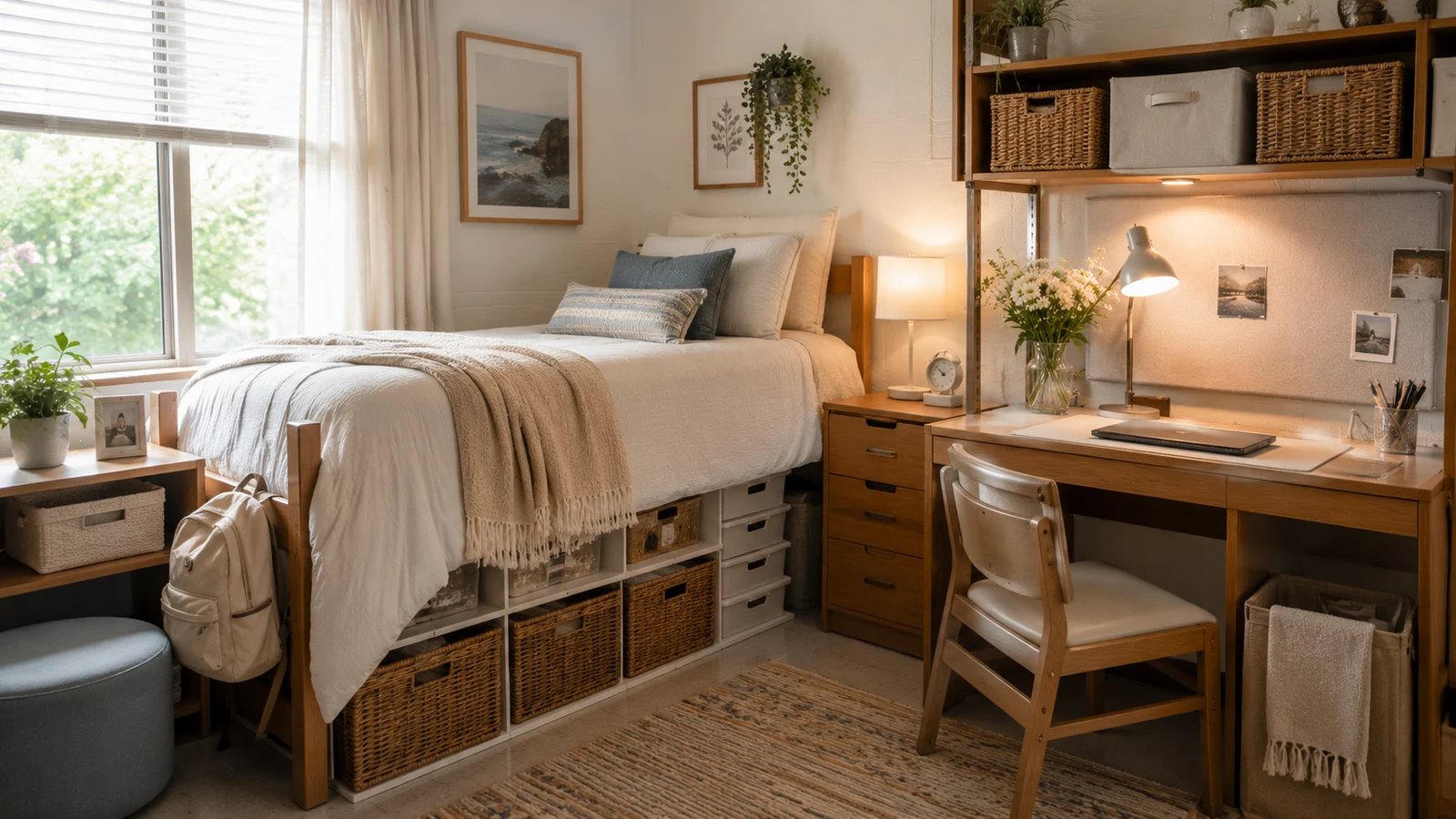
Bedding occupies much of the visual field. A generous duvet or coverlet, layered pillows, one beautiful throw, a rug, curtains where appropriate, and art can completely change the way the dark furniture reads.
Instead of trying to modernize the headboard, let it become contrast. Instead of fighting the dresser mirror, style the surface beneath it with a tray, books, a small framed photograph, or another personal object.
The room usually does not need another large piece. It needs softness.
Keep the Changes Reversible
This may be the least glamorous decorating advice in the article, but it is one of the most important. Government furniture is still government property.
The safest improvements are usually the ones that come back off: slipcovers, chair covers, pillow covers, throws, removable textiles, lampshades, removable decorative treatments, baskets, trays, and styling around the furniture rather than changing the furniture itself.
Painting, reupholstering, drilling, changing hardware permanently, or making another structural alteration should never be assumed to be acceptable. If your post specifically authorizes something different, follow that guidance. Otherwise, think temporary and reversible.
Photograph the Furniture Before You Cover It
Before hiding a stain under a slipcover or moving a scratched table into a new arrangement, take a few move-in photos.
Document existing scratches. Upholstery wear. Discoloration. Stains. Damaged hardware. Anything that was already there.
It takes a few minutes and gives you a clear record later, particularly for pieces that will spend most of your tour partially covered or visually disguised.
And What About Asking GSO to Take It Away?
Ask. There is nothing wrong with asking. If your post allows furniture removal or exchange, warehouse capacity exists, and that is what works best for your family, use the option.
But don't make it the decorating strategy. At many posts, removing otherwise serviceable furniture is difficult or simply not offered. Damaged pieces may be repaired or exchanged, but disliking the upholstery is usually a very different issue.
The safest Drexpat assumption is: decorate the house you actually received. If GSO later gives you more flexibility, consider it a bonus.
Buy the Things That Can Follow You
Every decorating decision at post eventually meets another PCS. That should influence what earns money and space.
The most useful decorating additions are often portable: pillow covers, throws, rugs, baskets, lampshades, art, frames, table linens, trays, slipcovers, and the smaller collected pieces that make a room feel finished.
Large furniture purchased to solve the proportions of one particular government house may become much harder to justify when the next post has different dimensions, different floors, and another complete furniture package waiting inside.
Portable layers adapt. And after enough moves, those repeat pieces become far more important than the furniture underneath them.
A Drexpat Home Doesn't Need to Look Like Anyone Else's
There is no single right way to live with Drexel.
One family may embrace dark wood, brass, books, stripes, rugs, and a deeper Ralph Lauren-inspired look. Another may take the same furniture and surround it with pale linen, blue-and-white ceramics, woven texture, florals, and a much lighter traditional style. Another may fill the china cabinet with pottery, photographs, and objects collected across six posts. Another may cover the sofa, cover the chairs, wrap the lampshade, and happily forget what was underneath.
All of those approaches can work. Because the goal isn't preserving the government's decorating scheme. And it isn't pretending the furniture isn't there.
It is building enough of your own visual story around it that the house stops feeling assigned.
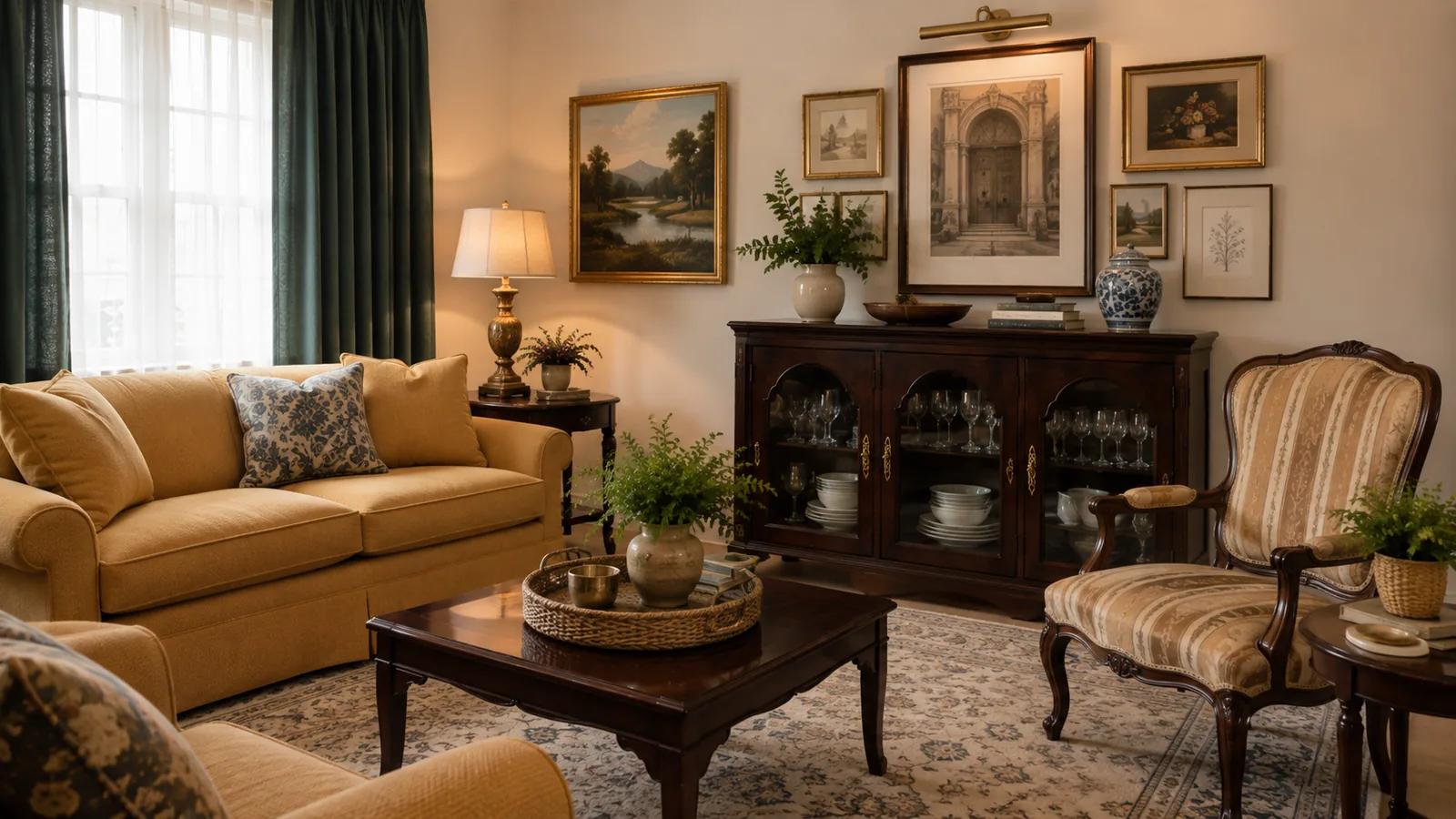
Eventually, the sofa is just the sofa. The cabinet holds memories. The rug came from somewhere you loved. The art reminds you of another home. The pillows move with you again.
And somewhere between the Drexel, the boxes you unpacked, and the things you've gathered along the way, government-furnished housing begins to feel like yours.
Shop the Furniture Refresh
For the pieces that are easier to soften than embrace, Drexpat: Slipcovers & Furniture Refresh gathers practical options for working with government-furnished sofas, chairs, and other pieces without replacing the furniture itself.
Browse Drexpat: Slipcovers & Furniture Refresh →