Halloween decorating usually gets treated like its own separate holiday: a full swap of everything fall for a month of orange lights, plastic bats, and inflatable everything, then a full swap back. It doesn't need to work that way. The fall decor already in place is the house's foundation. Halloween is just one layer added on top of it, and it comes off just as easily as it went on.
This is the plan for that layer: keep what's already working, add one clear Halloween mood in a few high-impact spots, let lighting do more of the work than objects do, and, whenever possible, keep the truly Halloween-only pieces within one labeled box that is easy to put away on November 1.
This post contains affiliate links. As an Amazon Associate, I earn from qualifying purchases at no extra cost to you. #ad
Halloween doesn't require another complete seasonal reset
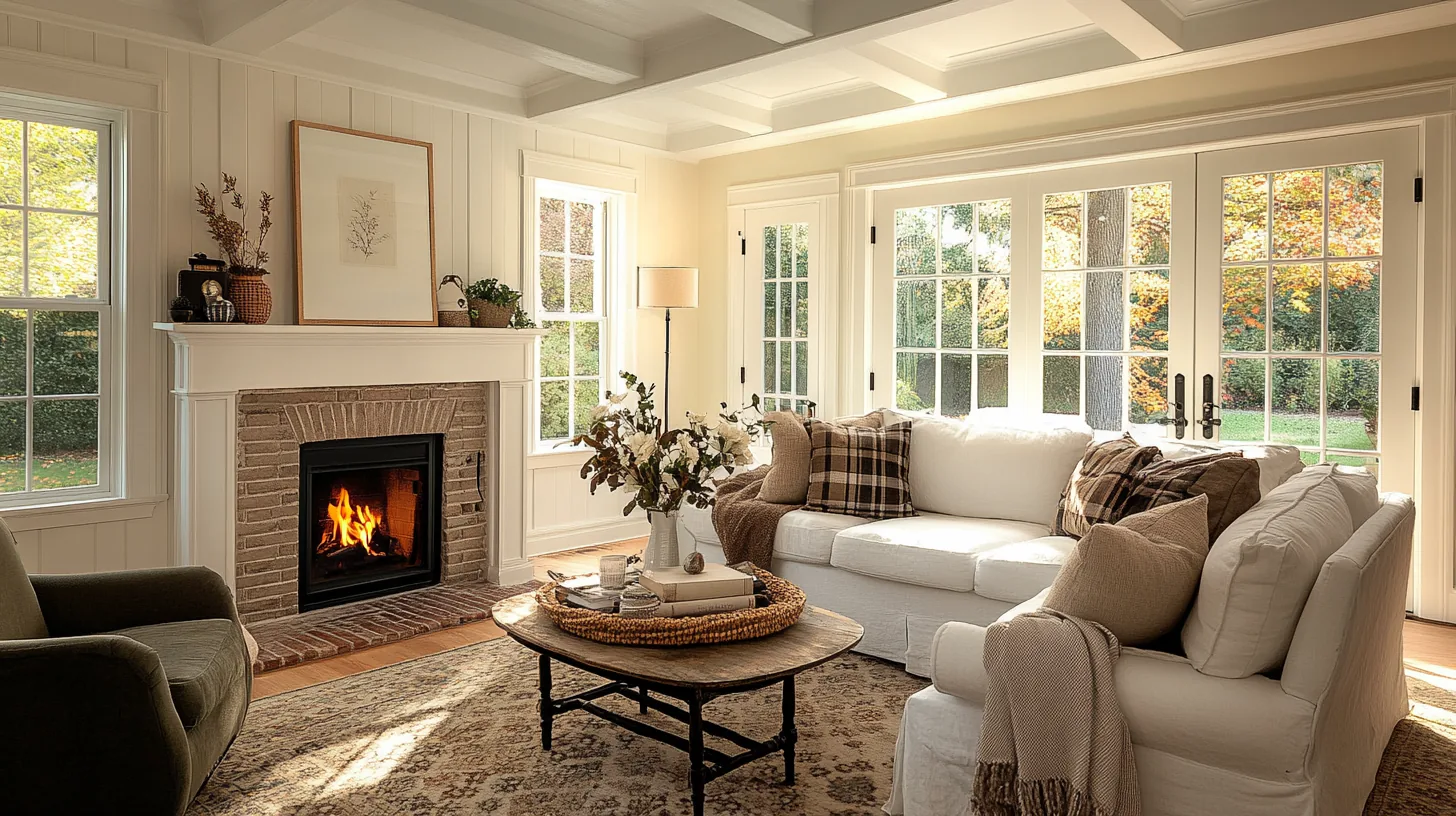
If the early-fall edit is already done (the neutral base, the warm accents, the natural textures), most of the hard work for Halloween is already finished. A house doesn't need a second full decorating pass six weeks later. It needs one more layer, added deliberately, on top of a base that isn't going anywhere.
Think of it less as "decorating for Halloween" and more as "adding a little spooky to the house that's already there." That distinction changes what gets bought, where it gets placed, and how long it takes to set up and take down.
Keep the early-fall base already working
Most of what is already in place for early fall can stay exactly where it is: the branches or dried stems, the wood and brass accents, the neutral pumpkins, the everyday trays and vessels holding it all together. None of it needs to be packed away to make room for Halloween. It's the foundation the Halloween layer sits on top of, not something it competes with.
Keeping the existing fall foundation in place prevents Halloween decorating from becoming a second full seasonal project. A house that's already handled its early-fall edit is halfway to a good Halloween look before a single new item comes in the door.
Choose one Halloween mood
Halloween decor spans a genuinely wide range right now: classic black-and-orange, moody and gothic, playful and vintage, even a lighter nostalgic take with pastels and carnival details. All of them can look good. The mistake isn't picking the "wrong" one; it's picking several at once and letting them argue with each other across the same house.
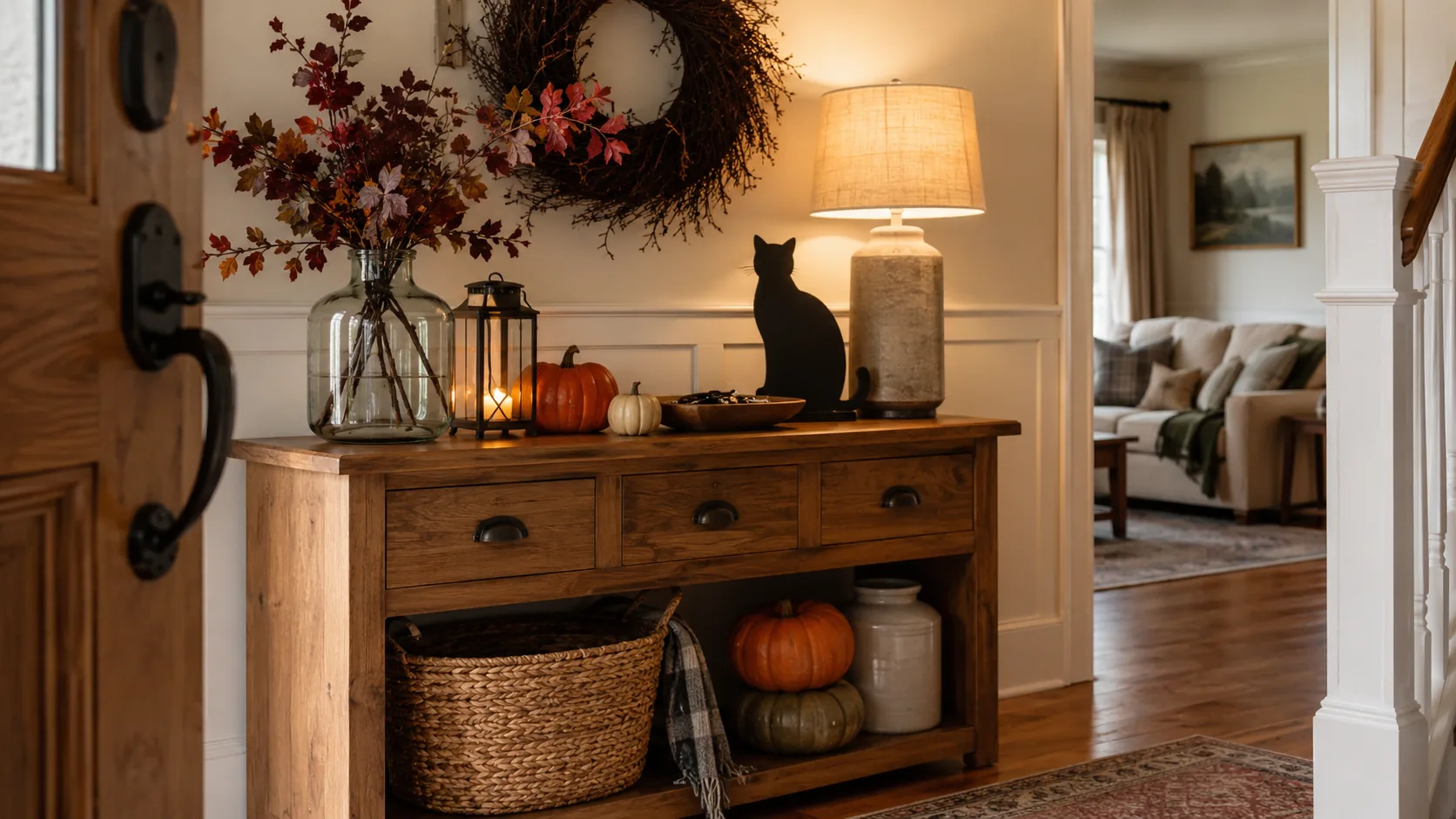
Choose one language and let it carry the whole layer. If the mood is classic, a black-cat silhouette and a simple black-and-orange wreath may be enough. Adding a gothic candelabra and a pastel garland to the same space would introduce two additional styles competing for attention. A single consistent mood reads as intentional even with very few pieces. A mixed approach can feel cluttered even when each individual piece is well chosen.
Some of the pieces that make this layer easy (pillow covers, small silhouettes, removable wall accents, light-up pieces, compact tabletop decor) are gathered in our Halloween decor edit.
Decorate only the three highest-impact zones
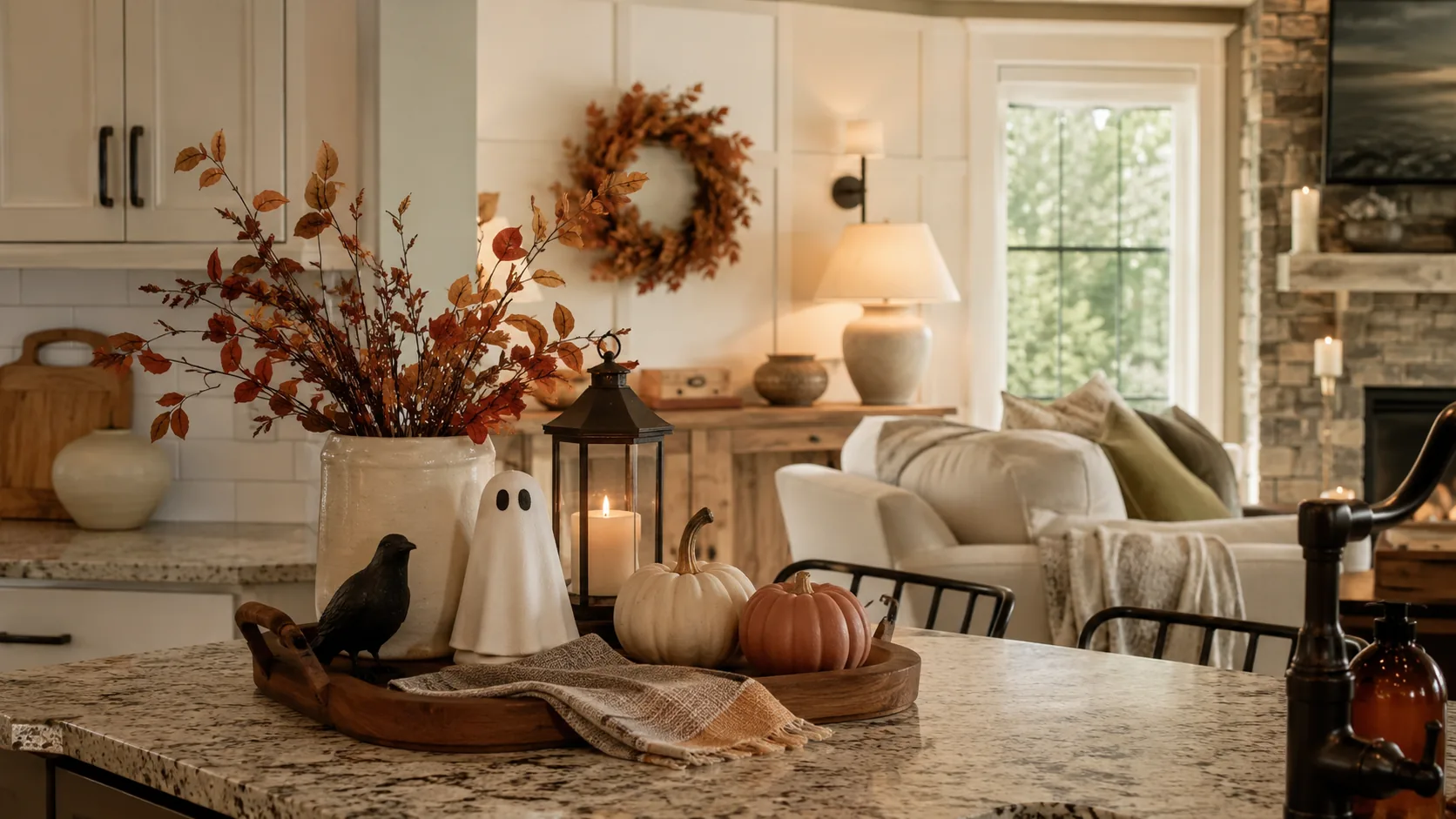
Concentrate the Halloween layer in the areas where it will be noticed most, instead of spreading it across every surface. For most homes, that means three zones: the entrance or front door, one living-room focal point, and one high-traffic surface: a kitchen counter, a dining table, a console, or a stair landing. The framework works the same in an apartment as it does in a house with a porch; only the specific spots change.
Everywhere else stays as it already is from the early-fall edit. This isn't about being sparing for its own sake. It's what makes three well-styled zones read as more intentional than a house completely covered in decor, and it's also what makes the whole thing faster to put up and faster to take down.
Halloween doesn't need to take over the house. Ideally, its temporary layer should fit into one labeled box that can be put away on November 1.
Let lighting do most of the work
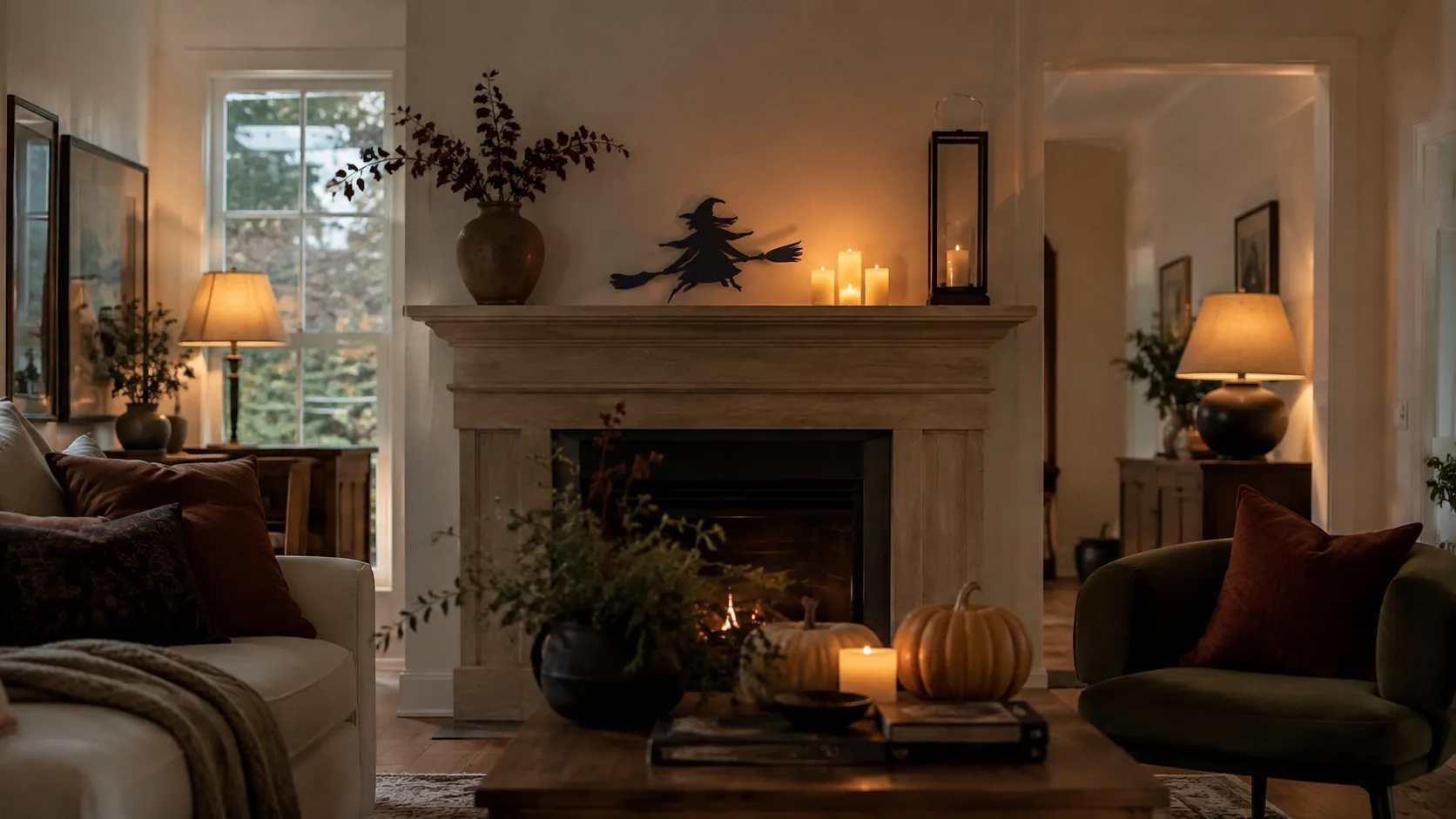
Lighting changes the mood of a room faster and more convincingly than another object ever will. In the rooms where you are adding Halloween decor, rely less on harsh overhead lighting and add warmer sources instead: a lantern, a cluster of battery-operated candles, string lights tucked along a railing or mantel edge. The atmosphere comes from the light and shadow, not from adding more things to look at.
Lighting is also one of the most compact and reversible parts of the Halloween layer. Battery-operated candles, lanterns, and reusable string lights can create atmosphere without requiring many additional objects or much storage.
Keep counters, paths, doors, and exits functional
One quick, practical note before anything goes up: keep walkways, doors, and exits clear. Use battery-operated candles or glow sticks instead of open flames, and keep dried stems, paper, fabric, and other combustible decorations away from heat sources. Inspect electrical decorations and cords before using them, use outdoor-rated products outside, and turn electrical decorations off before leaving home or going to bed. None of this changes the look of the house. It just means the styling doesn't get in its own way.
Choose pieces with storage and November 1 in mind
The fall base was already chosen to last through November, so this rule only applies to the Halloween-specific layer: before buying anything that's Halloween-only, ask whether it packs flat, whether it uses removable adhesive strips or hooks that are appropriate for the surface instead of anything permanent, and whether it's worth the storage space it will occupy for the other eleven months of the year. A carved pumpkin can be composted or discarded after the holiday. Flat wall accents, silhouettes, pillow covers, and any children's crafts you choose to save should fit into the Halloween-only storage box.
That's the organizing boundary: choose one appropriately sized, labeled container as the limit for Halloween-only decor whenever possible, separate from the fall storage that stays out through November. When the holiday is over, only the compact Halloween layer needs to be removed; the underlying fall decor can remain through November.
A few pieces sized well for exactly this kind of storage are in the same Halloween decor edit.
Base
- Branches, dried stems
- Wood, brass accents
- Neutral pumpkins
- Everyday trays, vessels
Layer
- One chosen mood
- Black cat, crow, ghost, or removable bats
- Halloween pillow covers
- A wreath or compact tabletop accent
Glow
- Battery candles, glow sticks
- A lantern or two
- Warm string lights
- A warmer bulb, repositioned lamp
Reset
- One labeled box
- Removable mounting only
- Packs flat
- Down by November 1
The quick Halloween layering checklist
When it's time to add the layer, a short sequence keeps it from turning into a weekend project: confirm the early-fall base is still in place, pick one Halloween mood, choose two or three zones and no more, add lighting before adding more objects, keep exits and heat sources clear, and set aside one box now for whatever is genuinely Halloween-only. Stop when the house feels like it's celebrating the season, not staging it.
HALLOWEEN DECOR EDIT
Pillow covers, small silhouettes, lanterns, light-up pieces, and the rest of this layer are gathered in one place: explore the Halloween decor edit.
The house doesn't need to change into a different house for Halloween. Keep the fall base doing what it's already doing, add one clear mood in a few well-chosen spots, let the lighting carry the rest, and when November arrives, the compact Halloween layer comes down while the fall decor underneath stays right where it is.