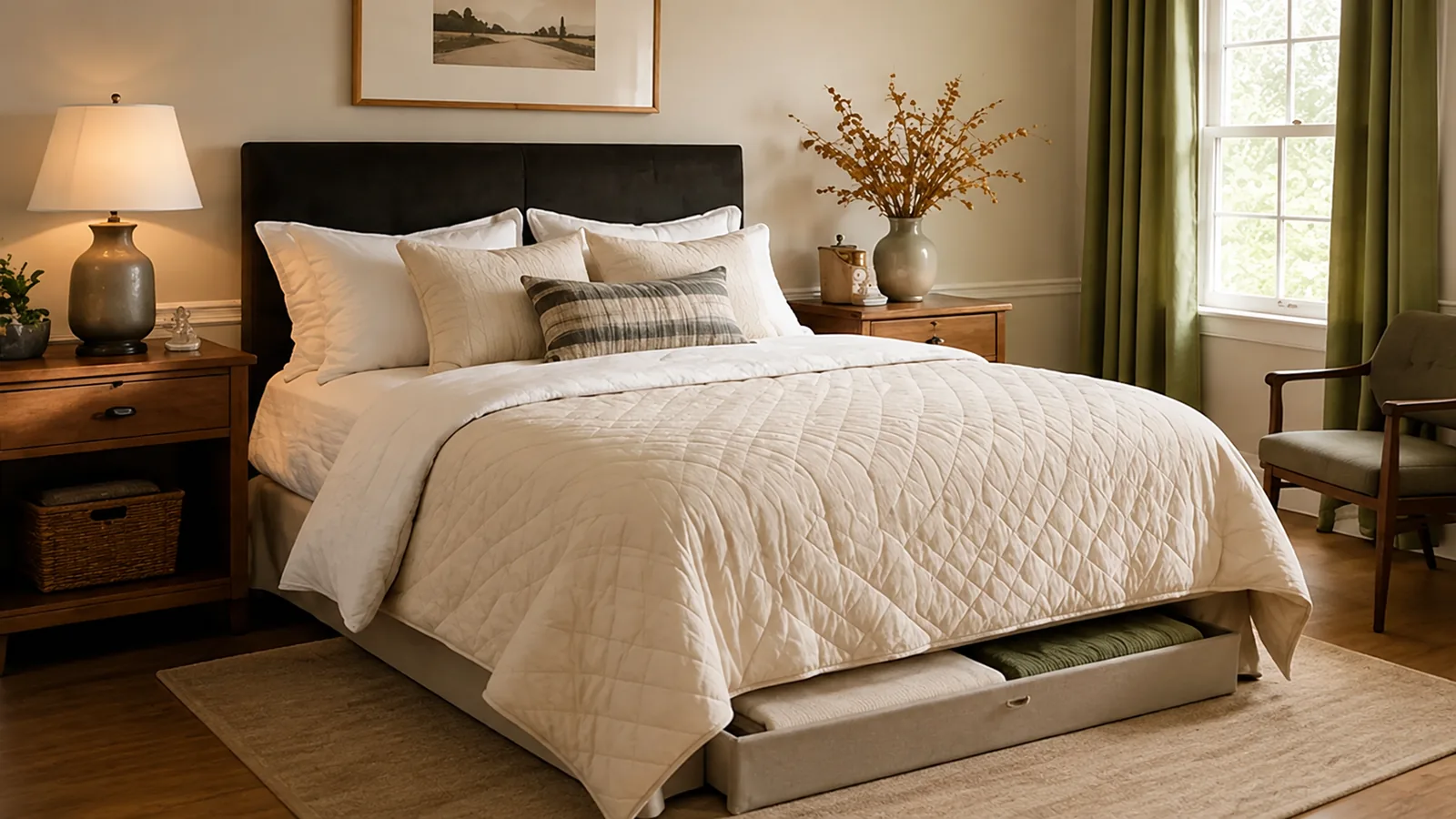

Most guest rooms aren't messy. They're doing two jobs at once. It's where the donation bag lives until someone drives it to the drop-off, where the extra laundry basket sits, where the boxes from the last move or the last online order pile up because the door stays closed and nobody has to look at it. Then someone says they're coming for the holidays, and a room that's been functioning as storage has to become a real bedroom again, fast. This isn't about decorating a guest room. It's about giving a room that's already doing double duty a way to do both jobs well.
This post contains affiliate links. As an Amazon Associate, I earn from qualifying purchases, at no extra cost to you. #ad
The Room That's Doing Two Jobs at Once
That tension has a name, and most guest-room advice only ever addresses one side of it.
The fix isn't pretending the storage need doesn't exist. It's drawing a line between where the household's overflow lives and where a guest's own things go, so the room can hold both without either one taking over. Think of it in three parts: a sleep zone that stays clear no matter what (the bed, a light, a surface), a storage zone that's contained rather than chaotic (a dresser, a closet shelf, a few bins), and a guest zone that's genuinely empty and ready (a drawer, a stretch of hangers, a spot for a bag). Once those three have boundaries, the room stops needing an emergency overhaul every time someone visits.
Give the Overflow a Real Place, Not a Closed Door
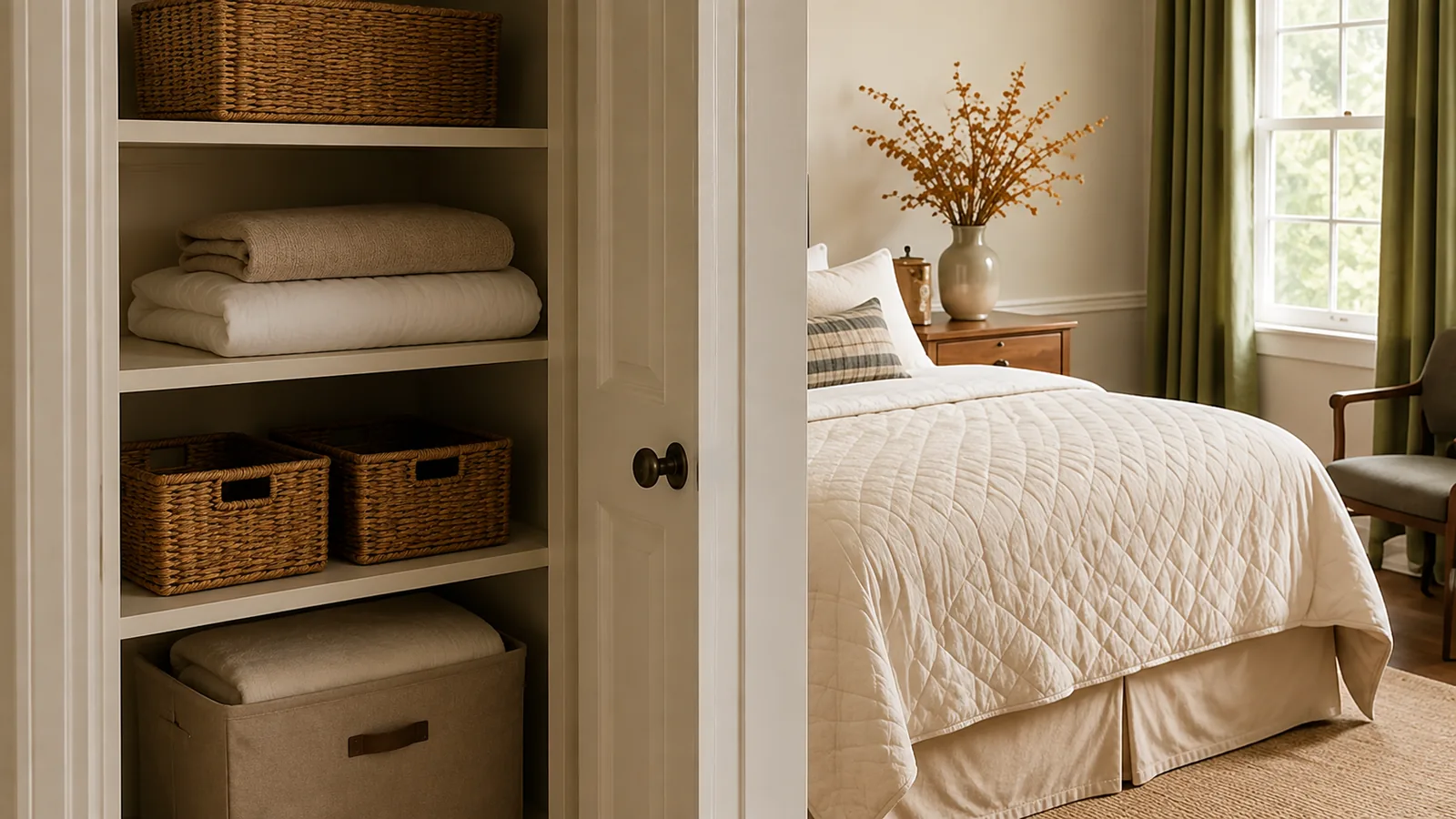
The instinct is to "declutter," but that word implies getting rid of everything, and most of what's in a guest room isn't trash, it's just homeless. The extra bedding, the off-season clothes, the box of things you haven't decided about yet: none of that needs to disappear. It needs a contained, specific place instead of a general pile.
A few bins or closet and drawer organizers do more here than a full purge. Group like with like (linens together, seasonal items together, the "figure this out later" box clearly labeled as its own thing), and put it up high or tucked into a closet, not sprawled across the bed or floor where it visually competes with the room the second someone walks in.
Somewhere for a Suitcase and a Coat
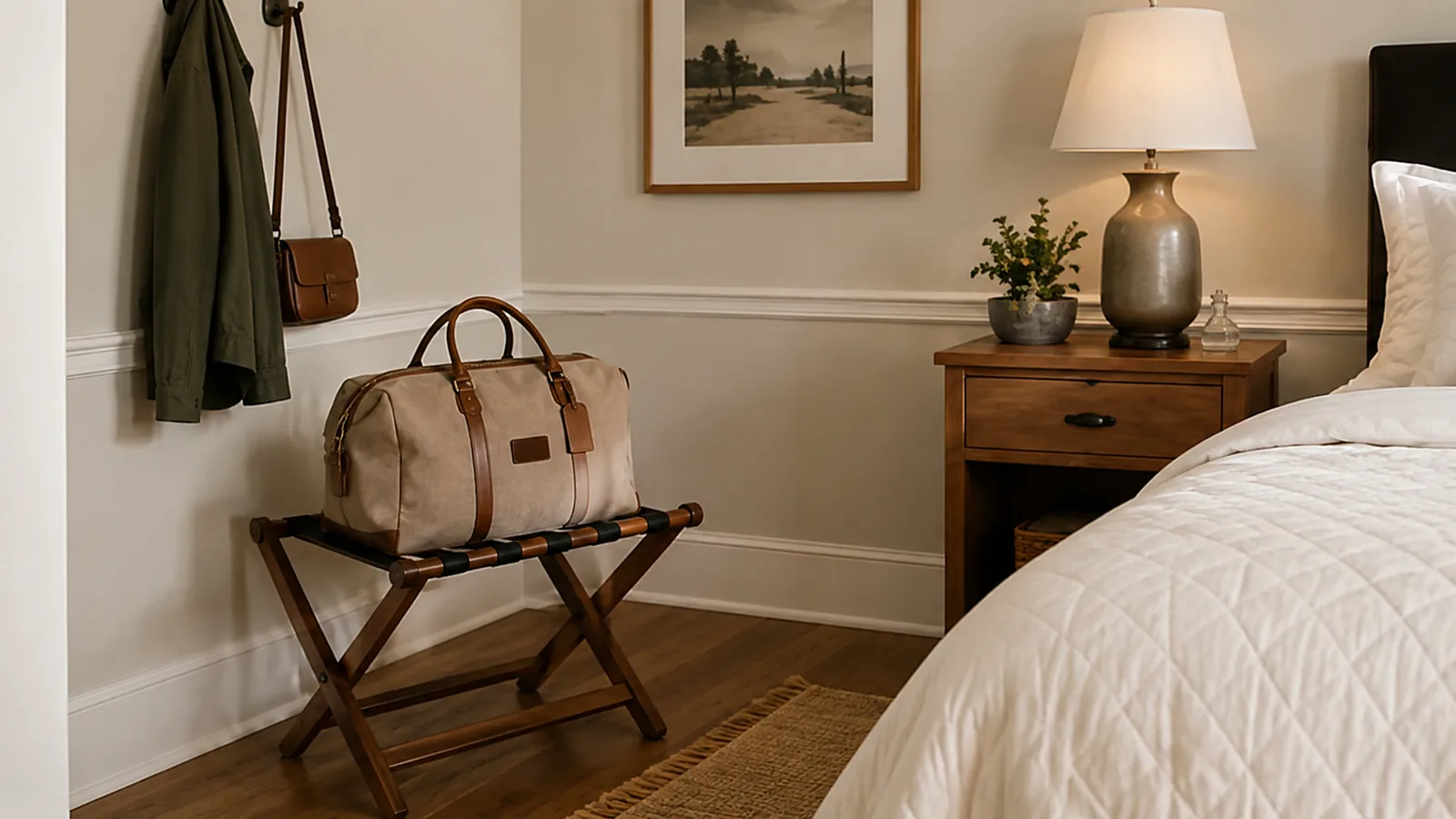
This is an easy step to miss: where does a suitcase go? Living out of a bag on the floor for a few nights is uncomfortable in a way that's hard to name but easy to feel. A dedicated spot, even a small one, changes the whole experience of staying somewhere.
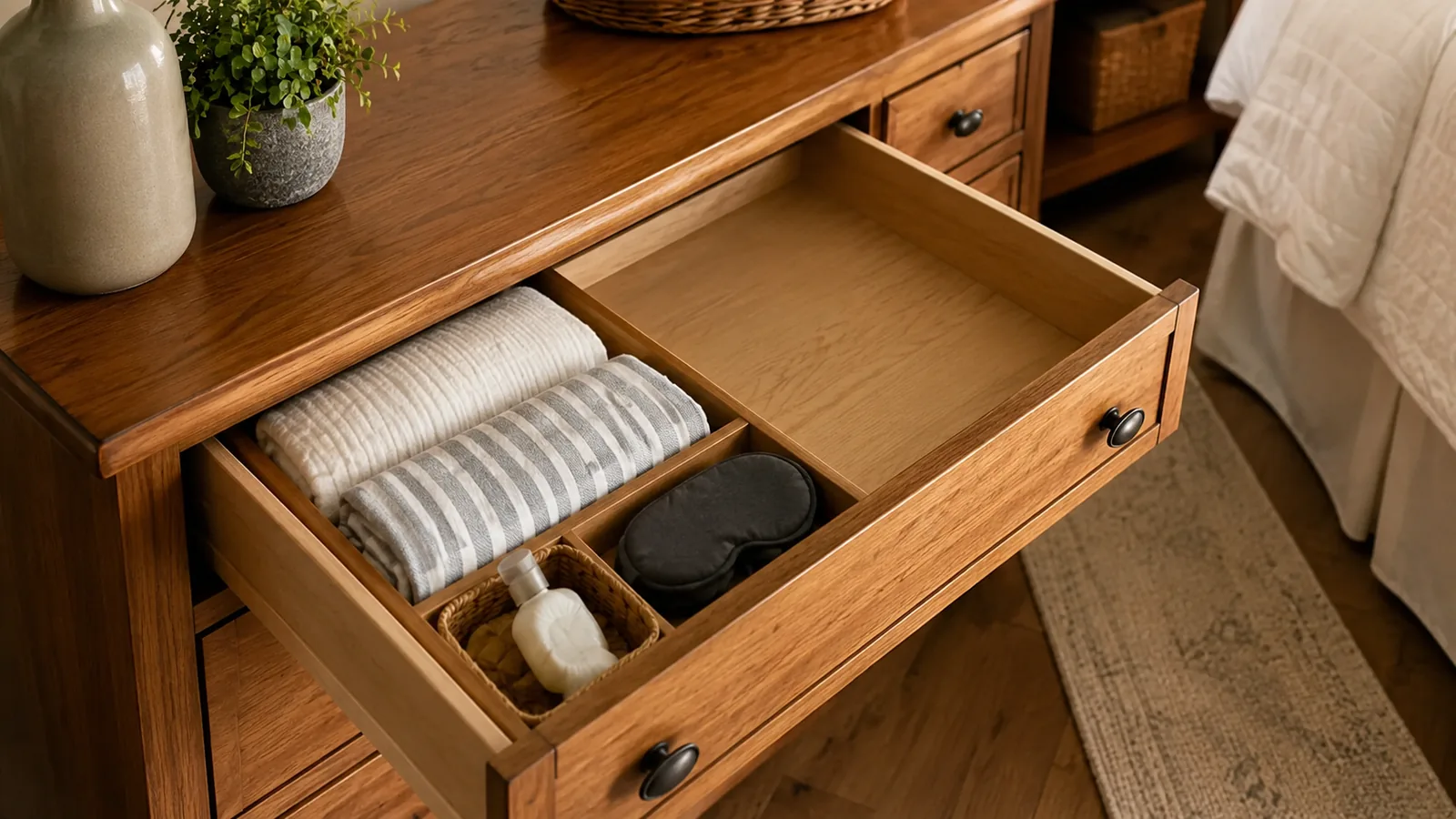
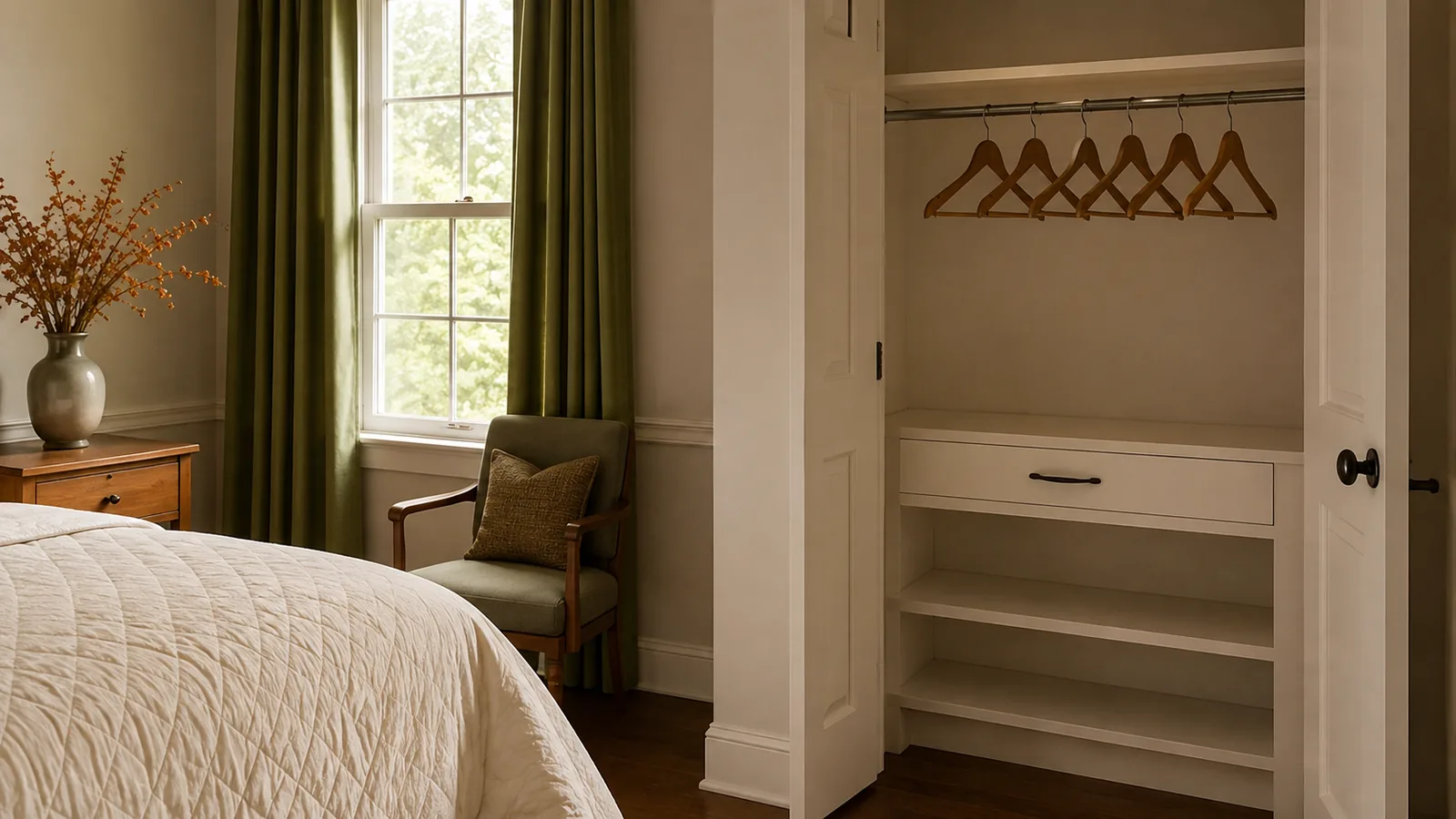
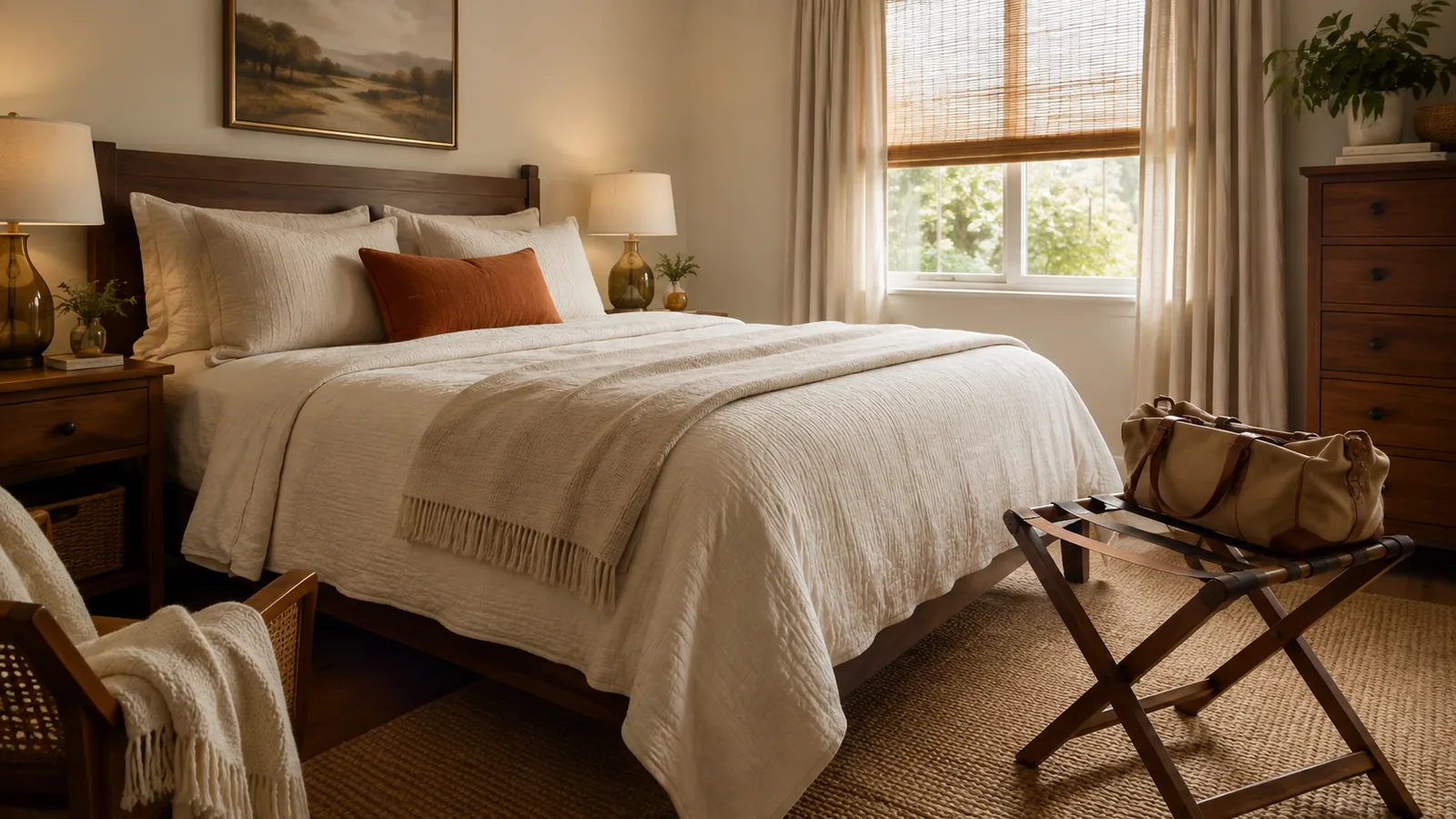
A foldable luggage rack solves this in almost no floor space, and it does something a lot of guest-room advice skips: it signals "this is set up for you" the moment someone walks in. Pair it with one empty drawer and a stretch of open hangers (not the three that happened to still be there), and a guest has somewhere for their things that isn't the corner of the floor.
Reset the Bed Before You Style Anything Else
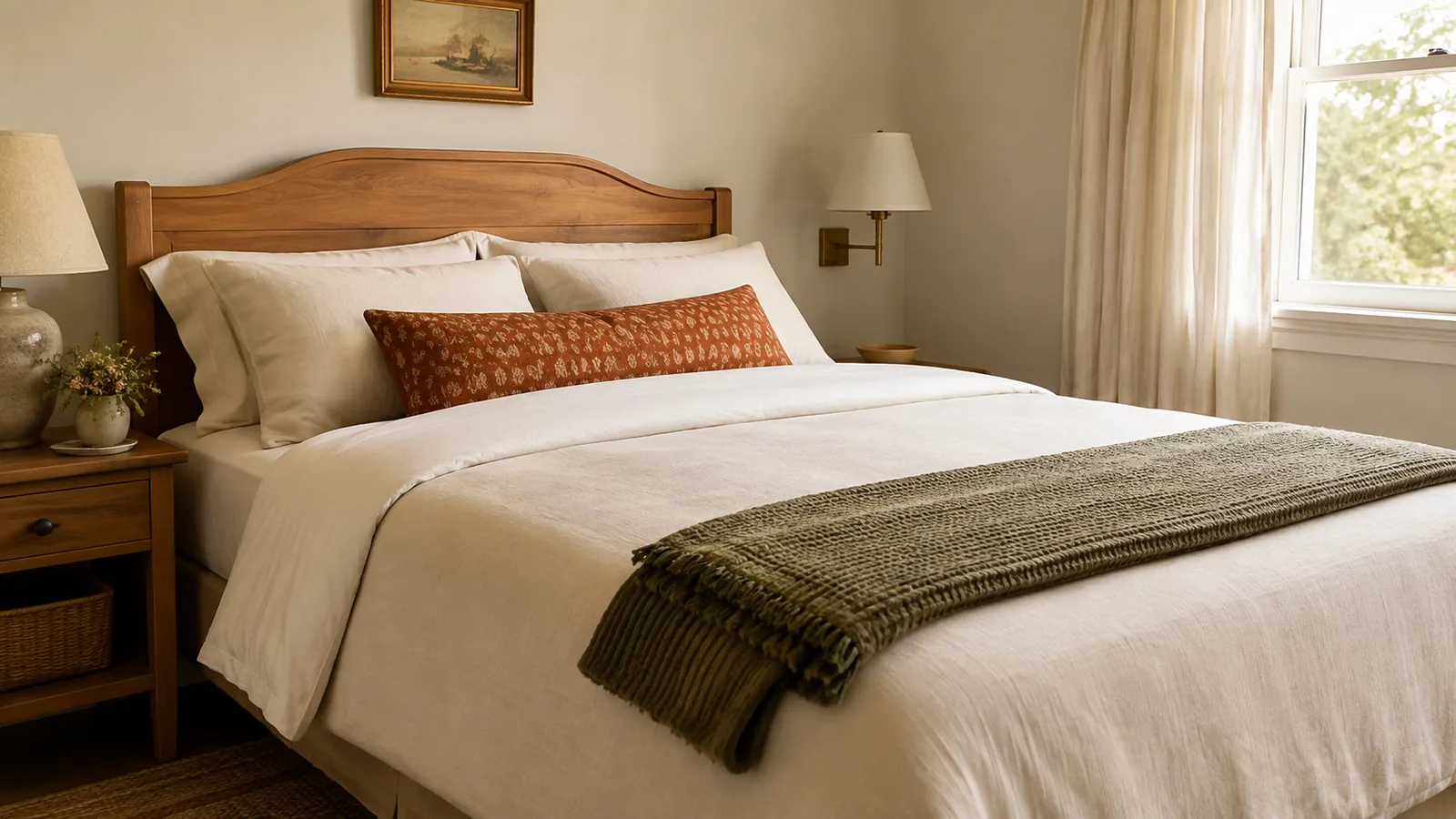
Everything else in this list is about making the room work. This one is about making it feel good, and it's worth doing before anything else because it's the fastest single change that makes a room read as guest-ready. Fresh, laundered bedding that feels like a small hotel stay, not just "the sheets that happen to be on there," plus an extra blanket folded at the foot of the bed for anyone who runs cold.
If the room only gets used a handful of weeks a year, it's easy for bedding to sit unused and start to smell faintly of the closet it lives in. A wash right before guests arrive matters more here than in a room slept in every night.
A Bedside That Works
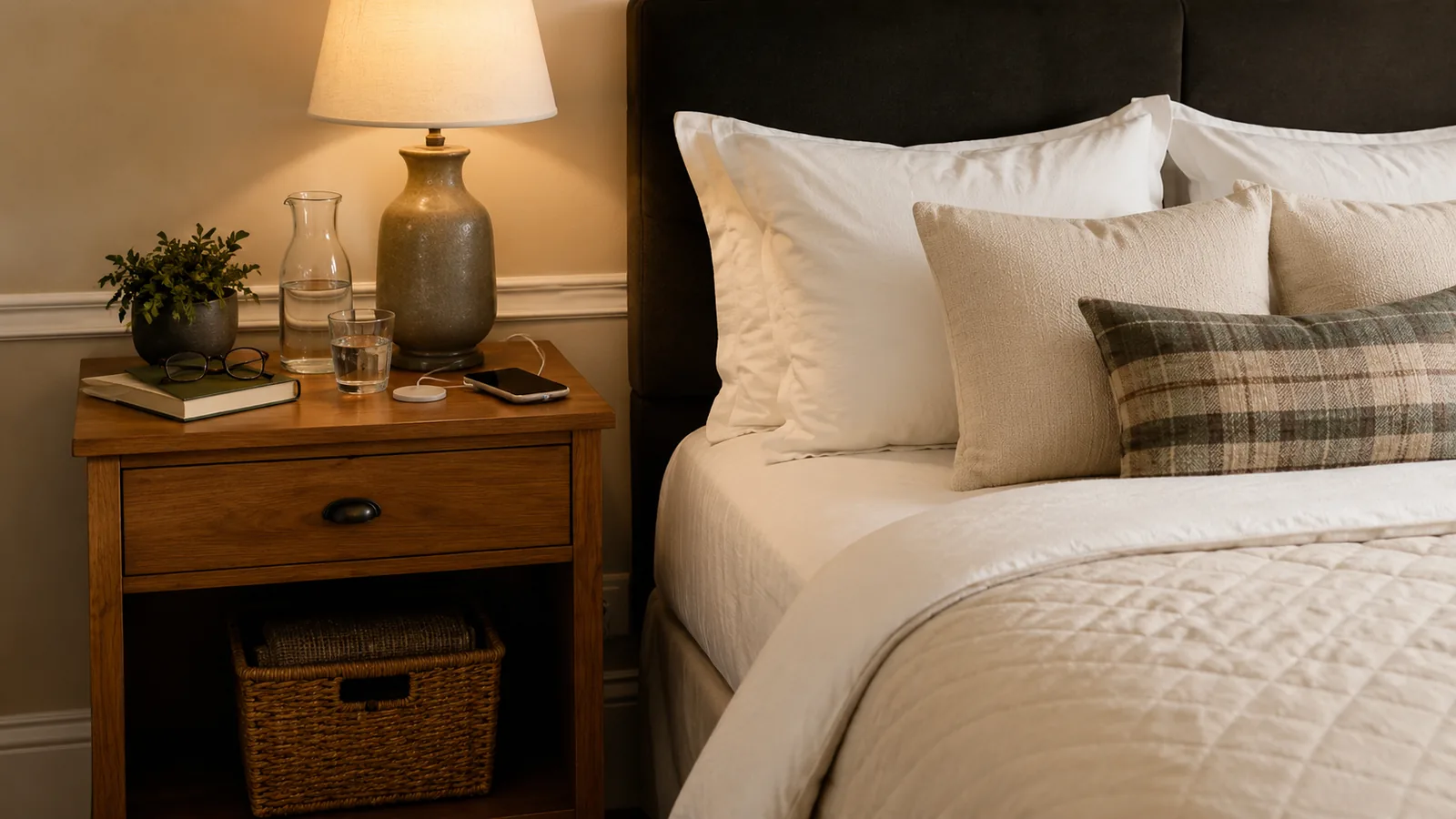
A nightstand with nothing on it but a lamp isn't finished, even though it looks tidy. A guest needs a working bedside lamp they can reach without fumbling in the dark, a glass and a small carafe of water so they're not wandering to find the kitchen at 11pm, a spot to charge a phone, and a clear surface for the small things people set down without thinking: glasses, a book, a watch.
None of this needs to be elaborate. It needs to be complete. A lamp that works, water within reach, somewhere to charge a phone, and a little open space, that's the whole list, and it's the difference between a room that looks nice in photos and one that feels considered to sleep in.
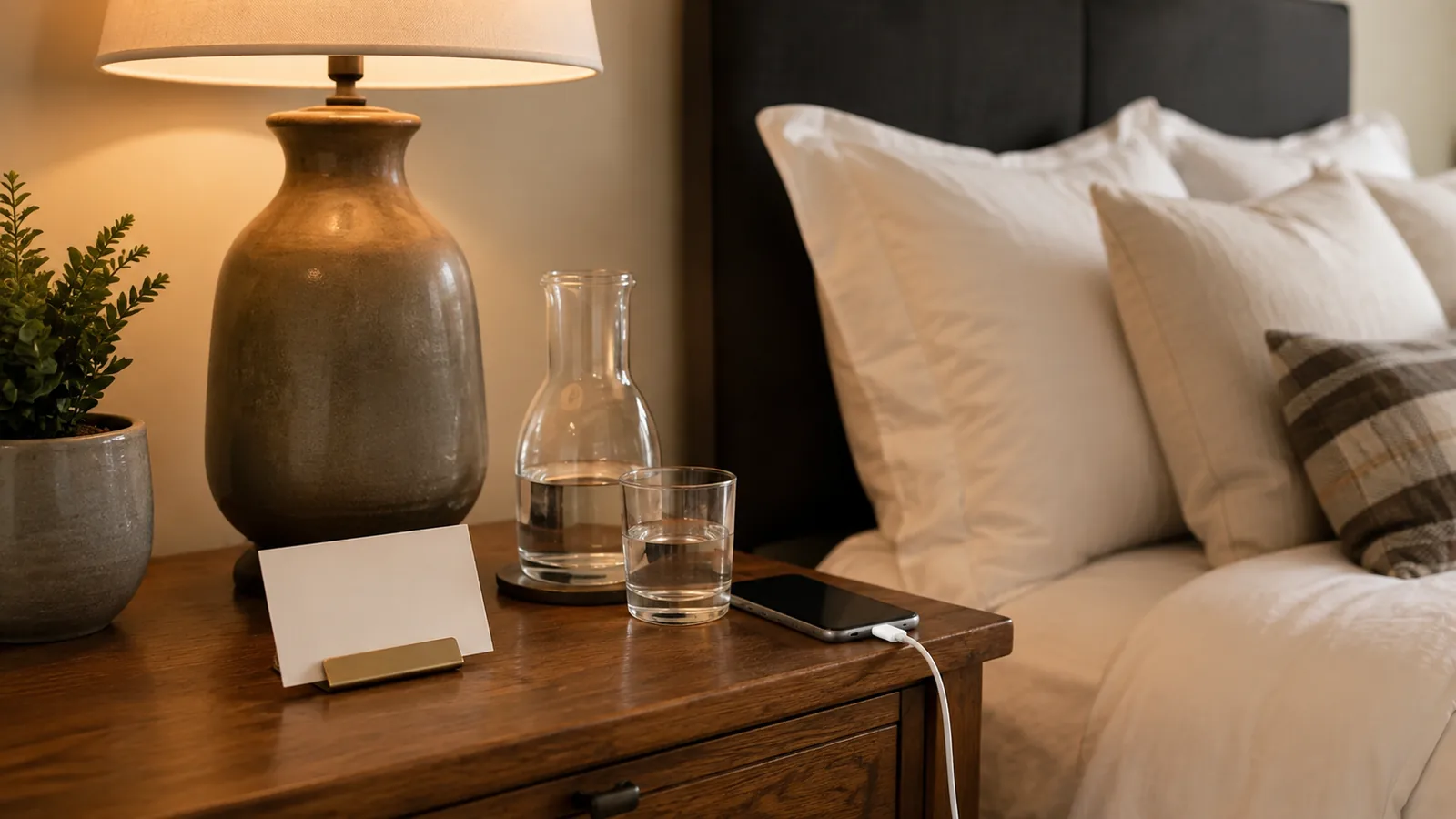
A room that looks guest-ready and a room that feels guest-ready aren't always the same room. The second one has water on the nightstand.
The Small Things a Guest Never Says Out Loud
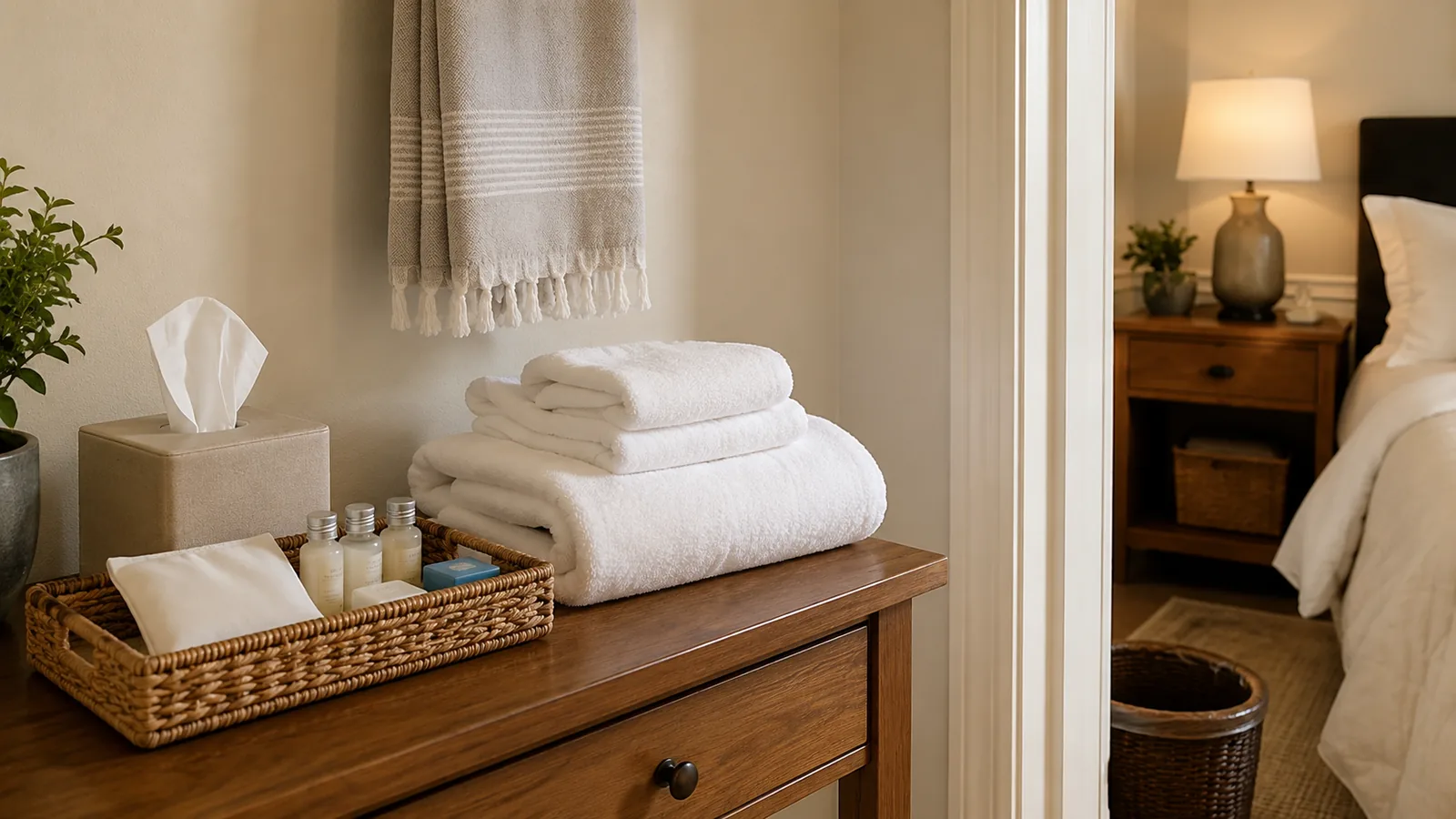
Nobody arriving for a visit is going to mention that there's no wastebasket in their room, or that they had to ask for a towel. They'll just quietly notice, and it'll shape how at-home they feel for the whole stay. A fresh towel set (bath, hand, and a washcloth), a small stash of travel toiletries for the things people forget, a box of tissues, an extra blanket, and a small card or note with the Wi-Fi password: none of this needs to be elaborate, and all of it is the difference between a room that's "fine" and one that feels taken care of.

One Seasonal Layer Is Enough
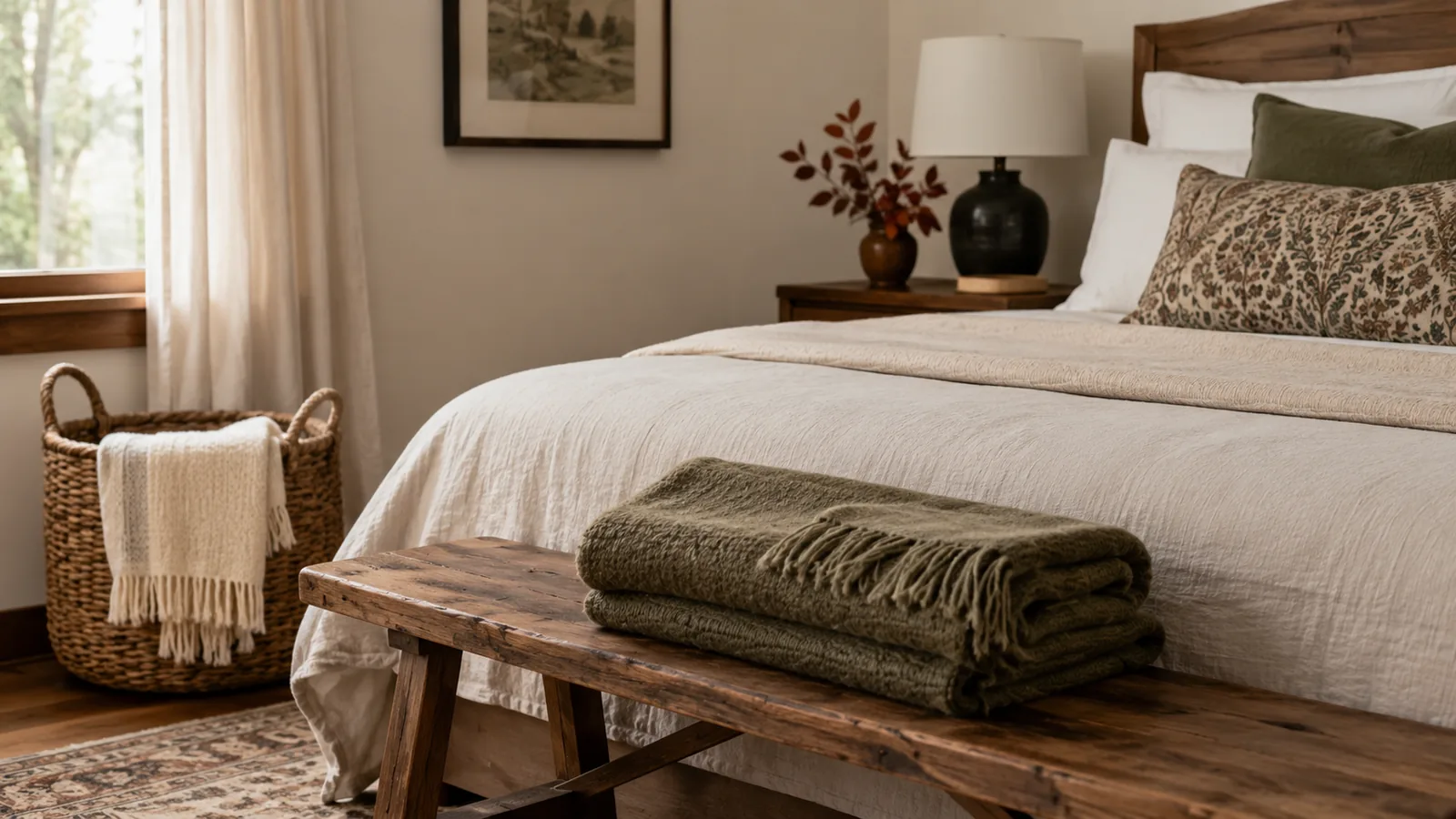
The room doesn't need a holiday makeover to feel connected to the rest of the house. One or two seasonal details are enough: a warmer throw folded at the foot of the bed, a small ceramic vase with clipped greenery or a dried branch, or a pillow in a deeper fall tone like burgundy, rust, or muted ochre. The idea is to make the room feel considered for the season without filling the surfaces a guest actually needs.
If the rest of the house already carries seasonal color, borrowing one shade or material here creates continuity without making the guest room feel themed. A little aged brass, amber glass, warm wood, or a natural branch is enough to connect the room to the season. Keep the styling restrained and leave the useful surfaces open; the seasonal layer should support the welcome, not compete with it.
The Small Solutions That Make the Zoning Stick
The three-zone idea from earlier only holds up if something keeps it organized day to day, not just on the one weekend someone's visiting. This is where the small tools do real work: under-bed storage for anything that needs to stay but doesn't need to be visible, a set of matching hangers so the closet doesn't look like a leftover drawer, and baskets and trays that give loose items a home instead of a flat surface to collect on.
The luggage rack, the labeled bins, the matching hangers: none of it needs to be fancy, but it needs to be there consistently, or the room slides back into an unofficial storage room within a month of the reset. A few well-chosen bedroom organization basics are usually enough to keep those zones working from one visit to the next.
Before You Close the Door: Do the Guest Test
Before you consider the room finished, walk in and stand where a guest would stand. Where does the suitcase go? Is there somewhere to hang clothes and unpack a few things? Can the bedside light turn off from the bed? Can a phone charge without moving furniture out of the way? Is there water, a tissue, and somewhere to throw something away? Can a guest find the Wi-Fi password without having to ask? Is there an extra blanket, or some other easy way to handle being too cold or too warm?
If you can answer all of that without leaving the room or moving something out of the way, the guest room is ready. Keep this list. It's worth running through again the next time someone's coming, holidays or not.
A Guest Room That Works Whether or Not Anyone's Coming
That's the whole point. A guest room set up around zoning, not a one-time scramble, doesn't need to be redone every time someone visits. It just needs the occasional bed reset and a fresh towel. That's what makes this worth doing properly once instead of frantically every time: the room keeps earning its keep long after the holidays are over, whether that's extra storage most weeks or a real bedroom for a weekend.
SHOP THIS ARTICLE