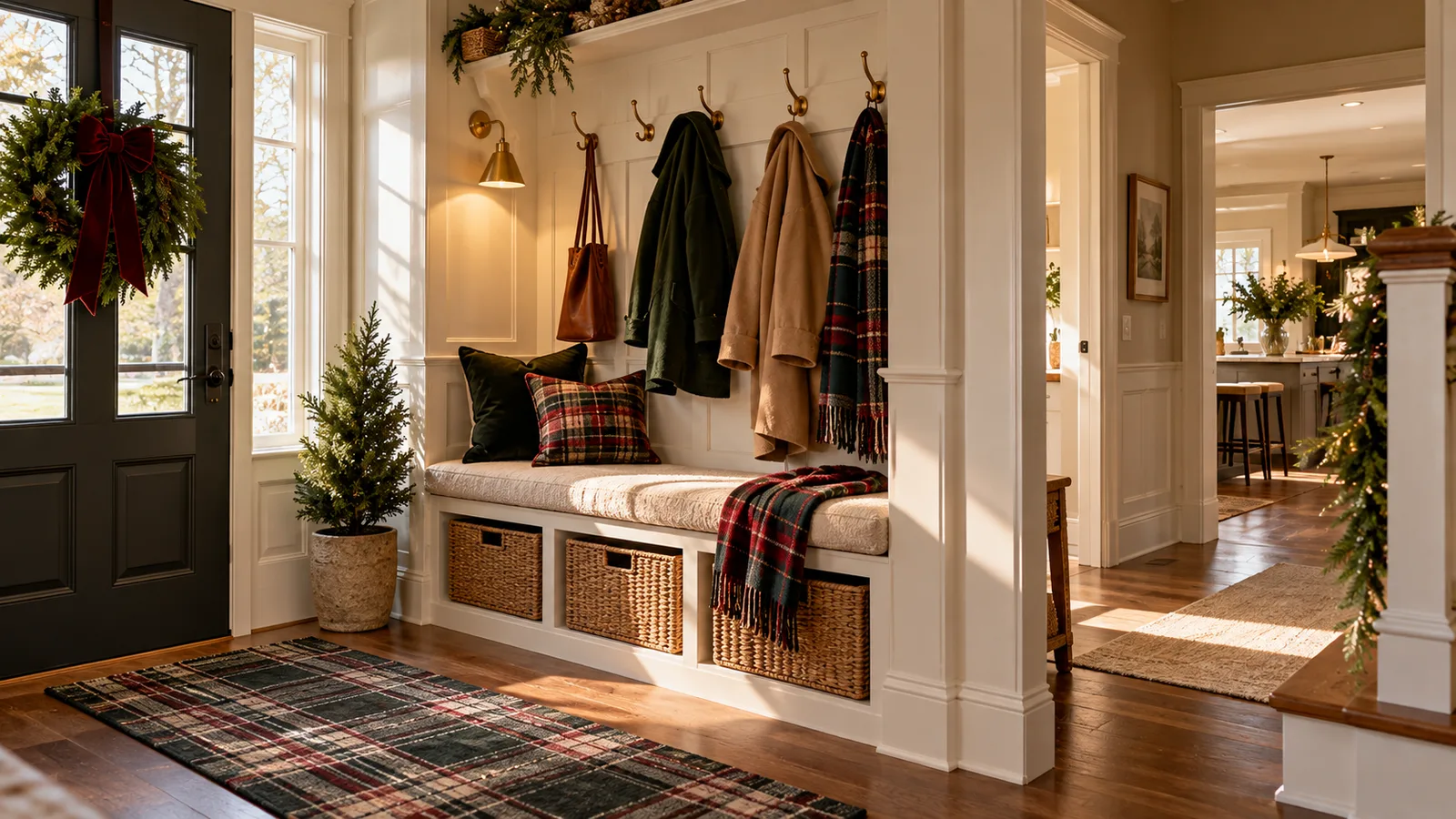
Guests start arriving in a few weeks, and there is nowhere for their coats to go that does not end up in a pile on a bed or draped over a chair. That is not a decorating problem. It is a capacity problem: a system built for a normal Tuesday, suddenly asked to hold everyone's coats at once.
This is not about making the entryway prettier. It is about making it actually work, whether you have a real coat closet buried under summer stuff, or no closet there at all. Two different homes need two different fixes, and both are covered here, the same instinct behind getting a guest room ready before anyone arrives.
This post contains affiliate links. As an Amazon Associate, I earn from qualifying purchases, at no extra cost to you. #ad
What Actually Needs to Change
Before anything gets organized, it helps to split the problem into three zones instead of one pile: coats, shoes, and accessories like hats, scarves, and gloves. A lot of entryways struggle not because they're small, but because all three zones are competing for the same few feet of rod and floor.
One easy trap is buying storage before decluttering. A bin or a basket looks like progress, but it just gives the wrong things somewhere new to live. Pull everything out first, including the off-season coats nobody has worn since March, and only then decide what actually needs a home.
Count instead of guessing. Count how many coats the household actually wears in a normal week, then add a real number for guests, not just "a few," the number you actually expect this gathering. That total, not the closet's square footage, is what decides whether hooks alone will cover it or whether the rod needs real help too. Clear that many hooks or hangers before anyone arrives, so nobody's coat ends up without a spot.
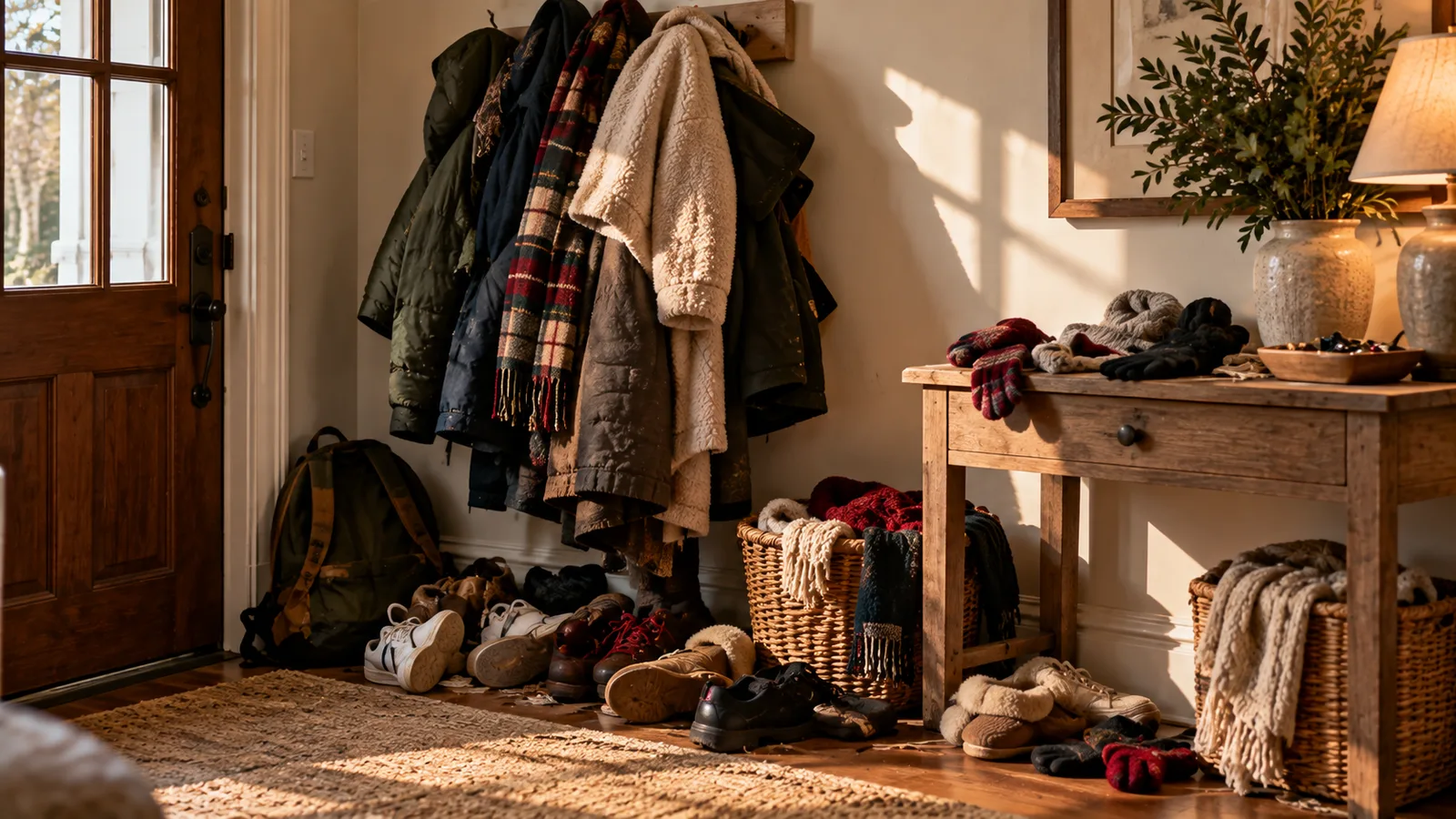
Most closets aren't too small. They're just holding four seasons of coats when the week only needs one.
The Family-Home Coat Closet
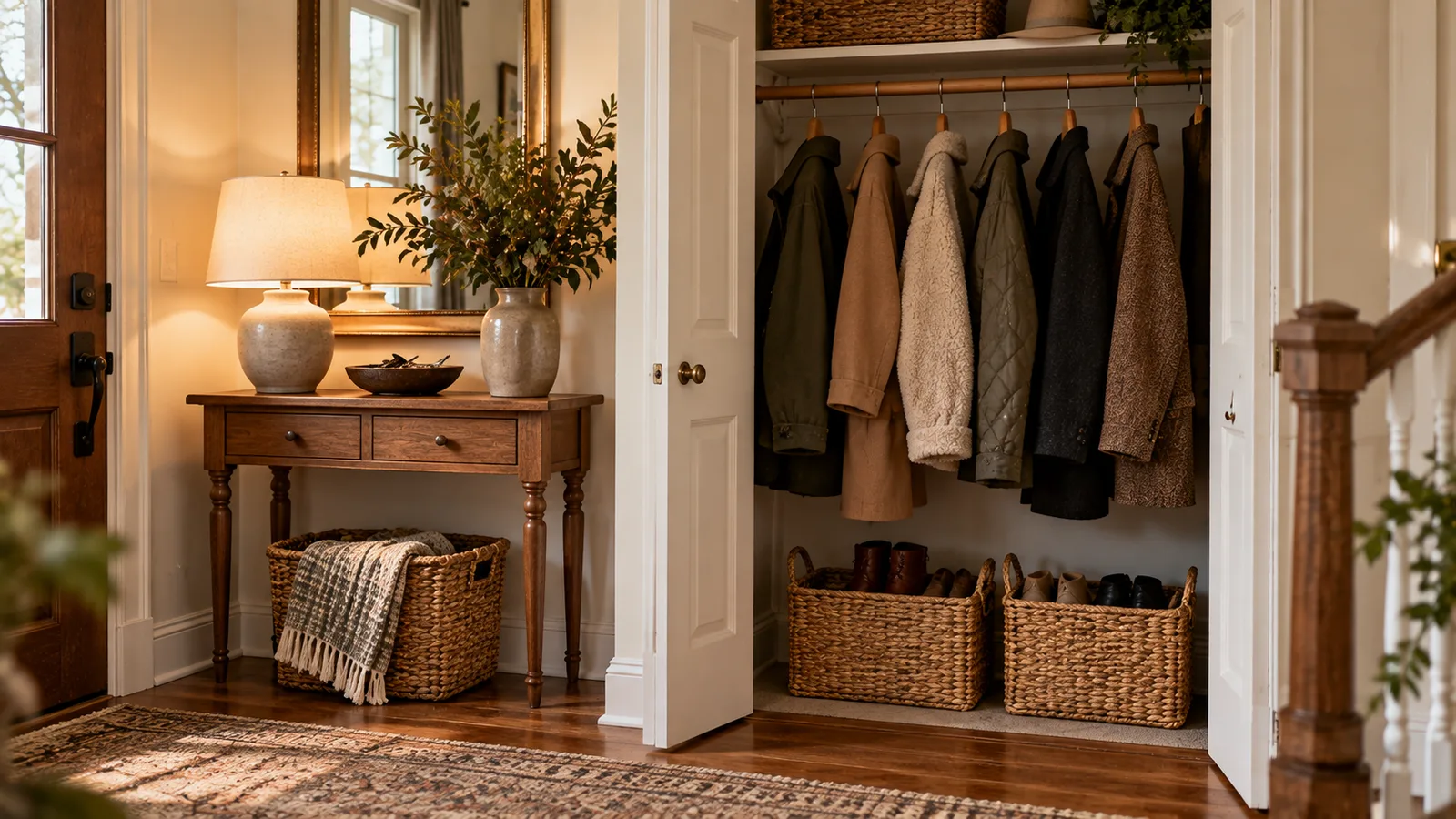
If there is a real coat closet, the fix is rarely more space. It is usually that this year's coats, last year's coats, everyone's shoes, and a drawer's worth of loose gloves are all competing for the same rod. Pull the off-season coats out first and store them somewhere else, even just a garment bag on a bedroom hook. What is left should be this year's actual rotation, nothing more.
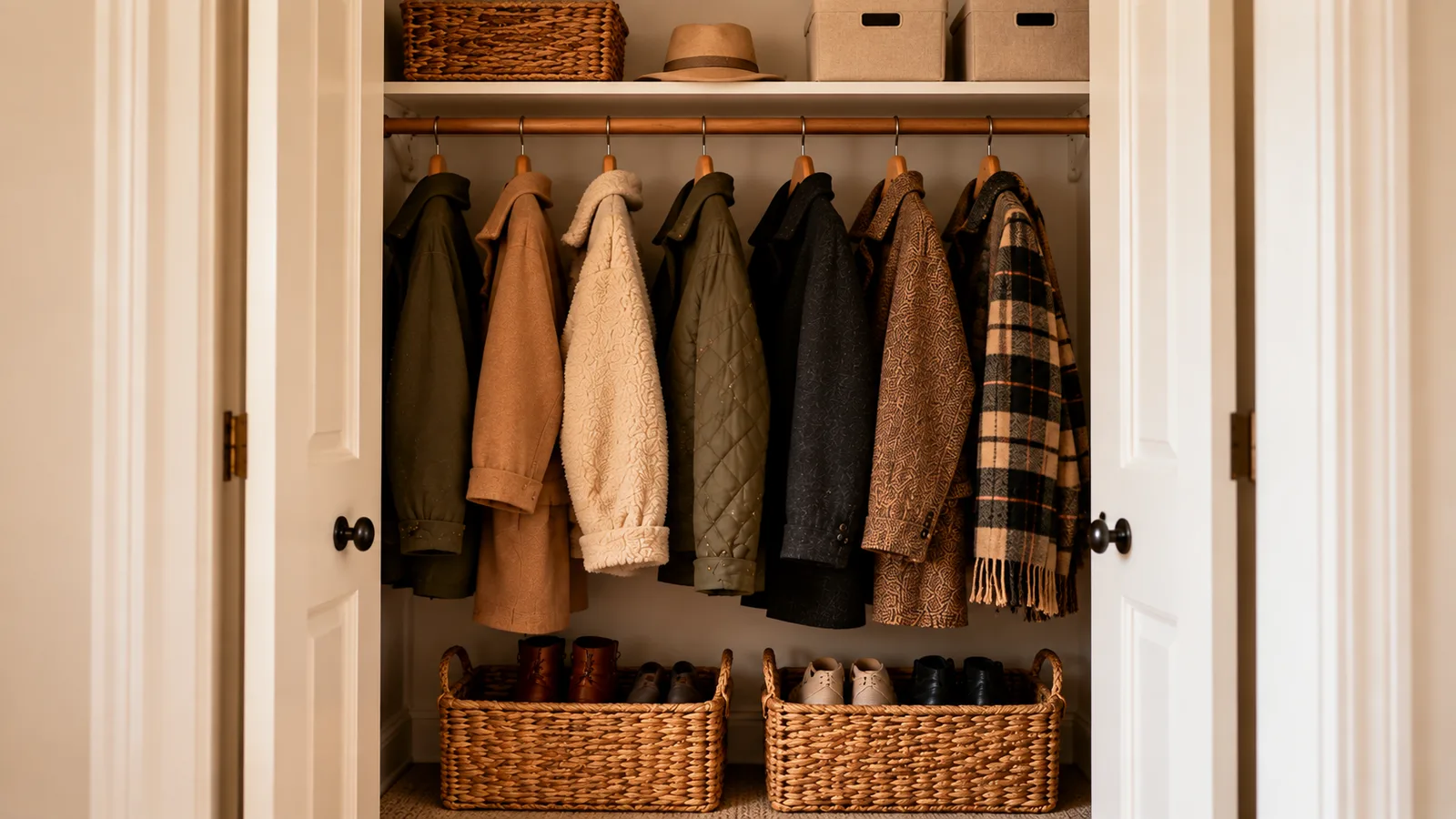
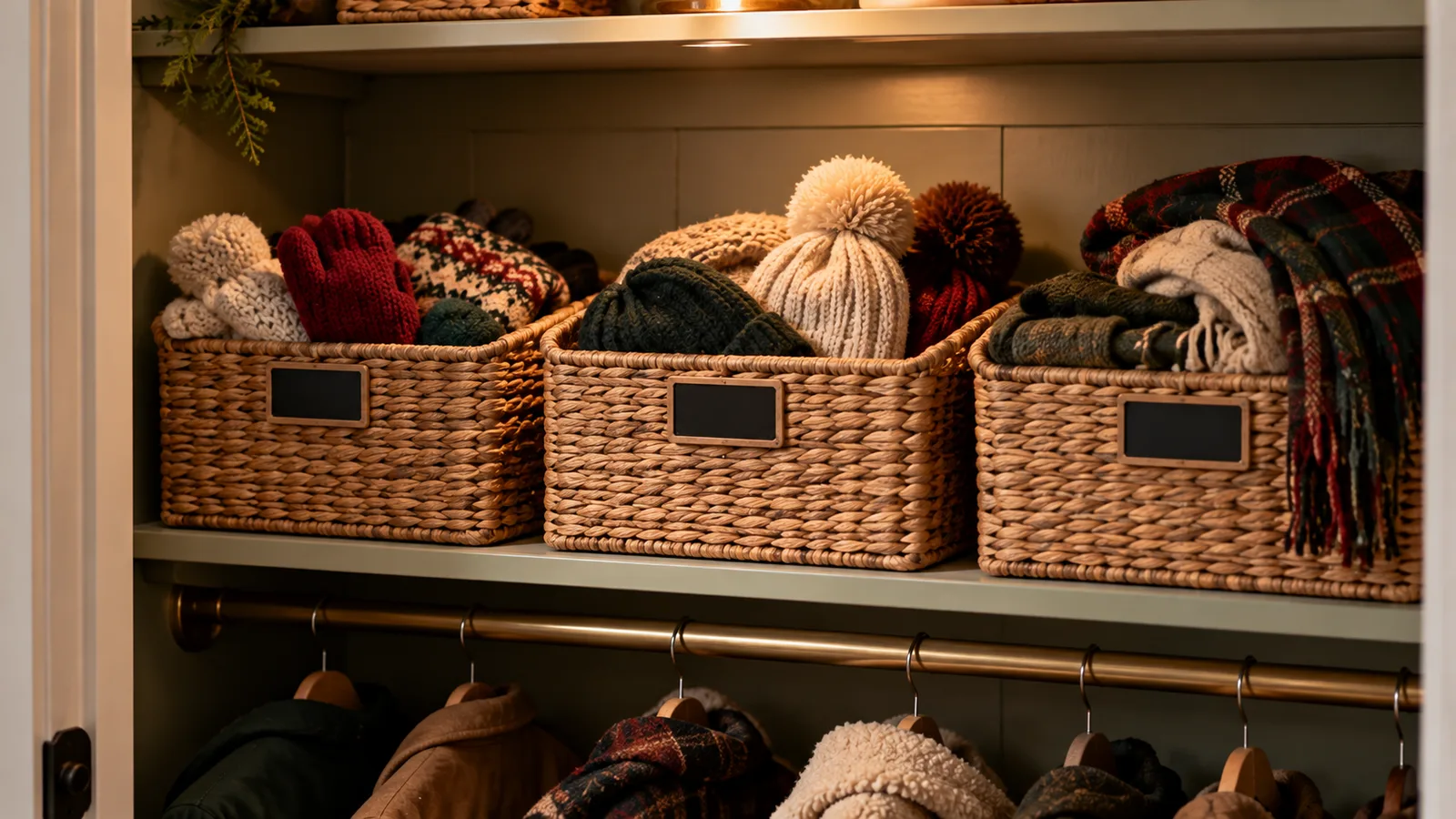
Three zones, not one pile: coats, shoes, and accessories.
Once the closet only holds what actually belongs there, shoes and boots get their own stackable closet baskets on the floor, and hats, scarves, and gloves go into fabric storage cubes on the shelf above. A set of over-the-door coat hooks on the inside of the closet door is what actually covers the guest-coat number from a minute ago: hang them there once your own rod is full, so a guest's coat has a real spot instead of ending up on a bed.
Hook height is worth getting right, and the simplest test beats a fixed number: hang the tallest coat in the house and check that it clears the floor with room to spare. That's the actual height that works, not a universal standard. If kids live there too, add a second row they can actually reach on their own. A hook a child can't reach isn't really a hook for them, it's just one more reason their coat ends up on the floor instead.
No Coat Closet? Here Is What Actually Works
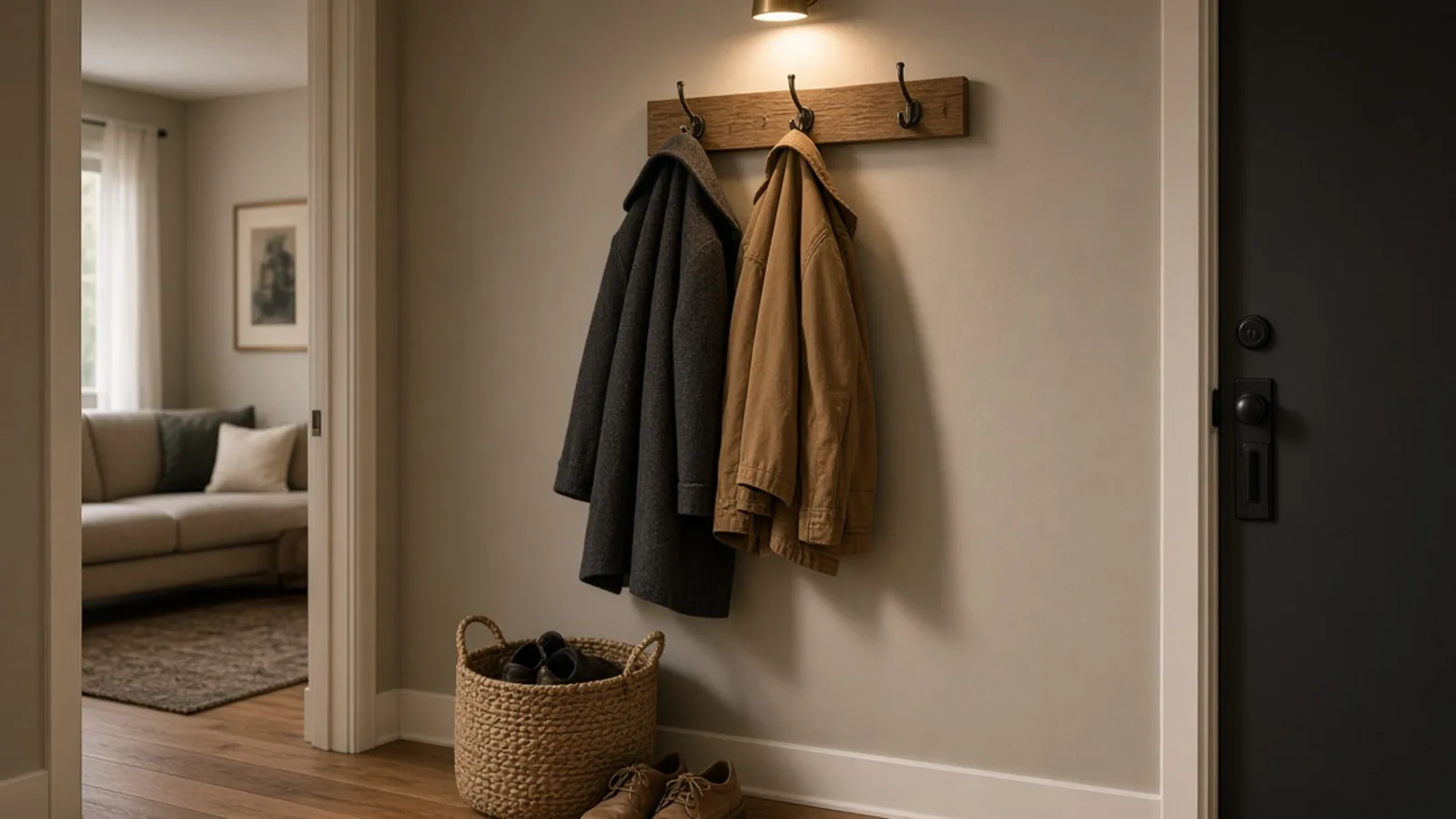
No coat closet isn't a dead end, it's a layout problem with more than one real fix. A freestanding ladder shelf with two hooks tucks into a corner and gives you hanging space plus a shelf for shoes or a basket, without touching the wall. If you rent, or just don't want to drill, a set of no-drill adhesive wall hooks is worth trying, just check the listed weight rating against your heaviest coat before you count on it for a wool topcoat or a stuffed parka.
For the shoes and bags that pile up next to the door, a 6-cube storage organizer works as a defined drop zone instead of a random pile against the wall, and a couple of small wicker baskets on top keep gloves and keys from sliding off the edge.
Without a closet to absorb the overflow, the guest-coat count matters even more here: if six people are coming, six hooks or six feet of borrowed rod need to actually be open when they walk in, not just theoretically available under a coat that's already hanging there. If the guest list this year is bigger than usual, it's also worth temporarily borrowing an underused rack from a bedroom, an off-season clothing rod nobody is using in October, just for the hosting stretch, then moving it back in January. A two-week loan, not a permanent piece of entryway furniture, which is exactly why it works: nobody has to buy anything they won't use the other eleven months of the year.
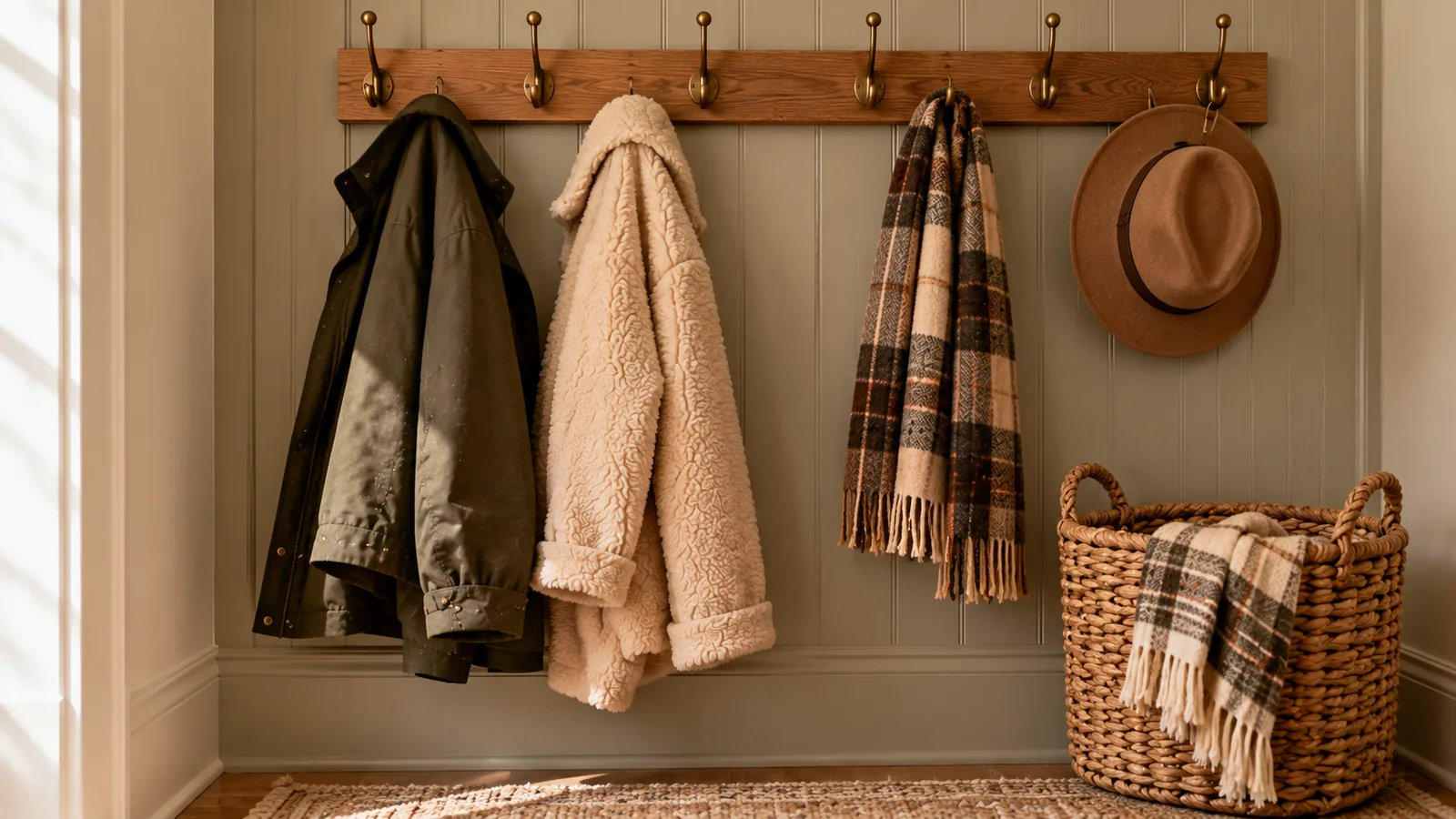
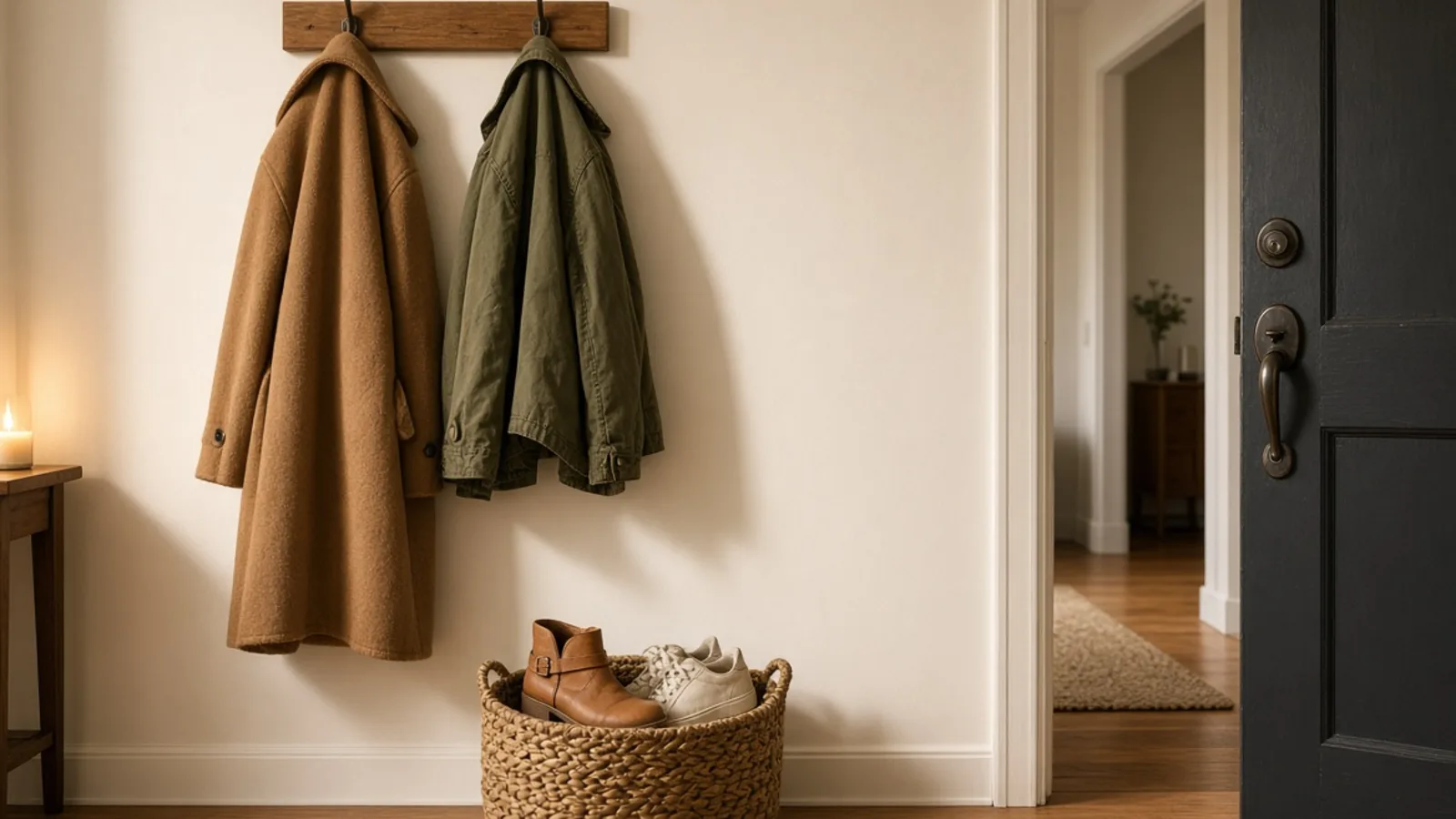
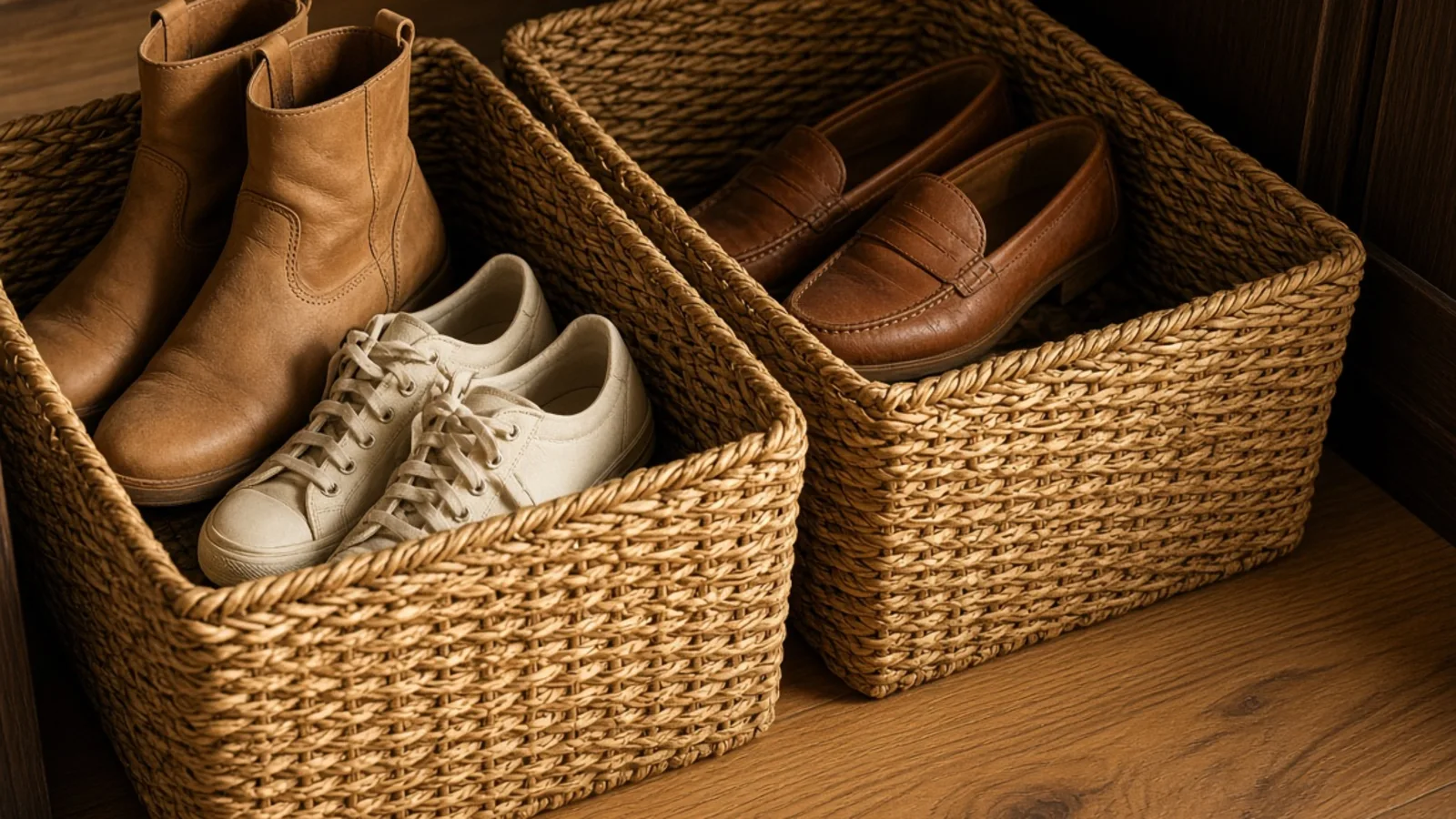
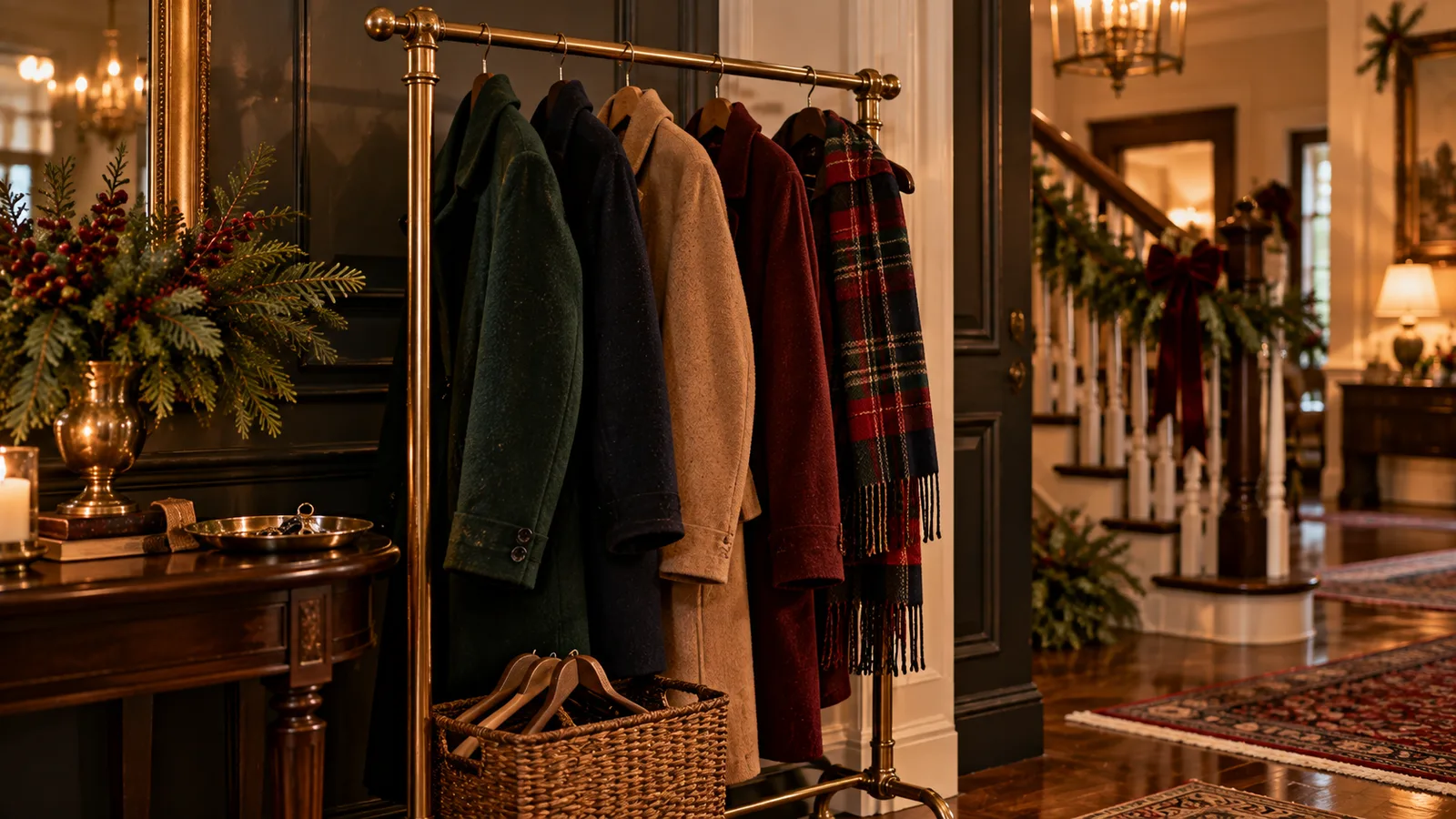
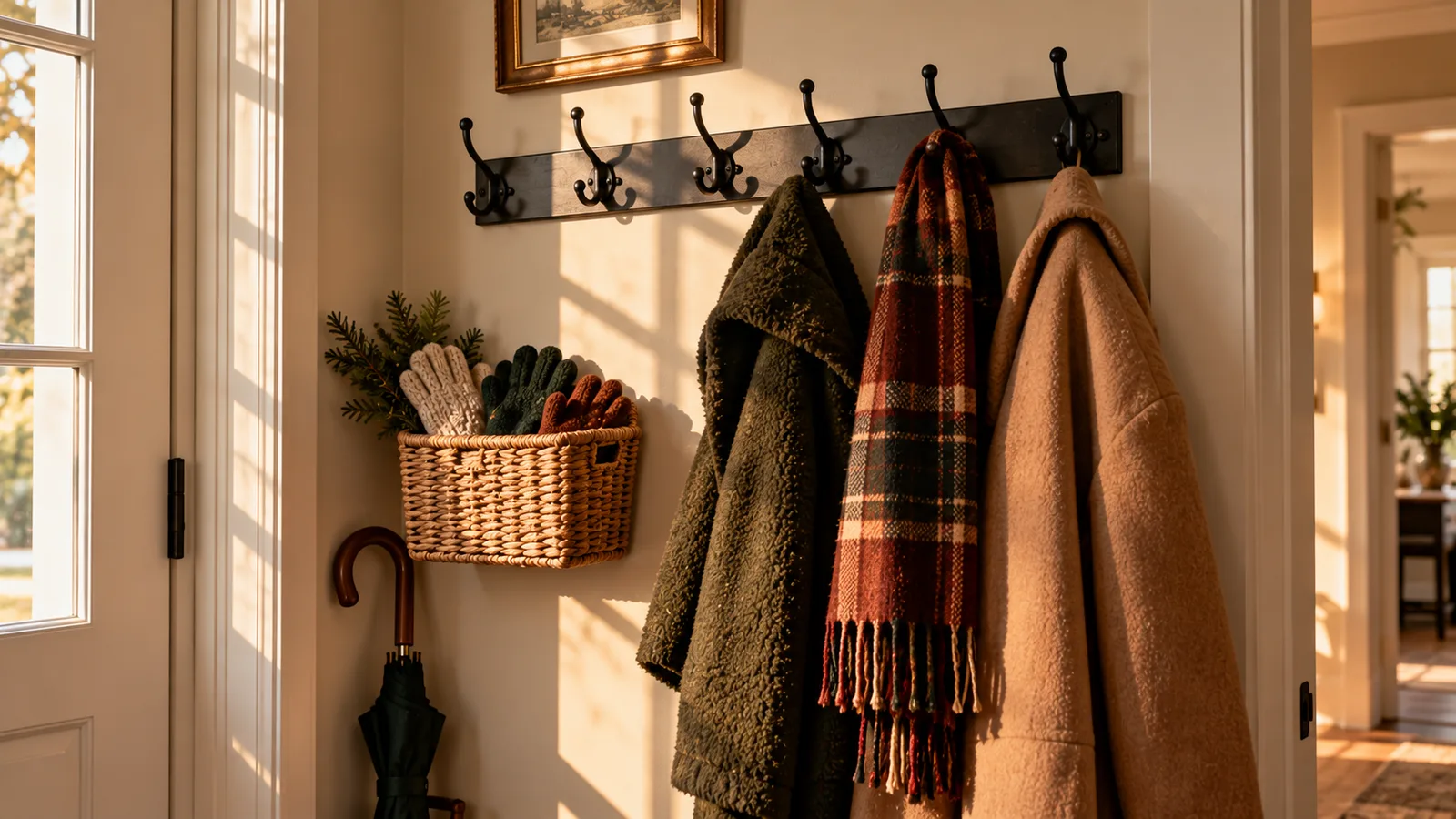
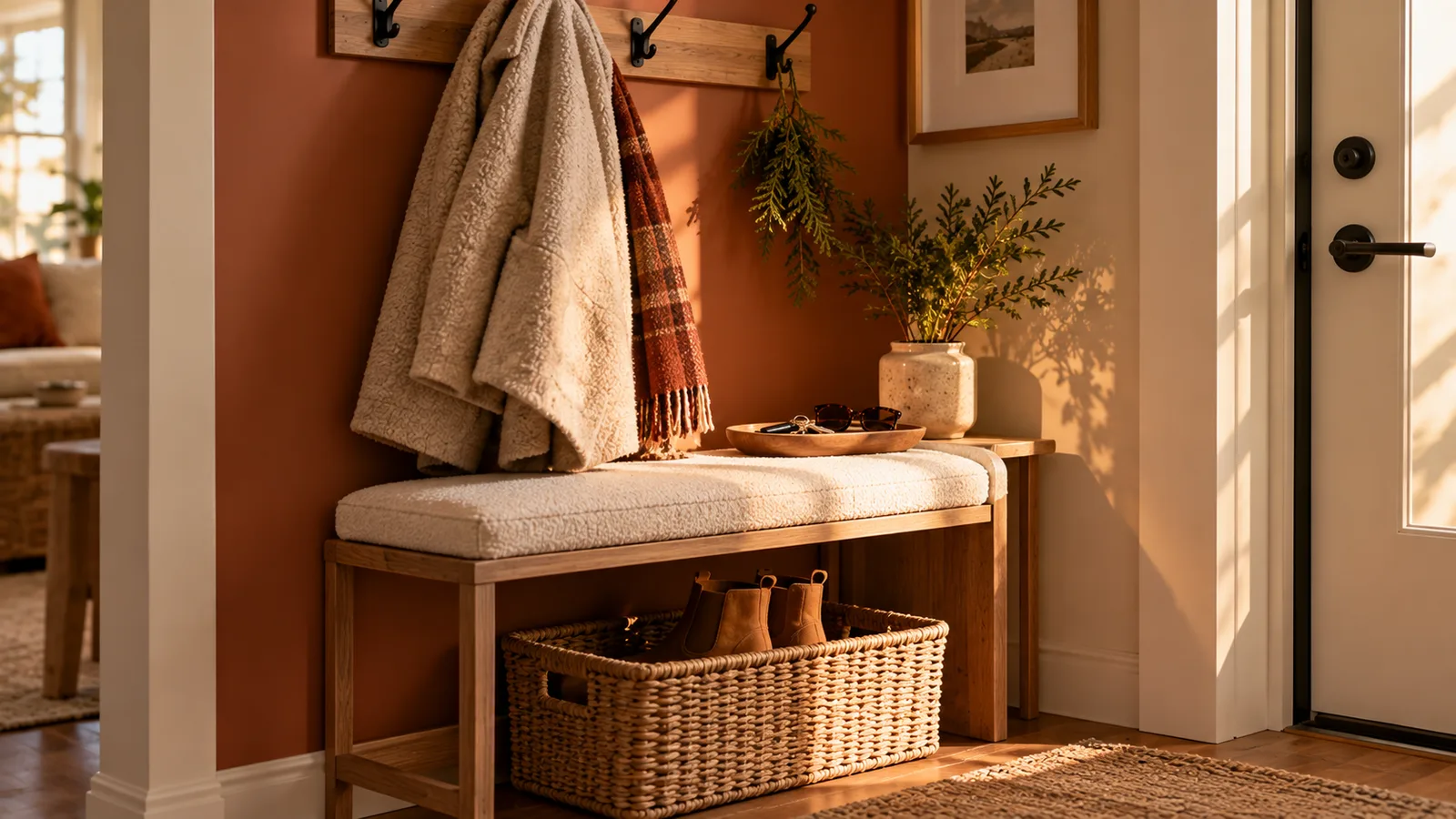
No closet, no problem. Four real homes proving it.
Where Gloves and Scarves Actually Go
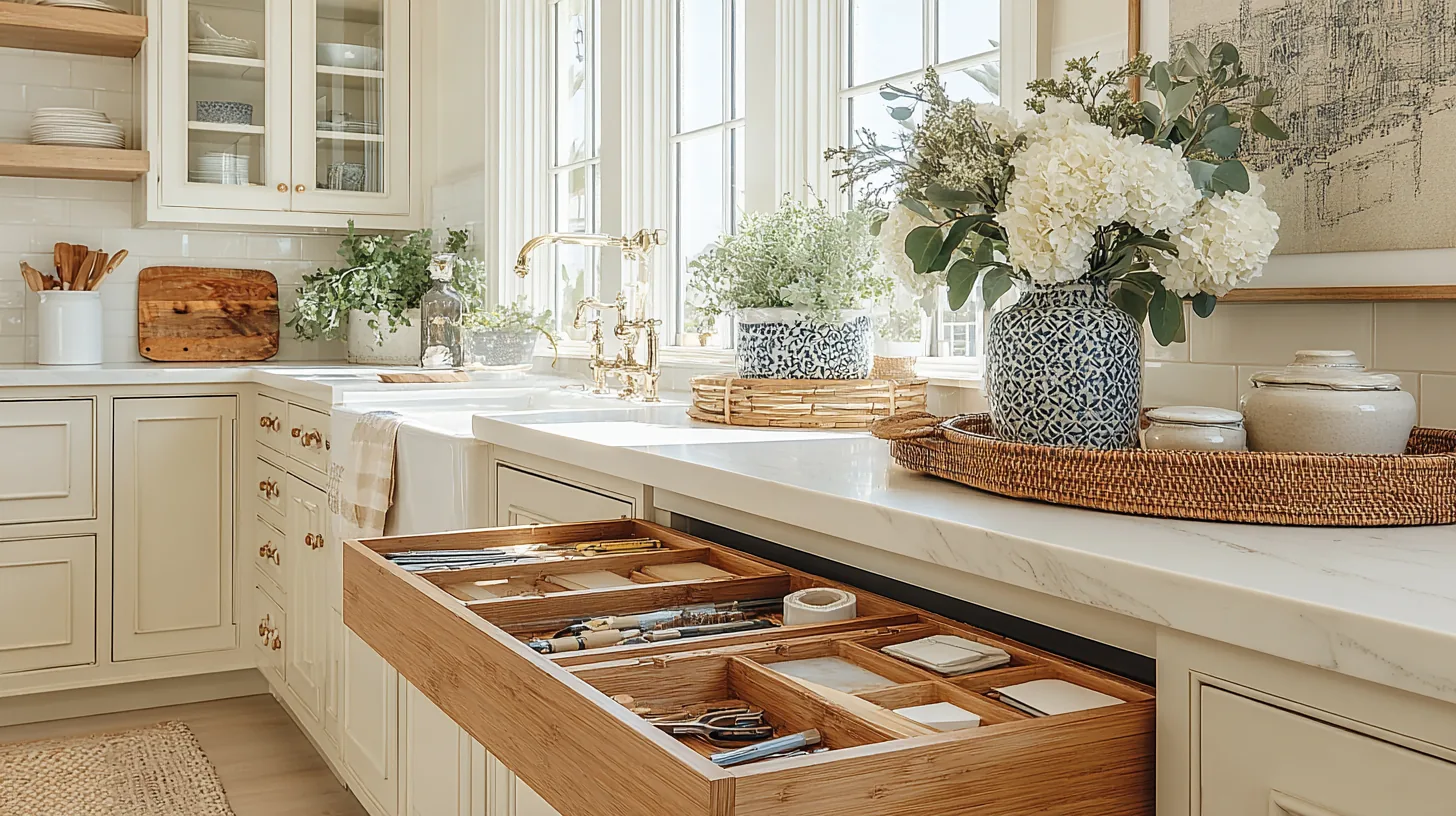
Household gloves and scarves are one problem. Guest gloves and scarves are a different one, since they're not staying long enough to earn a drawer. If there is an actual drawer nearby, whether in a closet floor unit or a mudroom bench, adjustable drawer dividers keep each person's winter accessories in their own lane instead of one tangled pile. For guests, skip the drawer system entirely and use a single shallow basket by the door, easy to spot on the way out, nothing to learn. Without a drawer for the household side, a set of clear stackable storage drawers on a shelf does the same job, and you can see what is inside without opening every one.
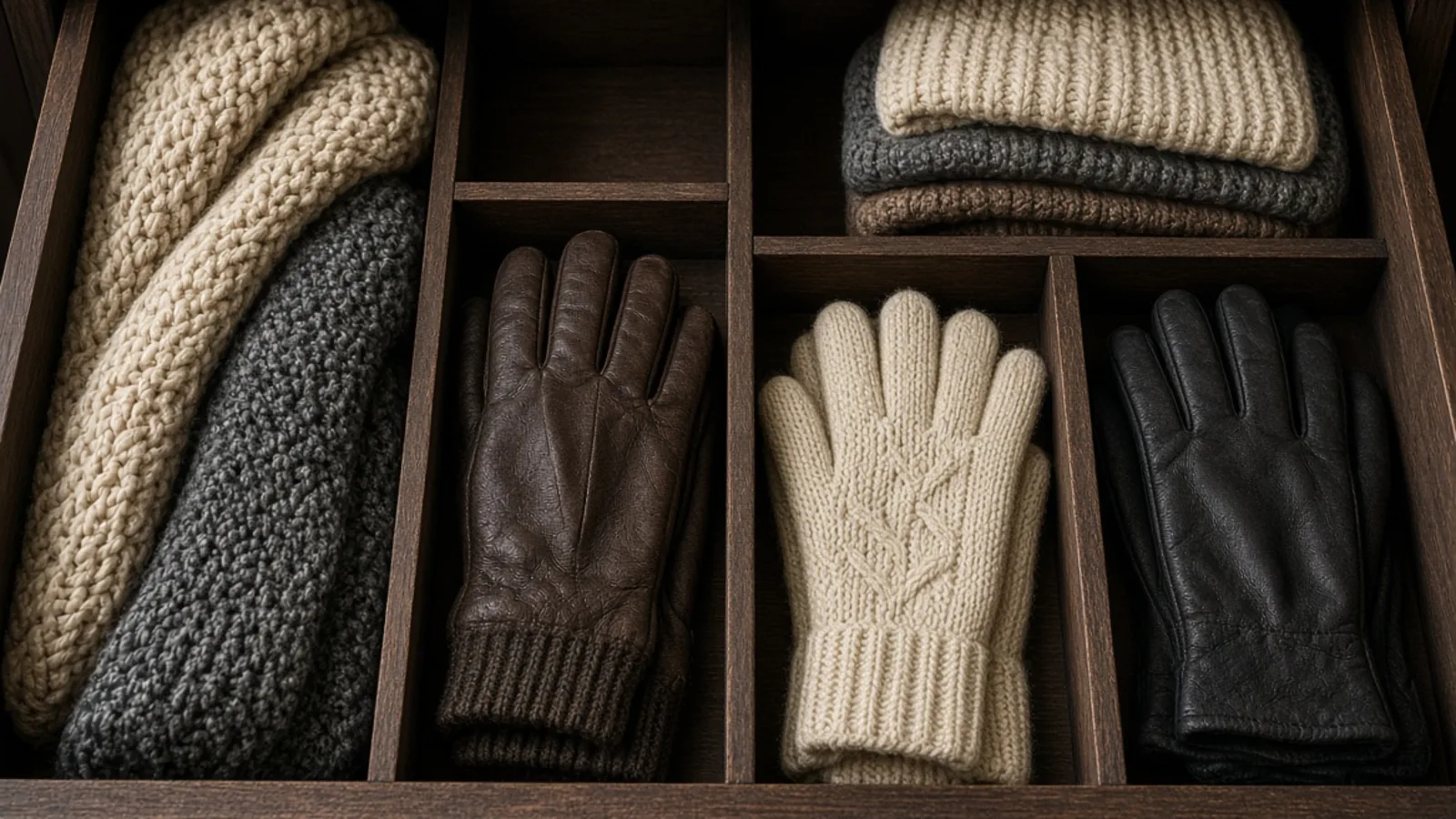
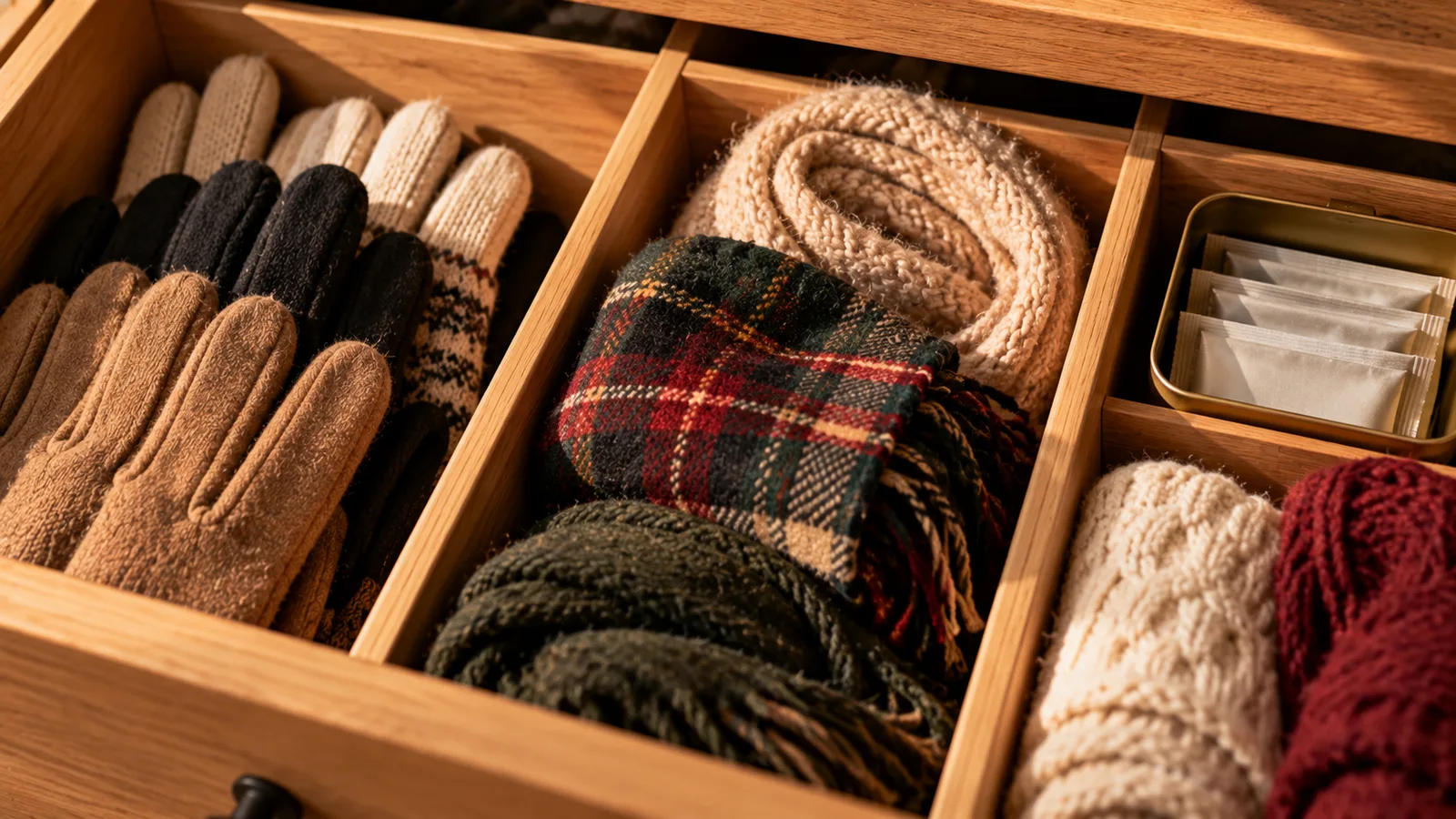
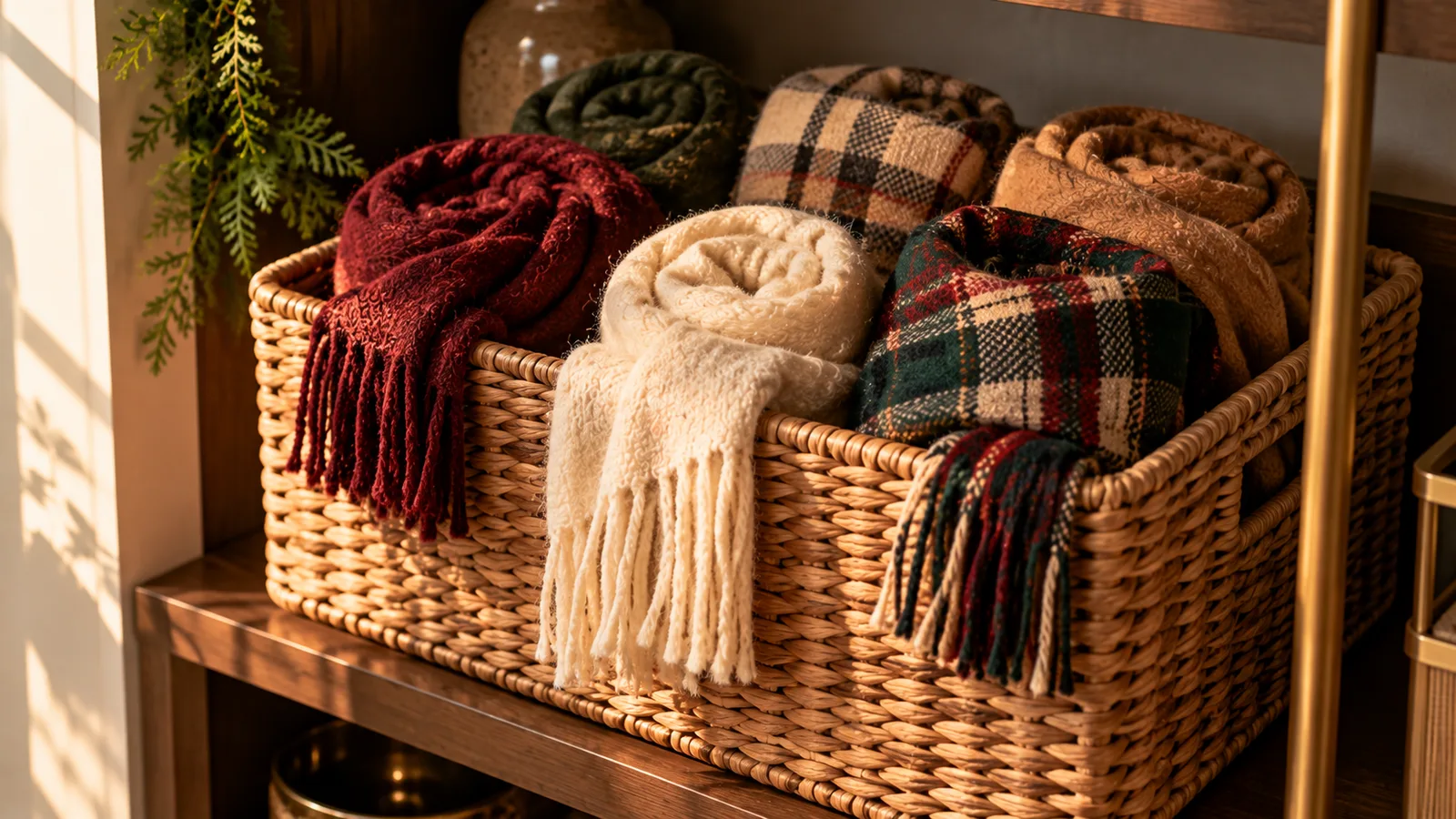
Each person's winter accessories in their own lane.
The Small Details That Finish It
None of this needs to look like a magazine spread to work, but a few small things make the entry feel considered once the system underneath it is solid. A storage ottoman is the last functional upgrade worth making, an actual place to sit and put shoes on, while quietly hiding an extra blanket or a pair of slippers inside, and it also happens to be the piece that makes the whole entry look finished instead of just organized.
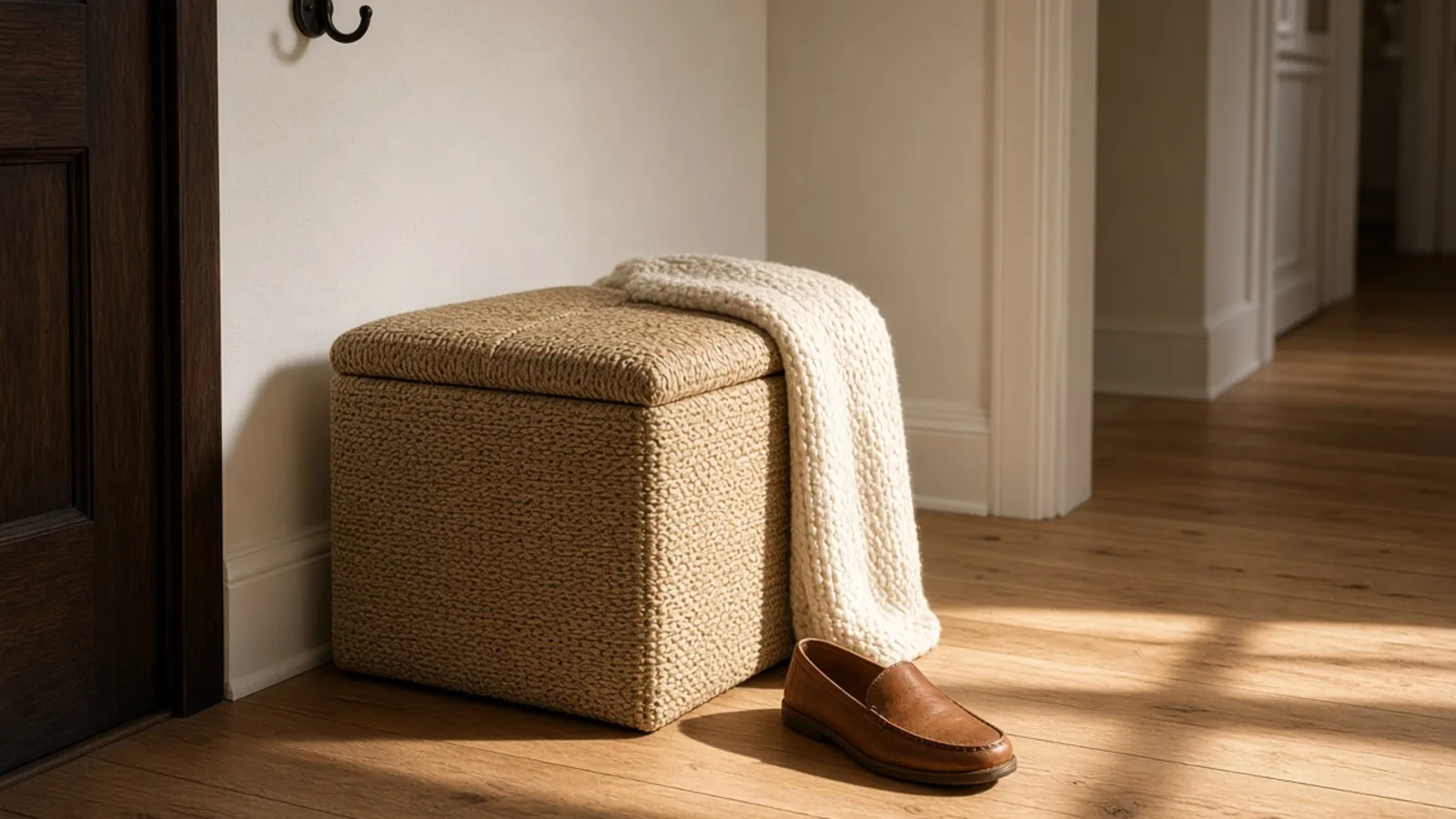
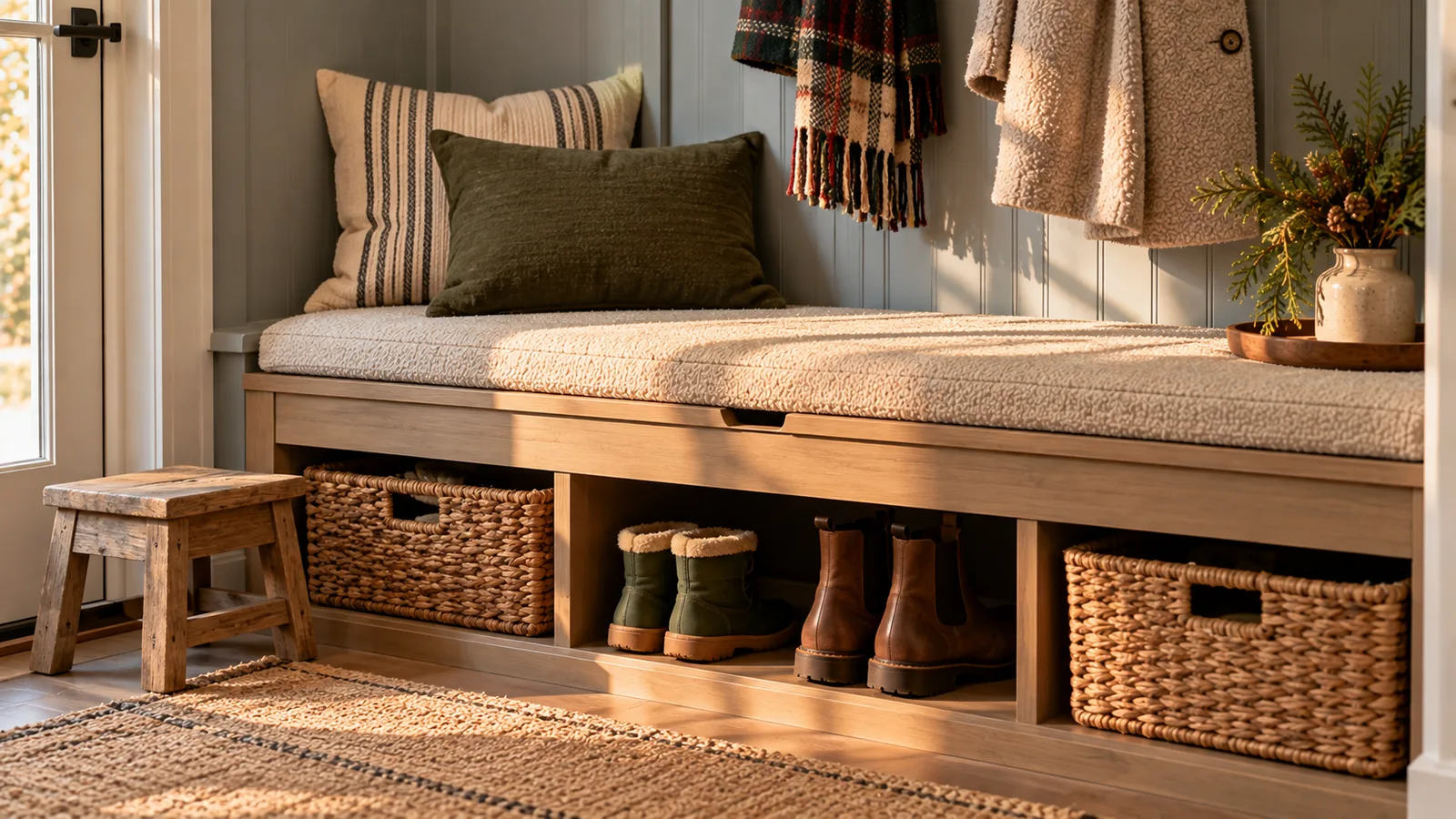
The last functional upgrade before pure styling.
Everything after it is pure styling. A small catchall tray nearby means keys have one place to land instead of three, and a couple of stacked decorative books beside it give the tray something to sit on besides bare wood.
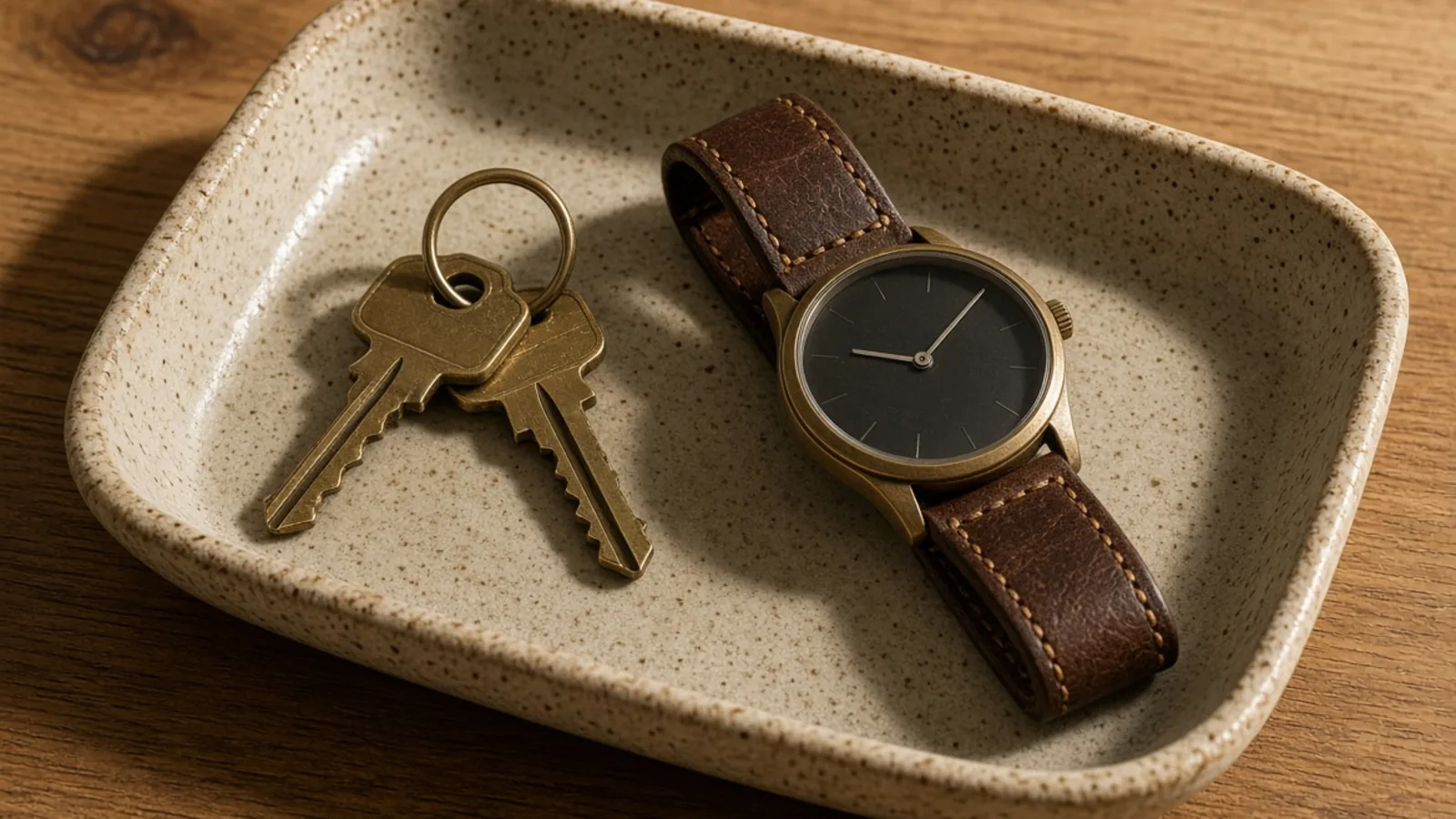
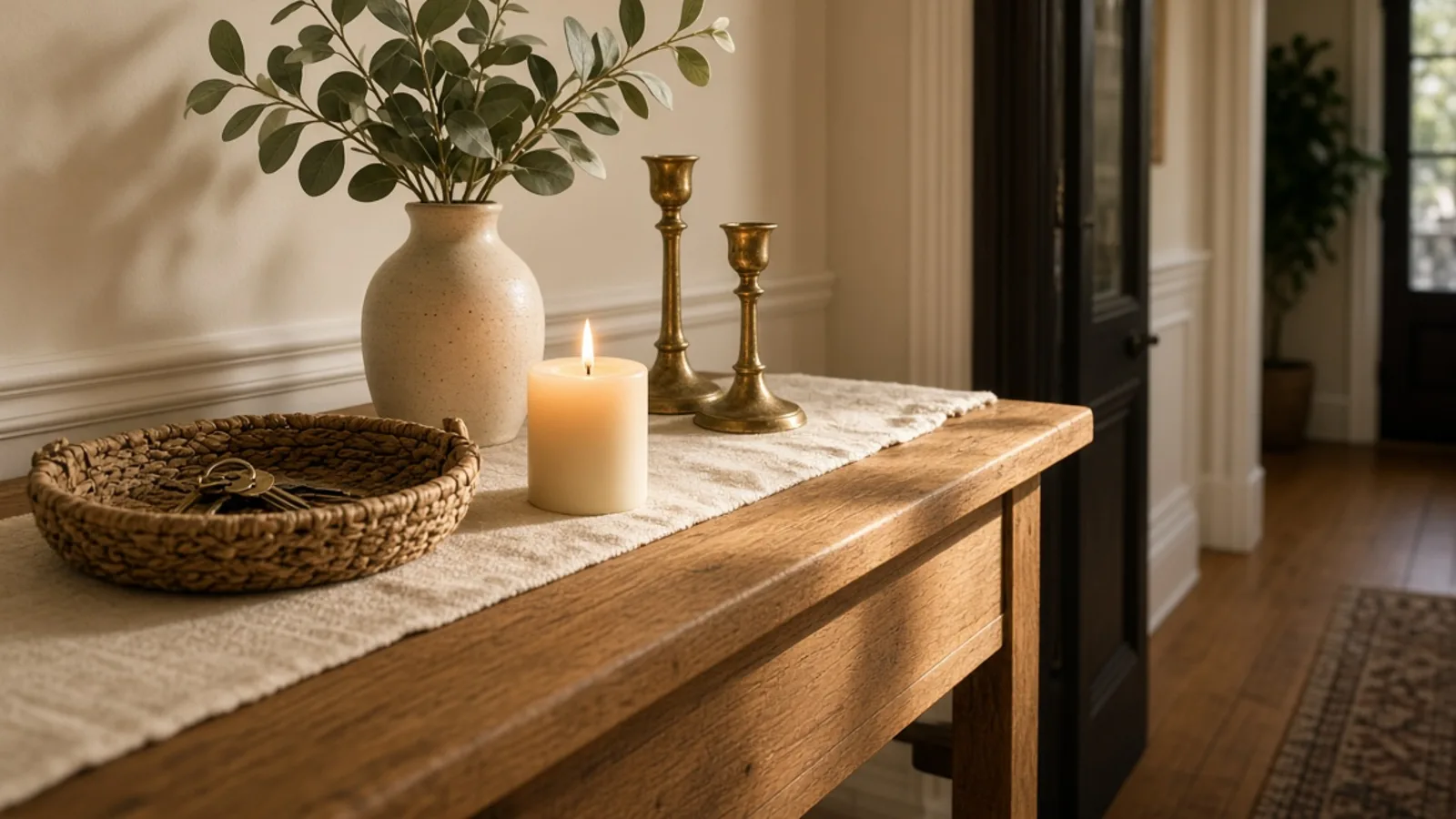
The system does the work. This is just the finish.
If there is room for a little more, a lit oakmoss and amber candle, a small vase of faux stems, and a pair of brass candle holders round out a console without asking for much upkeep. None of it fixes the actual coat problem, and it's genuinely optional, the same idea behind a fall porch that carries through Thanksgiving: get the system right first, then decide if you even want the finishing touches.
The Guest Coat Test
Before the real guests arrive, run one quick test. Hand someone a coat and have them hang it up and hand it back to you, timed. If it takes longer than it should, or they can't find one of the open hooks you actually counted and cleared earlier, that is the exact spot to fix, not the whole system. It is the same logic behind the two-minute test that works on the junk drawer: find the one real stall point instead of redoing everything.
Run the same test once more on the way out the door, since that is usually the part that actually breaks down once a house is full of people leaving at the same time, everyone reaching for the same few hooks at once. If two people always end up in the same spot, that tells you exactly where to add a second hook or move a basket, which is a smaller fix than it sounds like from the middle of a hosting week.
If you only do one thing before guests arrive, do the closet declutter. Everything else, the hooks, the baskets, the small tray by the door, only works once there is actual room for it.